

How to Become a Neurologist in 2026 – Key Takeaways
Becoming a neurologist is a challenging yet highly rewarding career path. Neurologists diagnose, treat, and manage disorders of the brain, spinal cord, and nervous system. The path to becoming a neurologist involves extensive education and training, but the opportunity to work in a specialized field of medicine that deals with some of the most complex health issues makes it all worthwhile. Here, we’ll break down the fundamental steps to becoming a neurologist, including the educational journey, necessary qualifications, and specialized career options.
- What a Neurologist Does:
- Diagnoses and manages conditions such as epilepsy, multiple sclerosis, Parkinson’s disease, stroke, and Alzheimer’s disease.
- Uses tools like MRI scans, imaging studies, and EEGs to evaluate disorders of the nervous system.
- Works in settings such as hospitals, private practices, and research institutions.
- Educational Path:
- Bachelor’s degree (4 years): usually in biology, chemistry, neuroscience, or another science-related field.
- Medical school (4 years): leads to an MD or DO degree.
- Internship (1 year): commonly in internal medicine, surgery, or a related area.
- Neurology residency (3–4 years): specialized training in diagnosing and treating neurological disorders.
- Optional fellowship (1–2 years): for subspecialties such as epilepsy, neurocritical care, or movement disorders.
- Key Steps to Become a Neurologist:
- Complete undergraduate study and pre-med coursework.
- Take the MCAT and gain admission to medical school.
- Finish medical school and clinical rotations.
- Complete internship and neurology residency training.
- Pass licensing exams such as USMLE or COMLEX and obtain board certification through the ABPN.
- Skills and Requirements:
- Strong academic performance and medical knowledge.
- Excellent problem-solving, attention to detail, and critical thinking.
- Compassion and clear communication with patients, especially those with chronic neurological conditions.
- Career Growth and Subspecialties:
- Neurologists can specialize in epilepsy, pediatric neurology, neuroimmunology, neurocritical care, multiple sclerosis, and movement disorders.
- Career paths include hospital employment, private practice, academic medicine, and research.
- Growing demand is linked to an aging population and increased prevalence of neurological disorders.
- Salary Expectations in 2026:
- Entry-level neurologists: about $230,000–$250,000 per year.
- Experienced neurologists: about $300,000–$350,000 annually.
- Top earners in subspecialties: can make $400,000+ per year.
- Pay varies by location, experience, and subspecialty.
Neurology offers a demanding but fulfilling medical career for those interested in complex brain and nervous system disorders. With extensive education, strong clinical skills, and specialized training, aspiring neurologists can build impactful careers in patient care, research, and advanced subspecialty practice.
Introduction to Neurology: Basics of the Profession
Neurology is a branch of medicine that focuses on diagnosing and treating diseases and disorders of the brain, spinal cord, and nervous system. The profession plays a vital role in the medical field, as neurological conditions can affect every part of a person’s life, from motor function to cognitive abilities. Neurologists are essential in diagnosing and managing conditions such as:
- Epilepsy: A condition that causes recurring seizures.
- Multiple sclerosis: A chronic condition that affects the brain and spinal cord.
- Parkinson’s disease: A neurodegenerative disorder that affects motor control.
- Stroke: An interruption of blood flow to the brain that causes brain damage.
- Neurodegenerative diseases: Such as Alzheimer’s disease, which leads to the gradual degeneration of memory and cognitive abilities.
Neurologists use various diagnostic tools such as imaging, electroencephalograms (EEGs), and MRI scans to identify issues related to the brain and nervous system. Their work is often focused on both diagnosing and treating neurological conditions through medications, therapy, or lifestyle recommendations. Neurologists may work in a variety of settings, including hospitals, research institutions, or private practices.
The Educational Path: What You Need to Become a Neurologist
Becoming a neurologist requires extensive education and training, starting from undergraduate education and continuing through medical school, residency, and potentially a fellowship. Here’s a detailed look at the educational path to becoming a neurologist:
- Undergraduate Education (4 years):
- The first step in your journey is to complete a bachelor’s degree from an accredited university. Most future neurologists choose a pre-medical or scientific major such as biology, chemistry, or neuroscience to build a foundation for medical school.
- Key courses in subjects like biology, chemistry, physics, and mathematics will prepare you for medical school. Clinical and research experience can also be beneficial during this time.
- Medical School (4 years):
- After completing your undergraduate degree, the next step is to attend medical school. This will take four years and culminate in earning either a Doctor of Medicine (MD) or Doctor of Osteopathic Medicine (DO) degree.
- The first two years of medical school generally focus on basic medical sciences, including anatomy, biochemistry, and physiology. There will also be a focus on understanding the structure and functions of the nervous system.
- The remaining two years consist of clinical rotations in various medical specialties, including neurology, internal medicine, surgery, and other essential areas. These rotations give you hands-on experience and a comprehensive understanding of how different specialties interact.
- Internship Year (1 year):
- After graduating from medical school, you will undergo a one-year internship in internal medicine, general surgery, or another related field. This internship provides foundational clinical experience and prepares you for more specialized training.
- Neurology Residency (3-4 years):
- Following your internship, you will enter a neurology residency program, which typically lasts 3 to 4 years. During residency, you will receive in-depth training in diagnosing and treating a wide variety of neurological conditions.
- Residency is where you begin to specialize in neurology, and you’ll get hands-on experience in patient care, diagnostic testing (such as neuroimaging), and treatment of neurological disorders.
- Fellowship (Optional, 1-2 years):
- After completing your neurology residency, you can choose to pursue a fellowship in a specific area of neurology. Fellowships last 1 to 2 years and provide advanced training in subspecialties such as epilepsy, neurocritical care, or movement disorders.
- Specializing in a particular area of neurology can open up additional career opportunities and allow you to deepen your expertise.
Steps To Take to Become a Neurologist
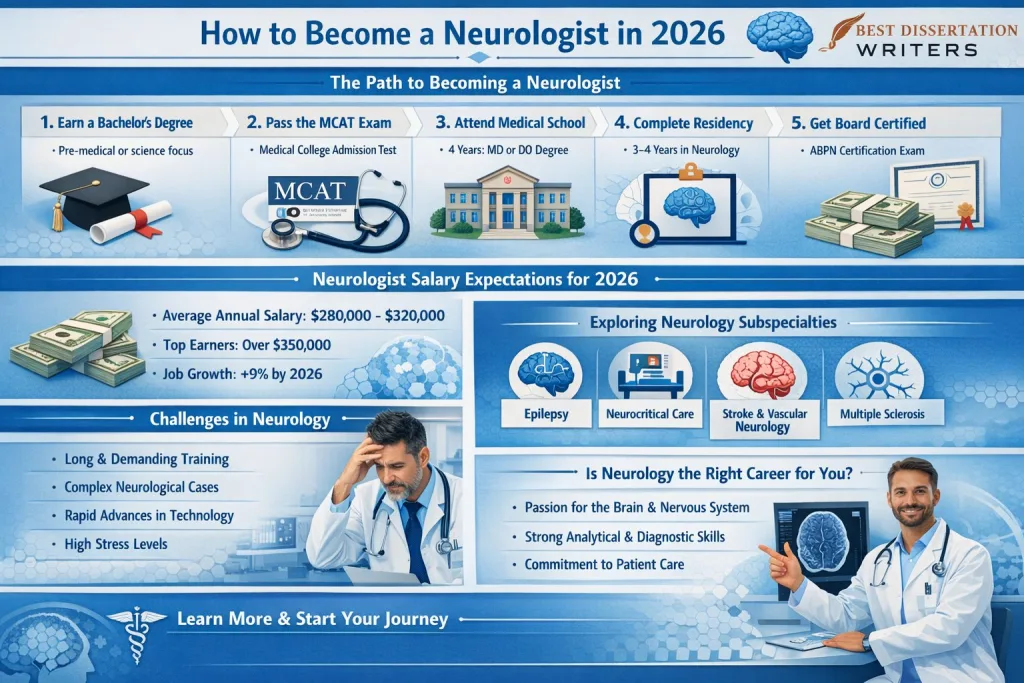
Becoming a neurologist requires commitment, dedication, and years of training. The process involves a clear progression through education and hands-on experience. Below is a more detailed breakdown of the key steps to take to achieve this goal:
- Complete Undergraduate Education:
- The journey to becoming a neurologist begins with obtaining a bachelor’s degree. Most aspiring neurologists major in a science-related field such as biology, chemistry, or neuroscience to provide a strong foundation for medical school.
- During your undergraduate years, it’s important to focus on excelling in courses like biology, chemistry, physics, and mathematics, as these subjects are crucial for the MCAT and for understanding the medical sciences later on.
- Additionally, many students engage in volunteer work or internships to gain exposure to healthcare settings, whether by working in hospitals or research labs. This can help demonstrate your commitment to the medical field when applying to medical schools.
- Take the MCAT:
- The next step is to take the Medical College Admission Test (MCAT), a standardized exam required for entry into medical school. The MCAT evaluates knowledge in several key areas, including biological sciences, chemical and physical sciences, psychological and social sciences, and critical reasoning skills.
- Since the MCAT is a significant factor in medical school admissions, it’s essential to prepare thoroughly. Many students spend months preparing for the exam to ensure they score well enough to be competitive for top-tier medical schools.
- Achieving a high MCAT score can greatly improve your chances of acceptance to medical school, where you will begin your journey into the field of neurology.
- Graduate from Medical School:
- After successfully applying to and being accepted into medical school, the next step is to complete four years of medical education. Medical school is rigorous, with a strong emphasis on both theory and practice.
- The first two years primarily focus on classroom learning and foundational medical sciences, such as anatomy, physiology, biochemistry, and pharmacology. During this period, you’ll also begin learning about the basic structures and functions of the nervous system, which will be critical to your future neurology career.
- The last two years are focused on clinical rotations in various medical specialties, such as internal medicine, surgery, and neurology. During these rotations, you’ll gain hands-on experience in diagnosing and treating patients under the supervision of experienced physicians, including neurologists.
- During your neurology rotation, you’ll gain exposure to patients with a variety of neurological disorders, such as epilepsy, stroke, Parkinson’s disease, and multiple sclerosis. This experience will solidify your understanding of neurology and help guide your decision to pursue a career in this field.
- Complete the Internship Year:
- After medical school, the next step is to complete a one-year internship in a clinical setting. Internships are usually completed in a variety of specialties, but most students opt for rotations in internal medicine or surgery, which are directly related to neurology.
- The internship provides an opportunity to apply the knowledge and skills you’ve acquired in medical school to real-world clinical scenarios. It also allows you to begin developing a stronger understanding of patient care, honing your clinical skills, and preparing for more specialized training during your residency.
- This year of hands-on experience is essential to building the foundation for your neurology residency, where you will receive more focused training in the diagnosis and treatment of neurological disorders.
- Begin Neurology Residency:
- The next step in your path to becoming a neurologist is entering a neurology residency program, which typically lasts 3 to 4 years. During your residency, you will receive extensive training in diagnosing and treating a wide variety of neurological conditions such as epilepsy, stroke, dementia, and multiple sclerosis.
- The residency is highly specialized and involves rotations through various subspecialties of neurology, including neurocritical care, movement disorders, neuroimmunology, and pediatric neurology. You will also gain experience in interpreting neurological imaging (e.g., CT scans, MRIs), conducting physical exams, and managing complex cases of neurological disorders.
- This phase of training is designed to help you build the expertise necessary to manage both common and rare neurological diseases. You’ll work closely with patients, observe experienced neurologists, and gain hands-on experience in patient care under the supervision of attending physicians.
- Obtain Board Certification:
- After successfully completing your neurology residency, the next step is to obtain board certification in neurology. This is an essential credential that demonstrates your expertise and qualifications to practice as a neurologist.
- To become board-certified, you must pass the certification examination offered by the American Board of Psychiatry and Neurology (ABPN). This examination evaluates your knowledge and skills across a wide range of neurology topics, including neuroanatomy, neurophysiology, diagnosis, and treatment of neurological diseases.
- Board certification is not only a requirement to practice in many states but is also a mark of professionalism and competence in the field. It gives patients and employers confidence in your ability to provide quality neurological care.
- Consider Fellowship (Optional):
- After obtaining board certification and starting your career as a neurologist, you may choose to further specialize by pursuing a fellowship. Fellowships provide advanced, focused training in subspecialties of neurology and typically last 1 to 2 years.
- Some common neurology subspecialties include:
- Epilepsy: Specializing in the treatment of seizure disorders.
- Neurocritical care: Focusing on critically ill patients with neurological conditions.
- Movement disorders: Specializing in diseases like Parkinson’s disease and other motor control issues.
- Multiple sclerosis: Specializing in the diagnosis and management of this chronic neurological disease.
- Fellowships allow you to deepen your expertise in specific areas of neurology, improve your diagnostic and treatment skills, and enhance your career opportunities. It can also increase your earning potential, as specialized neurologists are often in high demand.
Requirements to Become a Neurologist: What You Need to Succeed
Becoming a successful neurologist requires not only an extensive educational background but also personal attributes and specific professional skills. Below are some of the key requirements for success in neurology:
- Academic Excellence:
- A strong academic background is essential. You need to excel in medical school, particularly in subjects related to the nervous system, brain function, and neurological conditions. High grades and excellent performance in clinical rotations are crucial for matching into a neurology residency.
- Problem-Solving Skills:
- Neurologists must have excellent critical thinking and problem-solving skills, as diagnosing neurological conditions can be complex. Neurological disorders often have overlapping symptoms, and it’s up to the neurologist to pinpoint the exact cause using advanced diagnostic tests and imaging techniques.
- Attention to Detail:
- Because the nervous system is intricate and disorders often manifest in subtle ways, neurologists must pay close attention to detail. Small variations in a patient’s condition can indicate larger, more serious neurological issues.
- Compassion and Communication:
- Neurologists must be compassionate and able to communicate effectively with patients. Many neurological conditions are chronic and have no cure, so providing emotional support and clear communication about treatment options is crucial.
- Medical Licensing:
- After completing the necessary education and training, you must pass the United States Medical Licensing Examination (USMLE) or the Comprehensive Osteopathic Medical Licensing Examination (COMLEX) to practice medicine in the U.S.
- Board Certification:
- To become a board-certified neurologist, you must pass the board certification examination offered by the ABPN, which ensures you have the necessary skills and knowledge to practice neurology safely and effectively.
Need Help With Your Dissertation?
Get professional academic support from Best Dissertation Writers . Our expert team is ready to help you with high-quality dissertation writing services tailored to your academic goals.
Get Dissertation HelpExploring Neurology Subspecialties: Opportunities for Specialized Expertise
Neurology offers numerous subspecialties, allowing you to specialize in particular areas of the nervous system and gain expertise in handling specific neurological conditions. Some of the most common subspecialties include:
- Epilepsy:
- Epilepsy neurologists specialize in diagnosing and treating patients with seizure disorders. They may focus on managing the condition through medications, lifestyle adjustments, or surgical interventions.
- Neurocritical Care:
- Neurocritical care specialists work in intensive care units and treat critically ill patients with severe neurological conditions such as brain injuries, strokes, or hemorrhages. This subspecialty requires advanced training and skills in intensive care medicine.
- Movement Disorders:
- Neurologists in this subspecialty focus on disorders that affect movement, including Parkinson’s disease, Huntington’s disease, and dystonia. Treatment often involves managing symptoms with medication or surgical interventions like deep brain stimulation.
- Pediatric Neurology:
- Pediatric neurologists diagnose and treat neurological conditions in children, such as epilepsy, cerebral palsy, and developmental disorders that affect the brain and nervous system.
- Multiple Sclerosis:
- Neurologists who specialize in multiple sclerosis manage patients with this chronic autoimmune disorder. They help patients manage symptoms and slow the progression of the disease with immunotherapy and other treatments.
- Neuroimmunology:
- Neuroimmunologists focus on neurological conditions related to the immune system, such as neuromyelitis optica and Guillain-Barré syndrome, which involve inflammation and damage to the nervous system.
Choosing a subspecialty can allow you to tailor your career and gain expertise in a specific area of neurology, often leading to higher earning potential and unique opportunities in research and patient care.
Neurologist Salary Expectations: What to Expect in 2026
The salary for a neurologist can vary depending on experience, location, subspecialty, and the type of practice. Here’s a breakdown of what to expect in terms of salary in 2026:
- Starting Salary:
- Entry-level neurologists can expect to earn $230,000 to $250,000 per year. This figure is typical for those just out of residency, as they begin their practice in hospital settings or outpatient clinics.
- Experienced Neurologists:
- After several years of practice, neurologists typically earn between $300,000 to $350,000 annually. With more experience, you will see a steady increase in salary.
- Top-Earning Neurologists:
- Neurologists with specialized expertise or those working in high-demand areas such as neurocritical care, movement disorders, or epilepsy can earn up to $400,000 or more annually, especially in major metropolitan areas or private practice.
- Factors Affecting Salary:
- Location: Salaries are generally higher in areas with a high demand for healthcare providers, like large cities or underserved rural areas.
- Subspecialties: Those specializing in high-demand subspecialties within neurology, such as neurocritical care or movement disorders, can command higher salaries due to the specialized nature of their training and expertise.
- Salary Trends:
- Employment of neurologists is projected to grow by 7% from 2024 to 2034, driven by the increasing number of patients with neurological disorders, including an aging population with conditions like dementia and Parkinson’s disease. As such, salaries may continue to rise, especially for those with advanced skills and specializations.
The Neurology Residency Program: Essential Training for Aspiring Neurologists
Becoming a neurologist involves rigorous training, especially during the neurology residency program. This program is essential for gaining the skills and experience necessary to diagnose and treat a wide range of neurological conditions.
- What is Neurology Residency?:
- A neurology residency program typically lasts 3-4 years after completing medical school. This program provides specialized training in diagnosing and treating neurological disorders like epilepsy, multiple sclerosis, stroke, and neurodegenerative diseases.
- Structure of the Program:
- In the first year, you’ll often rotate through general internal medicine, where you will gain foundational clinical experience.
- The remaining years are dedicated to neurology training, where you’ll focus exclusively on learning about the nervous system, neurological imaging, and specific neurological conditions.
- Practical Experience:
- Throughout your residency, you will participate in clinical rotations in neurology, working under supervision to handle real patient cases, manage acute and chronic conditions, and refine your diagnostic skills.
- Residency program in neurology includes exposure to various subspecialties such as neurocritical care, neuroimmunology, and movement disorders, giving you the chance to specialize further if desired.
- Requirements to Complete the Residency:
- To successfully complete a neurology residency, you must pass board certification exams administered by the American Board of Psychiatry and Neurology (ABPN). These exams assess your knowledge of neurology and your readiness to practice independently.
Career Growth and Opportunities in Neurology
Neurology offers numerous career opportunities, ranging from clinical practice to academic positions and specialized research roles.
- Subspecialties in Neurology:
- One of the most attractive aspects of neurology is the ability to specialize in a subspecialty. Neurologists often pursue training in areas such as:
- Epilepsy
- Neurocritical care
- Movement disorders
- Pediatric neurology
- Multiple sclerosis
- Specialization in these areas can lead to higher salaries, increased job satisfaction, and opportunities for academic medicine or research.
- One of the most attractive aspects of neurology is the ability to specialize in a subspecialty. Neurologists often pursue training in areas such as:
- Academic Medicine:
- Many neurologists choose to pursue a career in academic medicine, where they teach at universities and contribute to medical research. This allows them to stay at the forefront of neurology advancements while influencing the next generation of doctors.
- Private Practice vs. Hospital Employment:
- Neurologists can also choose between working in private practice or hospital settings. Those in private practice enjoy greater autonomy but may face challenges with business management. Hospital-employed neurologists often have higher salaries and benefits but less control over their work schedule.
- Growth in Demand:
- The demand for neurologists is expected to continue growing as the population ages. Neurologists are medical professionals who treat a wide range of conditions, including those that are increasingly prevalent among older adults, such as dementia, stroke, and Parkinson’s disease.
- The increasing awareness of neurological disorders and advancements in neurological imaging have also increased the need for specialized neurologists.
- Long-Term Career Outlook:
- Neurologists enjoy job security as the demand for their expertise is expected to rise in the coming decades. With continued advances in treatment and technology, neurologists will have the opportunity to expand their practices and offer cutting-edge therapies to their patients.
Challenges in the Neurology Field and How to Overcome Them
Like any medical specialty, neurology comes with its own set of challenges. Being prepared for these challenges is essential to building a successful career in the field.
- Emotional Toll:
- Neurologists often work with patients who have chronic or degenerative conditions, such as Parkinson’s disease or Alzheimer’s disease, which can be emotionally taxing. Many neurologists find the emotional aspects of the work to be difficult, as these conditions can significantly affect the quality of life of patients and their families.
- Coping strategies such as building emotional resilience, seeking support from colleagues, and taking time for self-care are important for maintaining a long and fulfilling career.
- Staying Updated with Advancements:
- Neurology is a rapidly evolving field, with constant advancements in neurology training, medical imaging, and treatment options. Neurologists must continually engage in continuing education to stay current with the latest research and techniques.
- Work-Life Balance:
- Due to the demanding nature of the work, finding a balance between work and personal life can be difficult. Long hours in the hospital or dealing with complex cases can lead to burnout.
- Neurologists should work towards creating a healthy balance, perhaps through flexible scheduling or working in a setting that supports personal time and family life.
Conclusion: Is Neurology the Right Career for You?
Neurology is a deeply rewarding field, offering opportunities to make a significant impact on patients’ lives by diagnosing and treating complex neurological conditions. However, the path to becoming a neurologist is long and challenging, requiring years of medical school, residency, and training.
If you are passionate about understanding the brain and nervous system, enjoy problem-solving, and have the patience and dedication to pursue years of education and training, neurology may be the right career for you. With strong job prospects, competitive salaries, and the opportunity to specialize in various areas of neurology, the field offers both professional satisfaction and financial stability.
References
- Bureau of Labor Statistics (BLS). (2023, April 25). Neurologists. Bureau of Labor Statistics. – https://www.bls.gov/ooh/healthcare/physicians-and-surgeons.htm
- Salary.com. (2025, February 1). Hourly Wage for Neurologist Salary in the United States. Salary.com. – https://www.salary.com/research/salary/benchmark/neurologist-hourly-wages
- Salary.com. (2025, February 1). Neurosurgeon Salary, Hourly Rate (February, 2025) in the United States. Salary.com. – https://www.salary.com/research/salary/benchmark/neurosurgeon-hourly-wages
- Salary.com. (2025, February 1). Neurosurgeon Salary in California (February, 2025). Salary.com. – https://www.salary.com/research/salary/benchmark/neurosurgeon-salary-ca