

Managing Multimorbidity in Primary Care: Patient and Professional Perspectives and Intervention Effects. A Literature Review
 By Dr. Robertson Prime, Research Fellow
This dissertation is a worked example that shows the structure and standard of a 5,000-word literature-based Independent Project. It is provided for learning and is not to be submitted as a student’s own work.
Abstract
Background: Multimorbidity management is a growing part of primary care, because people with several long-term conditions account for much of the demand for consultations and prescriptions. Guidelines call for individualised care, but evidence on how patients and professionals experience multimorbidity management, and on what interventions achieve, is mixed.
Aim: To critically review UK evidence on multimorbidity management in primary care from patient and professional perspectives, and on the effects that interventions report.
Methods: A structured literature review using the Population, Exposure and Outcome framework. OpenAlex was searched twice on 9 November 2026, because CINAHL could not be accessed and a planned MEDLINE search was not completed. The first 40 records of each search were screened: 80 records were identified, 69 screened after duplicates were removed and 8 UK studies included. Quality was considered using Critical Appraisal Skills Programme questions, and findings were combined by thematic synthesis.
Findings: The included studies (n = 8) comprised five trials, a mixed-methods process evaluation and two interview studies, with between 26 and 1,546 participants. Patients and professionals valued coordination and holistic review, but delivery depended on time, training and team involvement. The 3D approach did not improve quality of life, whereas collaborative care reduced depressive symptoms and CARE Plus improved well-being in deprived areas.
Conclusions and implications for practice: Multimorbidity management is acceptable to many patients and professionals, but its effects on quality of life are mixed and depend on targeting and implementation. Nurses can begin reviews with patients’ concerns, treat poor communication and fragmented care as safety risks, and protect time and training for reviews. The evidence is limited by the restricted search, single-reviewer screening, overlap between reports and reliance on abstracts.
Keywords: multimorbidity management; primary care; long-term conditions; patient-centred care; literature review.
Brief at a glance
- Framework
- PEO
- Design
- Literature review (PEO)
- Studies included
- 8
- Field
- Adult Nursing
Introduction
Multimorbidity, the presence of two or more long-term conditions in the same person, is now the norm in adult health care and not the exception. In a Scottish study of more than 1.75 million registered patients, 23% had multimorbidity, and most people aged 65 or over were affected (Barnett et al., 2012). In English general practice, 27.2% of adults had multimorbidity, and these patients accounted for 52.9% of consultations and 78.7% of prescriptions (Cassell et al., 2018). Multimorbidity management therefore describes much of the work of primary care, yet services have tended to be built around single diseases, and patients can be left to coordinate their own treatment (May et al., 2009). The scale of the problem makes multimorbidity management a priority for the NHS as well as for individual clinicians, and it raises the question of what works in practice.
Nurses are central to this work. Patients with several conditions are seen by many professionals, and no single review is likely to capture their whole situation. Registered nurses are expected to assess needs, plan care and coordinate it across settings (NMC, 2018), and national guidance asks clinicians to consider an individualised approach for people who struggle to manage their treatments, take many medicines or use emergency care often (Kernick et al., 2017). Such an approach depends on how care is organised as well as on clinical content, because reviews of each condition can multiply and conflict when a patient has several. This dissertation therefore reviews UK research on multimorbidity management in primary care, asking how patients and professionals experience it and what effects interventions report. A related review examines stroke rehabilitation, where survivors often live with other conditions.
Background and Justification
Multimorbidity is usually defined as the coexistence of two or more long-term conditions in one person, and its measured prevalence depends on the conditions counted and the population studied. In Scotland, 42% of registered patients had at least one of 40 recorded conditions and 23% had two or more, and multimorbidity became more common with age (Barnett et al., 2012). In a random sample of 403,985 adults registered with English general practices, 27.2% had multimorbidity, and it was more common in women, at 30.0%, than in men, at 24.4% (Cassell et al., 2018). The figures differ because the lists of conditions and the data sources differ, so they show that multimorbidity is common and are not competing estimates.
Multimorbidity is neither confined to older people nor evenly spread. In the Scottish study, more people with multimorbidity were under 65, at about 210,500, than aged 65 or over, at about 195,000, and people in the most deprived areas developed multimorbidity 10 to 15 years earlier than those in the most affluent areas (Barnett et al., 2012). English data also showed higher prevalence in lower socioeconomic groups, and physical and mental health combinations made up a much larger share of morbidity in adults aged 18 to 44 (Cassell et al., 2018). For nurses, these patterns mean that the people with the most complex needs are often not the oldest, and that deprivation and mental health shape the care they require.
Multimorbidity is made up of familiar conditions. Among all adults in the English cohort, the most prevalent conditions were hypertension, at 18.2%, depression or anxiety, at 10.3%, and chronic pain, at 10.1% (Cassell et al., 2018). Mental health conditions are therefore central. In Scotland, the odds of having a mental health disorder rose with the number of physical conditions, from an adjusted odds ratio of 1.95 for one physical condition to 6.74 for five or more (Barnett et al., 2012). Physical and psychological needs are rarely separate, and a review of one condition cannot be assumed to cover the others, which is why hypertension self-monitoring and other single-condition topics need to be read alongside the wider picture.
Multimorbidity also drives demand. Over four years in the English cohort, patients with multimorbidity accounted for 52.9% of GP consultations, 78.7% of prescriptions and 56.1% of hospital admissions (Cassell et al., 2018). Demand is likely to grow. In projections for England, the proportion of people with four or more diseases was estimated to almost double, from 9.8% in 2015 to 17.0% in 2035, and about two-thirds of those with four or more diseases were expected to have mental ill health (Kingston et al., 2018). Services designed for single diseases are unlikely to support multimorbidity management on this scale without changes to how care is organised and delivered.
Single-disease care can be burdensome for people with several conditions. May et al. (2009) argued that many patients with complex chronic conditions are overwhelmed by the burden of treatment, which limits how well they can take part in their own care, and they called for medicine that disrupts lives less. The NICE guideline on multimorbidity (NICE, 2016), summarised in the British Journal of General Practice, takes a broad view of long-term conditions that includes mental health conditions, chronic pain, frailty and learning disability, and it suggests an approach to care for people who find it difficult to manage their treatments, take many regular medicines, use emergency care often or have frailty (Kernick et al., 2017). The full text of the NICE guideline NG56 sets out the recommendations.
Professional standards give nurses a clear part in this work. The Nursing and Midwifery Council standards of proficiency require registered nurses to assess needs and plan care (Platform 3) and to coordinate care (Platform 7) (NMC, 2018). Where care is organised condition by condition, a person with several conditions may be invited to several separate reviews, so the standards ask nurses to look beyond single-condition checklists (Kernick et al., 2017). The burden that treatment places on patients is a further reason to do so (May et al., 2009). How far the standards are met depends on how teams organise their work, and the research reviewed here shows how some teams have tried to organise care around the person.
Trials can show whether an approach changes outcomes but cannot explain why, and interview studies show how care is experienced without measuring its effects. Reviewing both together suits a question about multimorbidity management, in which acceptability and effectiveness are linked (Aveyard, 2023). This review therefore examines UK primary research on patient and professional experiences of managing multimorbidity in primary care and on the effects that interventions report, using a framework that separates population, exposure and outcome (Methley et al., 2014). It focuses on the UK so that its conclusions fit the organisation of NHS general practice, although that choice excludes research from other health systems.
Title, Aim and Objectives
What are patient and professional experiences of managing multimorbidity in primary care, and what effects do interventions report?
Title explained
The title names the population of adults with multimorbidity and the professionals who care for them, the focus on management in primary care, the two kinds of evidence reviewed, and the literature review design that structures the whole work.
Aim
To critically review UK evidence on multimorbidity management in primary care from patient and professional perspectives, and on the effects that interventions report.
Objectives
- To identify and appraise UK research on multimorbidity management in primary care.
- To synthesise patient and professional perspectives and reported intervention effects.
- To make recommendations for nursing practice.
Methodology
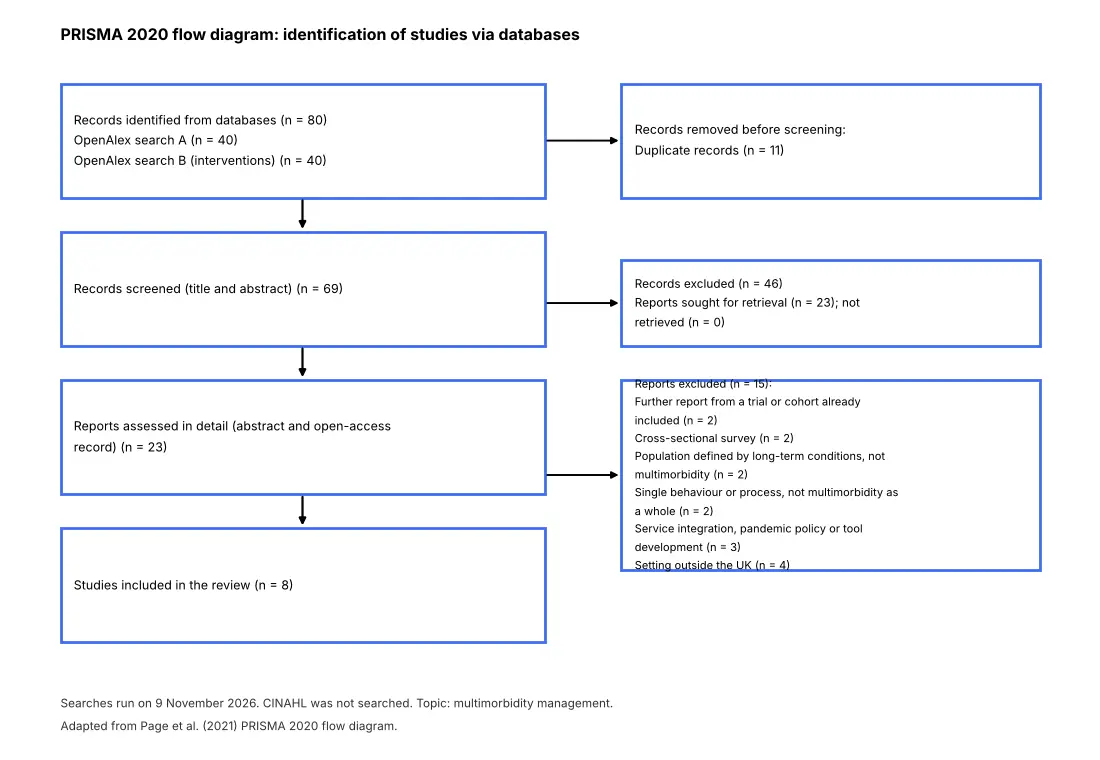
This literature-based dissertation is a structured review of published primary research on multimorbidity management. It aims to be transparent and reproducible, but it is smaller in scope than a full systematic review, which would normally involve several reviewers, many more databases and exhaustive searching (Aveyard, 2023). The review is reported with reference to the PRISMA 2020 statement, which lists the items that should be described and recommends a flow diagram showing how records move through identification, screening and inclusion (Page et al., 2021). Appendix D presents that flow diagram, Appendix A records each search string, Appendix B tabulates the included studies and Appendix C gives a worked critical appraisal. Together, the appendices allow another reader to check each decision and to repeat the process.
The review question was framed using the Population, Exposure and Outcome (PEO) structure, which suits questions about experiences and influencing factors rather than the effects of a treatment. The population was adults with two or more long-term conditions, together with the clinicians who care for them. The exposure was approaches to managing multimorbidity in primary care, and the outcomes were patient and professional experiences and the effects that interventions reported. Structured frameworks help to translate a broad topic into searchable concepts, although the choice of framework affects how sensitive a search is (Methley et al., 2014; Aveyard, 2023). Because the question concerned both experiences and effects, qualitative, mixed-methods and trial designs were all eligible for inclusion.
Two searches were run on 9 November 2026 in OpenAlex, an open index of scholarly works that covers a large and growing proportion of the published literature (Priem et al., 2022). The first search combined the word multimorbidity with the phrase primary care and the word qualitative, to capture experiences. The second combined multimorbidity with the words intervention and trial, to capture effects. Both searches were limited to open-access records published between 2015 and 2026 with at least one author affiliated to a UK institution. Both searches were restricted to journal articles. Combining more than one source is advised because a single database misses relevant studies (Bramer et al., 2017). The exact strings and settings are given in Appendix A.
CINAHL, the main nursing database, could not be accessed, and a planned search of MEDLINE through Europe PMC was not completed because the service refused repeated requests on the day of searching. The second OpenAlex search was therefore used in its place. These gaps mean that some relevant nursing studies may not have been found, a risk that is well recognised when the combination of databases is restricted (Bramer et al., 2017). OpenAlex matches terms anywhere in the text, so many records were not relevant. It also ranks records by relevance, and the two searches matched 3,322 and 5,439 records. Only the first 40 records of the first search and the first 40 of the second, 80 in total, were screened, so the review should be read as a structured sample of the literature and not as a complete search (Aveyard, 2023).
Studies were eligible if they involved adults with two or more long-term conditions, examined an approach to managing multimorbidity as a whole in primary or community care, and reported experiences or the effects of an intervention on patient outcomes. Reports had to be peer-reviewed, written in English, open access and published from 2015 onwards. UK origin was judged from the stated setting and, where the abstract did not name one, from author affiliations. Protocols, reviews, cross-sectional surveys, studies outside the UK, studies of a single behaviour or process and single-condition populations were excluded. From each trial or cohort, one outcome report and one qualitative or process report were kept. Clear criteria applied consistently reduce selection bias and allow the decisions to be audited. The extraction table is presented in Appendix B so that readers can compare studies at a glance (Page et al., 2021; Aveyard, 2023).
All 80 records were exported into a screening log, and 11 duplicates were removed, leaving 69 titles to screen. Titles that clearly described protocols, commentaries, instrument development, epidemiology, a single condition or a non-UK setting were excluded at this stage. That left 23 reports for closer assessment against the criteria. The abstract and open-access record of each of these reports were read, and the reason for every exclusion was recorded. The log lists every record by its identifier, the search in which it appeared and the decision reached, so that each exclusion can be traced. Eight studies met the criteria, and the numbers at each stage reconcile in the flow diagram (Page et al., 2021). Screening was carried out by one reviewer, which is a recognised limitation of student reviews because a second reviewer would normally check each decision (Aveyard, 2023).
Quality was considered using the Critical Appraisal Skills Programme checklists, which ask structured questions about the aims, design, conduct, results and value of a study (CASP, 2024). The qualitative checklist was completed in full for one study, as a worked example in Appendix C, and indicative quality notes for every study are recorded in Appendix B. Those notes are based on the abstract and, for one study, the open full text, so they are judgements of reporting and not a full audit of how the research was conducted. No study was excluded on quality alone, since appraisal was used to weigh the strength of the findings, which is a common approach in nursing reviews (Aveyard, 2023).
Data were extracted into a standard table covering aims, design, sample, setting, methods, findings and limitations. Numerical results were copied as reported and were not recalculated, and extraction was rechecked once against the source records, a step that reduces transcription errors but does not replace independent checking. Findings were grouped into themes by thematic synthesis, with the results of trials reported alongside the qualitative themes because the review combined interview, process and trial evidence (Thomas and Harden, 2008; Braun and Clarke, 2006). The review used published data only and involved no participants, so ethical approval was not required, although the findings of the included studies are reported accurately and with full attribution (Aveyard, 2023).
Findings
Eight UK studies met the inclusion criteria, published between 2015 and 2019. Three were cluster randomised trials. The 3D trial recruited 1,546 patients with multimorbidity from 33 practices in England and Scotland, and compared six-monthly comprehensive reviews that covered dimensions of health, depression and drugs with usual care (Salisbury et al., 2018). The collaborative care trial recruited 387 adults with depression and diabetes or heart disease from 36 practices in north west England, and offered up to eight sessions of low-intensity psychological treatment alongside practice nurses (Coventry et al., 2015). The CARE Plus trial recruited 152 patients aged 30 to 65 from eight practices in deprived areas of Glasgow and offered longer consultations, continuity and self-management support (Mercer et al., 2016).
Two smaller studies tested other approaches. In Norwich, six practices were randomised to a goal-setting intervention or usual care, and 52 adults with two or more long-term conditions at risk of unplanned admission took part, although the response rate was 12% and full data were available for 41 participants (Ford et al., 2019). In Greater Manchester, a trial within a cohort offered telephone health coaching to 504 of 1,306 eligible people with two or more long-term conditions, of whom 41% consented, and more than 80% of those who consented received at least four sessions (Panagioti et al., 2018). A mixed-methods process evaluation of the 3D trial interviewed 11 GPs, 14 nurses, 7 administrators and 38 patients from nine practices (Mann et al., 2019).
The remaining two studies used interviews. Nested in the collaborative care trial, 59 transcripts from 30 professionals, including 12 practice nurses and 7 GPs, and from 29 patients were analysed, with patients sampled to include both those who completed treatment and those who disengaged (Knowles et al., 2015). Baseline interviews with 26 people aged 65 or over with multimorbidity explored threats to safety in primary care and were analysed thematically against a framework drawn from an earlier synthesis (Hays et al., 2017). Two of the eight reports therefore drew on the same trial, because the interviews were nested in it (Coventry et al., 2015).
Effects on quality of life in multimorbidity management
Effects on quality of life were mixed. The 3D approach made no difference to the primary outcome, with an adjusted difference in EQ-5D-5L at 15 months of 0.00 (95% CI -0.02 to 0.02; p=0.93) (Salisbury et al., 2018). CARE Plus, delivered in deprived areas, produced a higher EQ-5D-5L area under the curve over 12 months (p=0.002) and an effect size of 0.33 for one well-being domain, negative well-being, at an incremental cost of £929 per participant and £12,224 per quality-adjusted life year gained (Mercer et al., 2016). Telephone coaching had no effect on patient activation, quality of life, depression or self-care in the intention-to-treat analysis, which the authors attributed mainly to low uptake (Panagioti et al., 2018).
The collaborative care trial reduced depressive symptoms modestly. At four months, scores on the SCL-D13 were 0.23 points lower in the intervention group (95% CI -0.41 to -0.05), an adjusted standardised effect size of 0.30, and these patients rated their self-management and the patient-centredness of their care more highly and were more satisfied, whereas quality of life, disability and social support did not differ significantly (Coventry et al., 2015). Participants had a mean of 6.2 other conditions, and 90% completed the trial. In the goal-setting feasibility trial, participants set one to three goals in areas such as disease management, walking and weight, and the intervention was judged feasible, although a larger trial was needed to test effectiveness (Ford et al., 2019).
Patient and professional experiences of multimorbidity management
The interviews nested in the collaborative care trial described two themes. Under integration, patients and professionals valued collaborative working because it improved the coordination of mental and physical health care and made patients feel that their health was managed more holistically. Under division, both groups preferred some separation between mental and physical health, and patients especially valued a space away from their long-term condition clinic to talk about emotional problems (Knowles et al., 2015). The authors concluded that the model achieved integration at the service level but not at the therapeutic level. In the 3D trial, patients reported more patient-centredness, although this came with extra time and questions about their health concerns (Mann et al., 2019).
Older people with multimorbidity described threats to safety across the whole journey from access to everyday management. Six themes emerged in three domains, and poor communication and uncoordinated care caused many problems and added burden for patients and staff (Hays et al., 2017). Patients’ sense of safety and trust was most threatened when they felt that their needs were ignored or that staff responses were inappropriate or insensitive, and the authors suggested that interventions could help patients to hold realistic expectations of primary care and to communicate their needs more effectively. Professionals’ views were reported mainly in the process evaluation, in which barriers included inadequate skills and training and gaps in planning (Mann et al., 2019).
Implementation of multimorbidity management in practice
The process evaluation of the 3D trial examined how far the approach was delivered. Staff loss, practice size and administrative strategies affected delivery, and practices with whole-team involvement and good fit with usual care implemented the approach better. Only 49% of patients received both planned reviews and 30% were partially reviewed, although more than 90% of components were delivered in completed reviews, and delivery ranged from tick-box to patient-centred (Mann et al., 2019). The authors concluded that implementation problems and aspects of the design of the intervention probably both contributed to the lack of effect on quality of life, which helps to interpret the null result of the main trial (Salisbury et al., 2018).
Delivery was also shaped by who took part. In CARE Plus, 12 of the 76 eligible practices contacted accepted, eight took part, and 67 of 76 patients in each arm completed the 12-month assessment (Mercer et al., 2016). In the collaborative care trial, 90% of participants completed follow-up, with sessions integrated with practice nurses (Coventry et al., 2015). Uptake of coaching was lower, since 41% of those offered telephone coaching consented, and the authors argued that the estimated effect still mattered for a proactive model of care for people in the community (Panagioti et al., 2018). Together these figures show that trials of this kind lose some practices and participants before and during delivery, so the people who experienced the intervention are a subset of those who were eligible.
Patterns across multimorbidity management studies
Three patterns ran through the studies of multimorbidity management. First, integrated approaches were acceptable to patients and professionals, as the valued coordination of mental and physical care showed (Knowles et al., 2015). Second, effects on generic quality of life were modest or absent, as in the 3D trial (Salisbury et al., 2018), but were more promising where an intervention was targeted, as with depression in the collaborative care trial (Coventry et al., 2015). Third, delivery depended on time, training and the involvement of the whole team, which determined how far the intended approach reached patients. Taken together, the patterns suggest that how an approach is delivered may matter as much as what it contains, although they come from only eight reports and are best read as themes to test and not as firm conclusions.
Quality and limits of the multimorbidity management evidence
Several limits qualify these findings. The interviews drew on patients and professionals in the collaborative care trial, so those two reports are not independent (Knowles et al., 2015; Coventry et al., 2015). The interviews were also conducted within a controlled trial, which the authors noted may not represent routine care, and they reported neither respondent validation nor a reflexivity statement, as the worked appraisal in Appendix C shows. The baseline interviews on safety included only 26 older people and reported views at one point in time (Hays et al., 2017). The authors of the interview study also noted that the patients interviewed were older, so their preference for separating mental and physical care may not apply to other age groups.
Other limits concern the trials. The goal-setting study was a feasibility trial with a 12% response rate, so it could not test effectiveness (Ford et al., 2019). The coaching trial reported effects after low uptake, which diluted the intention-to-treat estimate (Panagioti et al., 2018). The 3D trial and its process evaluation are likewise linked, so explanations of the null result come from the same research programme (Mann et al., 2019). Finally, most studies were appraised from their abstracts, so the judgements of quality in Appendix B are indicative and not a full audit of how each study was conducted. These limits do not make the evidence unusable, but they mean that the confidence placed in any single result should be measured.
Wider Discussion
The findings suggest that multimorbidity management is acceptable to patients and professionals but difficult to turn into better measured outcomes. Patients valued coordination and holistic review (Knowles et al., 2015), and the process evaluation found that patients experienced care as more patient-centred (Mann et al., 2019), yet the 3D trial found no difference in quality of life at 15 months (Salisbury et al., 2018). Patient-centredness and measured outcomes may therefore not move together over the period studied, and trials with longer follow-up or outcomes closer to what patients value may be needed. A null result for a generic outcome such as quality of life does not show that patients gained nothing, since experience and safety may improve without a change in that measure.
Targeting appears to matter. The collaborative care trial, which focused on depression within long-term condition care, reduced depressive symptoms (Coventry et al., 2015), and CARE Plus, which concentrated on deprived communities through longer consultations and continuity, improved one well-being domain and EQ-5D-5L over time (Mercer et al., 2016). The broader 3D approach did not improve quality of life, as noted above. These patterns agree with the view that care should reduce the burden of treatment and not add to it (May et al., 2009), and they suggest that extra reviews are unlikely to help unless they address a need that patients recognise. Targeted approaches may also be easier for teams to deliver, because the aim is clear to staff and patients.
For nursing practice, three priorities follow. First, communication and coordination should be treated as safety issues, because poor communication and uncoordinated care threatened safety and trust (Hays et al., 2017). Second, nurses and their teams need protected time and training for reviews, because staff loss, practice size and skills affected how far the intended approach was delivered (Mann et al., 2019). Third, mental health should be discussed in a protected space as well as within long-term condition reviews, because patients valued separation as well as integration (Knowles et al., 2015). A related review examines cardiac rehabilitation, where multimorbidity is also common. Together these priorities are modest, but each can be pursued within existing roles and does not depend on new services.
Several limitations qualify these conclusions. Only OpenAlex was searched, in two searches, and CINAHL was not accessible, so relevant studies may have been missed, a risk that is recognised when few databases are used (Bramer et al., 2017). Eighty records were identified, 69 were screened after duplicates were removed and only the first 40 of each search could be screened. Eligibility was judged by one reviewer, and most appraisal relied on abstracts. Excluding cross-sectional surveys removed UK evidence on how patients experience primary care that would have added breadth, and screening by one reviewer is a recognised limitation of student reviews (Aveyard, 2023). These limits mean that the review describes the direction of the evidence and not its precise size.
Reflection
Writing this review changed how I think about managing several conditions at once. I began with the assumption that a patient-centred, coordinated approach would improve quality of life, and I expected the trials to show it. I had also been using the word management as if it meant one thing, when in these studies it covered longer consultations, goal setting, coaching and collaborative care, each with different aims. The largest trial found no difference, while smaller studies showed gains in depression and well-being, and the interviews showed that patients valued coordination without wanting every concern merged into one consultation. That moved me from asking whether an approach works to asking what it is meant to change and for whom.
The search also taught me how many decisions sit behind a list of included studies. Two searches returned 80 records, and the pool of eligible reports was larger than I could synthesise in one dissertation, so I had to write rules for choosing among them. I excluded cross-sectional surveys, studies of a single behaviour and further reports from trials already included. Each rule was defensible, yet each removed useful evidence, including UK surveys of how patients experience primary care, and I recognise that another reviewer might have chosen differently. Writing the rules down at the start would have saved time, and I will do so in future. Keeping a screening log kept me honest, because it showed which decisions were made on titles and which on abstracts, and it made me less likely to favour studies with attractive results.
Appraisal was the most demanding stage. Completing the CASP checklist in full for the interview study showed me how much a paper can leave unsaid. The study named its ethics approval and described its sampling clearly, yet it gave no reflexivity statement even though the authors were involved in the trial, and it did not describe how interviews were recorded. I also noticed that I trusted large trials more readily than interview studies, and I had to remind myself that size does not remove bias. The exercise also made me more cautious about quoting effect sizes from abstracts, because the full papers may qualify them in ways that an abstract does not.
Looking ahead, I will bring three things to practice. I will ask patients what matters most to them at the start of a review, I will treat poor communication and fragmented care as safety risks, and I will think about the time and burden that each extra check places on patients. I also need to strengthen my skills in combining trial and interview evidence, because I found it hard to weigh a null trial against positive experiences, and I want to learn to search more databases than I could here. Finally, I will remember that a review of this kind describes the direction of the evidence, and that practice also depends on the patient in front of me.
Conclusion
This dissertation set out to review UK evidence on patient and professional experiences of multimorbidity management in primary care and on the effects that interventions report. Eight UK studies, comprising five trials, a mixed-methods process evaluation and two interview studies, showed that integrated and patient-centred approaches were acceptable to many patients and professionals, but that effects on quality of life were mixed and often modest. Patients valued coordination and a holistic review of their health. This matters because multimorbidity is so common that the way nurses and teams organise reviews affects very many patients. These findings are specific to UK primary care and to the studies that the search retrieved.
A large trial of comprehensive reviews and a coaching trial found no improvement in quality of life, whereas collaborative care reduced depressive symptoms and a whole-system intervention in deprived areas improved some measures of well-being and quality of life. Delivery depended on time, training, whole-team involvement and uptake. Patients also wanted space to talk about emotional problems that was separate from their long-term condition clinic, which shows that integration needs to be flexible. The trials suggest that more reviews alone are unlikely to be enough, and that approaches aimed at a clear need are more promising.
For nursing practice, the review supports starting reviews with the patient’s own concerns, treating poor communication and fragmented care as safety risks, protecting time and training for reviews, and discussing mental health in a protected space. The strength of this evidence is limited by the restricted search, single-reviewer screening, overlap between reports from the same trials and reliance on abstracts, so the conclusions are best treated as a well-founded starting point and not as a final answer. Future work should test approaches that reduce the burden of treatment and follow patients for longer than the studies reviewed here.
Reference List
Aveyard, H. (2023) Doing a literature review in health and social care: a practical guide. 5th edn. Open University Press.
Barnett, K. et al. (2012) ‘Epidemiology of multimorbidity and implications for health care, research, and medical education: a cross-sectional study’, The Lancet, 380(9836), pp. 37-43. doi:10.1016/S0140-6736(12)60240-2.
Bramer, W.M. et al. (2017) ‘Optimal database combinations for literature searches in systematic reviews: a prospective exploratory study’, Systematic Reviews, 6, article 245. doi:10.1186/s13643-017-0644-y.
Braun, V. and Clarke, V. (2006) ‘Using thematic analysis in psychology’, Qualitative Research in Psychology, 3(2), pp. 77-101. doi:10.1191/1478088706qp063oa.
CASP (2024) CASP checklists. Oxford: Critical Appraisal Skills Programme. Available at: https://casp-uk.net/casp-checklists/ (Accessed: 9 November 2026).
Cassell, A. et al. (2018) ‘The epidemiology of multimorbidity in primary care: a retrospective cohort study’, British Journal of General Practice, 68(669), pp. e245-e251. doi:10.3399/bjgp18X695465.
Coventry, P. et al. (2015) ‘Integrated primary care for patients with mental and physical multimorbidity: cluster randomised controlled trial of collaborative care for patients with depression comorbid with diabetes or cardiovascular disease’, BMJ, 350, article h638. doi:10.1136/bmj.h638.
Ford, J.A. et al. (2019) ‘Can goal-setting for patients with multimorbidity improve outcomes in primary care? Cluster randomised feasibility trial’, BMJ Open, 9(6), article e025332. doi:10.1136/bmjopen-2018-025332.
Hays, R. et al. (2017) ‘Threats to patient safety in primary care reported by older people with multimorbidity: baseline findings from a longitudinal qualitative study and implications for intervention’, BMC Health Services Research, 17, article 754. doi:10.1186/s12913-017-2727-9.
Kernick, D., Chew-Graham, C.A. and O’Flynn, N. (2017) ‘Clinical assessment and management of multimorbidity: NICE guideline’, British Journal of General Practice, 67(658), pp. 235-236. doi:10.3399/bjgp17X690857.
Kingston, A. et al. (2018) ‘Projections of multi-morbidity in the older population in England to 2035: estimates from the Population Ageing and Care Simulation (PACSim) model’, Age and Ageing, 47(3), pp. 374-380. doi:10.1093/ageing/afx201.
Knowles, S.E. et al. (2015) ‘Managing depression in people with multimorbidity: a qualitative evaluation of an integrated collaborative care model’, BMC Family Practice, 16, article 32. doi:10.1186/s12875-015-0246-5.
Mann, C. et al. (2019) ‘Can implementation failure or intervention failure explain the result of the 3D multimorbidity trial in general practice: mixed-methods process evaluation’, BMJ Open, 9(11), article e031438. doi:10.1136/bmjopen-2019-031438.
May, C., Montori, V.M. and Mair, F.S. (2009) ‘We need minimally disruptive medicine’, BMJ, 339, article b2803. doi:10.1136/bmj.b2803.
Mercer, S.W. et al. (2016) ‘The CARE Plus study: a whole-system intervention to improve quality of life of primary care patients with multimorbidity in areas of high socioeconomic deprivation: exploratory cluster randomised controlled trial and cost-utility analysis’, BMC Medicine, 14, article 88. doi:10.1186/s12916-016-0634-2.
Methley, A.M. et al. (2014) ‘PICO, PICOS and SPIDER: a comparison study of specificity and sensitivity in three search tools for qualitative systematic reviews’, BMC Health Services Research, 14, article 579. doi:10.1186/s12913-014-0579-0.
National Institute for Health and Care Excellence (NICE) (2016) Multimorbidity: clinical assessment and management (NICE guideline NG56). London: NICE. Available at: https://www.nice.org.uk/guidance/ng56 (Accessed: 9 November 2026).
Nursing and Midwifery Council (NMC) (2018) Future nurse: standards of proficiency for registered nurses. London: NMC.
Page, M.J. et al. (2021) ‘The PRISMA 2020 statement: an updated guideline for reporting systematic reviews’, BMJ, 372, article n71. doi:10.1136/bmj.n71.
Panagioti, M. et al. (2018) ‘Is telephone health coaching a useful population health strategy for supporting older people with multimorbidity? An evaluation of reach, effectiveness and cost-effectiveness using a trial within a cohort’, BMC Medicine, 16, article 80. doi:10.1186/s12916-018-1051-5.
Priem, J., Piwowar, H. and Orr, R. (2022) ‘OpenAlex: a fully-open index of scholarly works, authors, venues, institutions, and concepts’, arXiv, 2205.01833. doi:10.48550/arXiv.2205.01833.
Salisbury, C. et al. (2018) ‘Management of multimorbidity using a patient-centred care model: a pragmatic cluster-randomised trial of the 3D approach’, The Lancet, 392(10141), pp. 41-50. doi:10.1016/S0140-6736(18)31308-4.
Thomas, J. and Harden, A. (2008) ‘Methods for the thematic synthesis of qualitative research in systematic reviews’, BMC Medical Research Methodology, 8, article 45. doi:10.1186/1471-2288-8-45.
Appendix A: Search strategy
This appendix records the searches run for the multimorbidity management review so that the process can be repeated and checked.
Two searches on multimorbidity management were run on 9 November 2026 using the OpenAlex works API. The first 40 records of the first search and the first 40 of the second, ranked by relevance, were retrieved and screened by title and abstract.
| Database | Platform | Date run | Search string | Limiters | Hits |
|---|---|---|---|---|---|
| OpenAlex search A | OpenAlex API | 9 November 2026 | search=multimorbidity AND “primary care” AND qualitative | Filter: authorships.countries:GB; is_oa:true; publication_year:2015-2026; type:article. 3,322 matches in total; the first 40 by relevance were screened. | 40 |
| OpenAlex search B (interventions) | OpenAlex API | 9 November 2026 | search=multimorbidity AND intervention AND trial | Filter: authorships.countries:GB; is_oa:true; publication_year:2015-2026; type:article. 5,439 matches in total; the first 40 by relevance were screened. | 40 |
CINAHL could not be accessed and was not searched, so no CINAHL results are reported. A planned MEDLINE search through Europe PMC was attempted on the same day but the service refused repeated requests, so it was not completed for multimorbidity management; search B, which targeted intervention trials, was used instead.
OpenAlex matches search terms in the title, abstract or full text, and the country filter matches any record with at least one author affiliated to a UK institution. UK setting and relevance were therefore checked for each study at the assessment stage. Records identified: 80 (40 + 40); duplicates removed: 11; records screened: 69.
Appendix B: Data extraction table
The table summarises each study included in this multimorbidity management review: its aim, design, sample, methods, key findings, limitations and relevance to multimorbidity management.
| Author / year / country | Aim | Design | Sample and setting | Methods | Key findings | Limitations / quality | Relevance to multimorbidity management |
|---|---|---|---|---|---|---|---|
| Salisbury et al. (2018), UK (England and Scotland) | To test whether a patient-centred approach to multimorbidity management, the 3D approach, improves quality of life compared with usual care. | Pragmatic cluster-randomised trial. | 1,546 patients with multimorbidity from 33 general practices in England and Scotland (797 in the intervention group, 749 in usual care; 16 intervention and 17 usual-care practices). | Six-monthly comprehensive reviews covering dimensions of health, depression and drugs; primary outcome EQ-5D-5L at 15 months. The intervention was a model of multimorbidity management delivered by general practice teams. | Multimorbidity management with the 3D approach did not change quality of life: adjusted difference in EQ-5D-5L 0.00 (95% CI -0.02 to 0.02; p=0.93); 78 patients died. | Indicative (abstract only): numbers as reported; the linked process evaluation (Mann et al., 2019) is also in this multimorbidity management review and helps to explain the null result. | The largest trial of multimorbidity management in primary care in this review. |
| Mann et al. (2019), UK (three areas) | To examine how fully the 3D intervention for multimorbidity management was implemented and to help interpret the trial result. | Mixed-methods process evaluation using cross-trial data, with interviews, focus groups and review observations analysed blind to trial outcomes. | 33 UK general practices; interviews with 11 GPs, 14 nurses, 7 administrators and 38 patients from 9 of 16 sampled practices. | Thematic analysis integrated with quantitative data on context, adoption, reach, maintenance and delivery. Fidelity of multimorbidity management delivery was assessed. | 49% of patients received both reviews and 30% were partially reviewed; over 90% of components were delivered in completed reviews; delivery ranged from tick-box to patient-centred; staff loss, practice size, training and planning gaps affected multimorbidity management; patients reported more patient-centredness at the cost of time. | Indicative (abstract only): the authors judged that implementation and intervention design both contributed to the null result; same trial as Salisbury et al. (2018). The findings concern multimorbidity management in one trial. | Explains how multimorbidity management was delivered in practice and why it may not have improved quality of life. |
| Coventry et al. (2015), UK (north west England) | To test whether integrated collaborative care improves outcomes for people with depression and diabetes or heart disease, a targeted form of multimorbidity management. | Cluster randomised controlled trial. | 387 adults with diabetes, heart disease or both and depressive symptoms (PHQ-9 of 10 or more) from 36 general practices; mean of 6.2 other conditions; 90% completed. | Up to eight sessions of low-intensity psychological treatment from wellbeing practitioners integrated with practice nurses, plus medication management; primary outcome SCL-D13 at four months. Collaborative care was the form of multimorbidity management tested. | In multimorbidity management for depression, SCL-D13 scores 0.23 points lower (95% CI -0.41 to -0.05; effect size 0.30); better self-management, more patient-centred care and more satisfaction; no significant differences in quality of life, disability or social support. | Indicative (abstract only): modest effect, smaller than prespecified; deprived population with high multimorbidity; outcomes at four months only. Findings concern multimorbidity management for depression only. | Shows what targeted multimorbidity management can achieve for depression within long-term condition care. |
| Knowles et al. (2015), UK (north west England) | To explore patient and professional views of an integrated collaborative care model for depression in multimorbidity management. | Qualitative interview study nested in a trial, with analysis described as constant comparative and as thematic. | 30 professionals (11 psychological well-being practitioners, 12 practice nurses, 7 GPs) and 31 patients (15 completers, 16 who disengaged); 59 transcripts analysed. | Semi-structured interviews with separate topic guides; two authors read all transcripts; analysis blind to trial outcomes; consensus meetings. The interviews explored multimorbidity management from both perspectives. | In multimorbidity management, two themes: integration (better coordination and more holistic management) and division (a preference for a separate space for emotional problems); integration at the service level but not at the therapeutic level. | CASP qualitative appraisal in Appendix C (open full text). No reflexivity statement or respondent validation; recording and transcription not described; two transcripts lost; conducted within a trial. Findings concern multimorbidity management in one trial population. | Patient and professional experience of multimorbidity management that joins mental and physical health care. |
| Mercer et al. (2016), UK (Glasgow) | To evaluate CARE Plus, a whole-system approach to multimorbidity management, in patients in areas of high deprivation. | Phase 2 exploratory cluster randomised controlled trial with cost-utility analysis. | 152 patients aged 30 to 65 with multimorbidity from eight general practices in Glasgow; 67 of 76 in each arm completed the 12-month assessment. | Structured longer consultations, relationship continuity, practitioner support and self-management support; outcomes EQ-5D-5L and well-being (W-BQ12). The approach combined several elements of multimorbidity management in one package. | In multimorbidity management in deprived areas, negative well-being improved (effect size 0.33; 95% CI 0.11 to 0.55; p=0.0036); EQ-5D-5L area under the curve higher (p=0.002); incremental cost £929 per participant; 0.076 QALYs gained; £12,224 per QALY. | Indicative (abstract only): exploratory trial in eight practices; positive well-being, energy and the combined score did not change significantly. Findings concern multimorbidity management in deprived areas. | Suggests that whole-system multimorbidity management may protect quality of life in deprived areas. |
| Hays et al. (2017), UK (setting not named; all authors Manchester-affiliated) | To describe threats to patient safety in primary care reported by older people with multimorbidity and to inform interventions. | Baseline interviews in a longitudinal qualitative study, analysed thematically against a framework from an earlier synthesis. | 26 people aged 65 or over with multimorbidity. | Semi-structured interviews on health and healthcare; thematic analysis. Interviews covered experiences of multimorbidity management in primary care. | In multimorbidity management, six themes in three domains covering the patient journey from access to everyday management; poor communication and uncoordinated care caused many problems; safety and trust were threatened when needs were ignored or responses seemed insensitive. | Indicative (abstract only): UK setting inferred from author affiliations; small sample; views at one point in time. Findings concern multimorbidity management as experienced by older people. | Patient experience of safety within multimorbidity management in primary care. |
| Ford et al. (2019), UK (Norwich) | To assess the feasibility of goal setting for patients with multimorbidity in general practice before a definitive trial of this form of multimorbidity management. | Cluster randomised feasibility trial with recorded consultations and focus groups. | 52 adults with two or more long-term conditions at risk of unplanned admission from six practices in Norwich; response rate 12%; full data for 41; mean age 80.4 years in the goal-setting group. | Trained GPs discussed goals at an initial consultation and at a follow-up about six months later; outcomes EQ-5D-5L, capability, patient assessment of chronic illness care and healthcare use. Goal setting was the form of multimorbidity management tested. | In goal setting for multimorbidity management, participants set one to three goals (disease management, walking, social activities, weight); the approach was acceptable and felt patient-centred; participants wanted frequent follow-up and stressed GP training; judged feasible. | Indicative (abstract only): feasibility trial that did not test effectiveness; low response rate; older, at-risk sample. Findings concern multimorbidity management in at-risk patients. | Early evidence on goal setting as part of multimorbidity management. |
| Panagioti et al. (2018), UK (Greater Manchester) | To evaluate the reach, effectiveness and cost-effectiveness of telephone health coaching for older people with multimorbidity. | Trial within a cohort with a patient-centred consent model; analysis by offer and by uptake. | 4,377 people recruited to the cohort; 1,306 eligible (two or more long-term conditions and moderate patient activation); 504 selected for coaching, of whom 41% consented. | Regular supportive telephone calls from a health professional; over 80% of those who consented received at least four sessions; outcomes patient activation, quality of life, depression, self-care, service use and costs. Coaching was the form of multimorbidity management tested. | In multimorbidity management at population level, no effect on patient activation, quality of life, depression or self-care in the intention-to-treat analysis; fewer emergency visits, more planned care and higher costs; about £8,049 per QALY, with a 70 to 79% probability of cost-effectiveness. | Indicative (abstract only): low uptake diluted the estimate; cohort participants only; costs as reported. Findings concern multimorbidity management at population level. | Tests a proactive, population-level form of multimorbidity management. |
Appendix C: Critical appraisal checklist
CASP qualitative studies checklist (CASP, 2024), completed for Knowles et al. (2015), a study included in this multimorbidity management review. Answers: Yes, No or Can’t tell, each with a short justification.
| # | Question | Answer | Justification |
|---|---|---|---|
| Section A: Are the results valid? | |||
| 1 | Was there a clear statement of the aims of the research? | Yes | The aim is stated clearly: to evaluate patient and professional views of an integrated collaborative care model for depression in multimorbidity, including how acceptable it was and where integration worked. |
| 2 | Is a qualitative methodology appropriate? | Yes | Qualitative methods suit a question about the acceptability and experience of multimorbidity management, and the authors justify them by the need to understand how a model that joins depression care to long-term condition care works for patients and professionals. |
| 3 | Was the research design appropriate to address the aims of the research? | Can’t tell | Semi-structured interviews suit the aims, but the analysis is described as constant comparative in the methods and as thematic in the abstract, so the approach to multimorbidity management is not labelled consistently. |
| 4 | Was the recruitment strategy appropriate to the aims of the research? | Yes | All professionals in the intervention arm were approached, and patients were purposively sampled to include completers and those who disengaged, which suits a question about experience of multimorbidity management; 15 of 17 practices were represented. |
| 5 | Was the data collected in a way that addressed the research issue? | Can’t tell | Separate topic guides, revised during fieldwork, were used for patients and professionals, but the paper does not describe recording or transcription, and two transcripts were lost to a recording error. |
| 6 | Has the relationship between researcher and participants been adequately considered? | No | There is no reflexivity statement, although the corresponding author was the principal investigator and the authors were involved in the trial that tested this form of multimorbidity management. |
| Section B: What are the results? | |||
| 7 | Have ethical issues been taken into consideration? | Yes | Ethical approval from a National Research Ethics Service committee in the north west is reported with its reference number. |
| 8 | Was the data analysis sufficiently rigorous? | Yes | Two authors read all transcripts of this multimorbidity management study, themes were developed through consensus meetings blind to trial outcomes, and disconfirming comments were sought, although respondent validation is not reported. |
| 9 | Is there a clear statement of findings? | Yes | Findings are presented as two themes with many labelled quotations from patients and professionals, and the two groups’ accounts are compared. |
| Section C: Will the results help locally? | |||
| 10 | How valuable is the research? | Yes | The study adds to knowledge of multimorbidity management by showing integration at the service level but not the therapeutic level, and the authors state limits such as the trial setting and short-term outcomes. |
Appendix D: PRISMA flow diagram
This dissertation is a worked example that shows the structure and standard of a 5,000-word literature-based Independent Project. It is provided for learning and is not to be submitted as a student’s own work.