

“To Whom It May Concern” – Key Takeaways
The phrase “To Whom It May Concern” is a traditional greeting used in formal written communications when the recipient’s name is unknown. Although once standard in business and professional writing, modern etiquette increasingly favors personalized greetings when possible. Below is a clear breakdown of its meaning, usage, and alternatives:
- Definition & Purpose:
- Meaning: A formal salutation used at the beginning of a letter or email when the writer does not know the specific name or role of the intended reader.
- Purpose: Signals professionalism and respect in correspondence where recipient details are unavailable.
- When It’s Appropriate:
- Best used in formal letters, reference letters, official requests, and cover letters when the contact person’s name or title isn’t easily identified.
- Common in communications sent to organizations, departments, or committees rather than individual people.
- Common Contexts of Use:
- Business correspondence addressed to departments (e.g., HR or Admissions).
- Letters of recommendation or reference.
- Official requests for information, verification, or records.
- Modern Alternatives:
- When possible, personalized greetings are preferred for better engagement and professionalism:
- “Dear Hiring Manager”
- “Dear [Department Name]”
- “Dear [First and Last Name]”
- These alternatives show effort and can strengthen the tone of the message.
- Structuring the Rest of the Letter:
- After the salutation, the letter should introduce the purpose clearly, provide relevant details concisely, and close with a professional sign‑off (e.g., Sincerely, Best regards).
- Etiquette Tips:
- Avoid overly generic or outdated phrases when a specific contact can be found.
- Research company websites, LinkedIn, or job postings to find a name or appropriate role before using a generic greeting.
In business and professional communication, personalizing your greeting is generally preferred. While “To Whom It May Concern” can still be appropriate in specific contexts, making an effort to find the recipient’s name can enhance the professionalism and effectiveness of your communication.
What a “To Whom It May Concern” Letter Is and How to Use It Properly
Definition – What Is a To Whom It May Concern Letter?
- Formal salutation for unknown recipients
- A To Whom It May Concern letter is a formal type of correspondence used when you do not know the name of the person you are addressing.
- The salutation opens the letter in a professional way, signaling respect and formality, and is usually followed by a colon (:) rather than a comma.
- This letter can be used for various purposes, including recommendation letters, letters of interest, or inquiries to a prospect.
- Structure and conventions
- When using this greeting, you should capitalize the first letter of each word in the phrase: To Whom It May Concern.
- Always use a colon after the salutation to maintain proper punctuation and formal style. Example: To Whom It May Concern:
- Avoid using a comma here, as it is less formal and considered old-fashioned in professional writing.
- Professional tone
- This type of correspondence is neutral and safe but can appear impersonal if overused.
- While it’s widely recognized, some professionals consider it slightly old-fashioned, especially in modern job applications or networking letters.
- It is important to personalize the rest of the letter wherever possible, even if the greeting must remain generic.
When to Use a To Whom It May Concern Letter
- When the recipient’s name is unknown
- If you cannot find the name of a specific person to address, using this salutation is acceptable.
- This is common when reaching out to a company via email or traditional mail and the contact information is limited.
- Situations where it is appropriate
- Recommendation letters: If a former employer or teacher is writing a letter on your behalf, and the recipient is unknown, this greeting is a safe choice.
- Letters of interest: When you are submitting a cover letter or a letter expressing interest in a company or organization without a listed hiring manager.
- General inquiries: Writing to a prospect or a company’s department when you have no access to a specific person.
- Situations to avoid
- If you can identify the hiring manager or decision-maker, it is always a better option to address the letter to them directly.
- For LinkedIn networking or emails, finding the name of a person is easier and makes your message more personalized.
- Using a generic salutation in cases where personalization is possible may reduce the impact of your letter.
- Additional practical tips
- Always capitalize the first letter of each word in the salutation.
- Follow the greeting with a colon, not a comma, for proper punctuation.
- Start your first paragraph by introducing yourself and clearly stating why you are writing. This ensures your letter beginning is engaging even without a personalized name.
Alternatives and Best Practices for Your Cover Letter Beginning
- Why personalization matters
- Even if the To Whom It May Concern salutation is acceptable, personalizing your cover letter can improve the impression you make.
- Addressing a specific person shows that you’ve done your research and increases the likelihood your letter will be read carefully.
- Alternatives to consider
- Dear [Hiring Manager/Recruitment Team]
- If the name of the person is unknown but you know their title or department, this is a more targeted option.
- Example: Dear Hiring Manager:
- Using a title keeps your letter professional while still providing a degree of personalization.
- Dear [Specific Department/Team]
- For larger organizations, addressing a department or team is preferable to a generic salutation.
- Example: Dear Marketing Team:
- Finding the name online
- Use LinkedIn, company websites, or call the company to discover the name of a specific person.
- Even a small effort to find the right contact allows you to capitalize the first letter of their name and tailor the letter beginning.
- Dear [Hiring Manager/Recruitment Team]
- Best practices for using the generic salutation
- Always capitalize the first letter of each word in To Whom It May Concern.
- Use a colon instead of a comma after the salutation.
- Avoid overusing this greeting in modern professional writing; consider it a last resort when no other options are available.
- Keep the rest of your letter highly personalized and clear, demonstrating you know your audience even if you don’t know their name.
- Make sure your cover letter or recommendation letter includes proper contact information at the top so the recipient can respond efficiently.
- When writing to a prospect, ensure your purpose is clear from the first paragraph to maintain attention.
- Punctuation and style tips
- In addition to capitalizing each word, avoid using slang, contractions, or overly casual phrases.
- Maintain a professional tone throughout the letter, even if the salutation is neutral.
- When writing a letter with this greeting, make your sentences concise, logical, and well-organized.
- Summary of best practices
- Always use proper capitalization: To Whom It May Concern.
- Always use a colon after the greeting.
- Personalize the content of your letter wherever possible.
- Use this greeting mainly for recommendation letters, letters of interest, or situations where the name of the person is truly unknown.
- Consider modern alternatives for cover letters to show initiative and research skills.
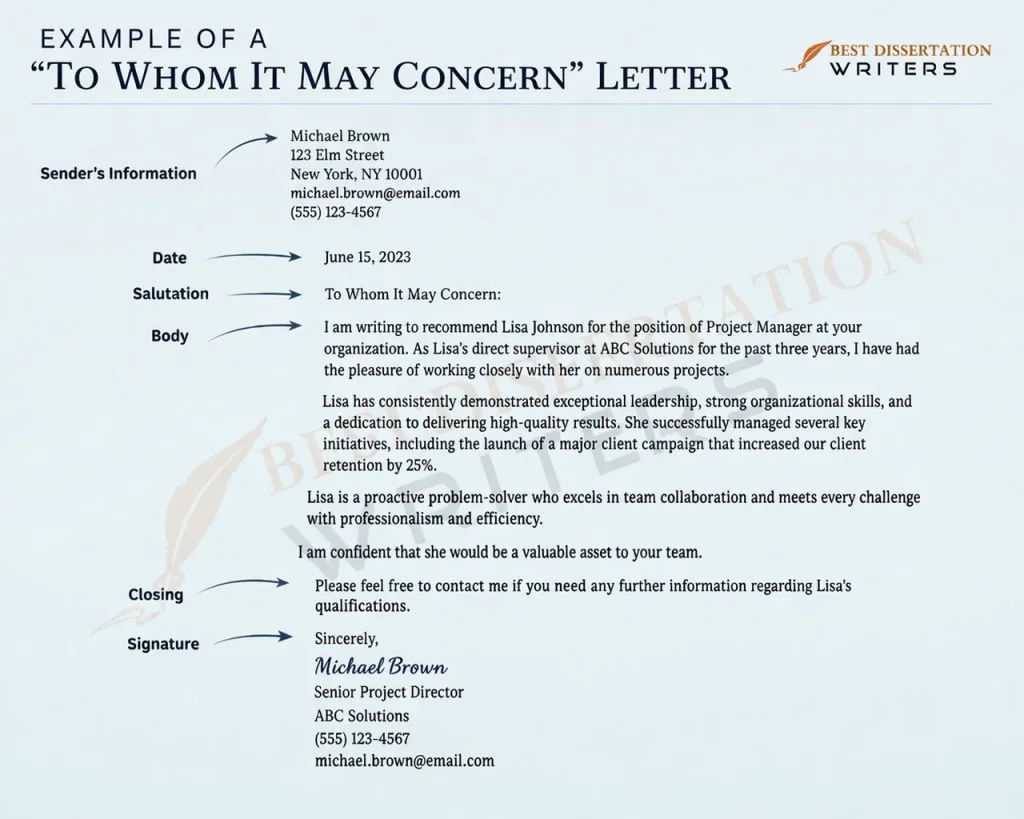
123 Main Street
City, State, ZIP Code
Email: jane.smith@email.com
Phone: (123) 456-7890
Date: March 30, 2026
To Whom It May Concern:
I am writing to recommend John Doe for a position within your organization. I had the pleasure of working with John for three years at XYZ Company, where he consistently demonstrated exceptional professionalism, dedication, and skill in his role as Marketing Coordinator.
During his tenure, John led multiple projects that significantly increased our outreach and engagement metrics. His ability to analyze data, develop strategic campaigns, and manage cross-functional teams has proven invaluable to our organization. Beyond his technical expertise, John is an excellent communicator and collaborator, always willing to support colleagues and share his knowledge.
I am confident that John would be a tremendous asset to any team. Please feel free to contact me at (123) 456-7890 or jane.smith@email.com if you require additional information regarding his qualifications.
8-Step Guide on How to Write a To Whom It May Concern Letter
Writing a To Whom It May Concern letter can be tricky if you’re unsure how to balance professionalism with personalization. This 8-step guide breaks down the process so you can use “to whom it may concern” properly, maintain a respectful tone, and make your letter stand out, whether it’s a cover letter, letter of reference, or other professional correspondence.
Step 1: Determine if “To Whom It May Concern” Is Appropriate
- Assess the situation before using a generic salutation
- A may concern letter is traditionally used when you don’t know the person to address.
- Consider who the letter is going to: is it a recruiter, talent acquisition contact, marketing manager, or another professional? If you can find a specific contact through the company website, LinkedIn, or job boards, it’s better to address the letter to the right person.
- When to use “to whom it may concern”
- Acceptable for letters of reference, formal inquiries, or situations where you’re writing to an unknown addressee.
- It is the safest option when the person to address cannot be identified after reasonable effort.
- Avoid using it when you know the name, the job title, or the department. Using the wrong generic salutation can look unprofessional or impersonal.
- Why it matters
- Using a generic salutation when you know the name to address can make the letter appear old-fashioned and stuffy.
- Always weigh whether personalization is possible; whenever possible, find the right name to make your correspondence more engaging.
Step 2: Choose the Right Format
- Select a formal business format
- Use standard professional formatting for email or letter: block format is widely accepted.
- Include your contact details at the top if submitting a letter of reference or cover letter. This ensures the recipient knows how to reach you.
- Add the recipient’s details if known
- Even if you use “to whom it may concern”, include the company name and address to make it clear this is a professional correspondence.
- Example layout: [Your Full Name]
[Your Contact Details]
[Date]
To Whom It May Concern:
[Company Name]
[Company Address]
- Consistency in style
- Maintain a respectful tone and formal business style throughout.
- Proper spacing, clear font, and readable margins ensure your letter doesn’t look unprofessional.
Step 3: Start With the Greeting
- How to properly use the salutation
- Always capitalize the first letter of each word: To Whom It May Concern.
- Follow it with a colon for formal correspondence instead of a comma. Example: To Whom It May Concern:
- Using a colon emphasizes formality and is the accepted standard for professional networking letters and formal business documents.
- Consider alternatives if possible
- If you know the name of the right person, address your letter as: Dear [Full Name]:
- You may also consider using a title like Marketing Manager or Talent Acquisition if the person’s name is unknown.
- This avoids the impersonal feeling that can come with generic salutations.
- Avoid common mistakes
- Do not use “to whom it may concern” with a comma after the greeting—this is considered outdated.
- Do not leave the greeting informal; a proper salutation sets the tone for the rest of the letter.
Need Help With Your Dissertation?
Get professional academic support from Best Dissertation Writers . Our expert team is ready to help you with high-quality dissertation writing services tailored to your academic goals.
Get Dissertation HelpStep 4: Introduce Yourself
- State your purpose clearly
- After the greeting, your letter beginning should immediately explain who you are and why you’re writing.
- Examples include:
- “My name is Jane Smith, and I am submitting this cover letter for the position of Marketing Coordinator.”
- “I am writing this letter of reference for John Doe, who has applied to your company.”
- Include relevant credentials or affiliations
- Mention your current role, job title, or professional connection to the individual if writing a recommendation letter.
- This ensures that your letter establishes credibility early and captures the recipient’s attention.
- Keep it concise and professional
- Avoid long introductions; make the letter clear and engaging from the start.
- Even if you’re using a salutation, the rest of your letter should feel personal and targeted.
8-Step Guide to Writing a “To Whom It May Concern” Letter
Step 5: Clearly State the Reason for Writing
- Explain the purpose of your letter
- Whether applying for a job, submitting a letter of reference, or making an inquiry, state the objective clearly.
- Use straightforward language to avoid confusion:
- Example: “I am writing to recommend John Doe for the position of Marketing Manager at your company.”
- Address key points
- Highlight details of the hiring manager or team if known, even if the greeting is generic.
- Emphasize the reason for writing in the first paragraph to make your purpose immediately apparent.
- Maintain formal business tone
- Avoid casual language; ensure that your letter reads professional and polished.
- The clarity of purpose prevents your letter from appearing impersonal or generic.
Step 6: Provide Supporting Details
- Include evidence or examples
- In a cover letter, discuss your relevant skills, achievements, and experience.
- In a letter of reference, provide examples of the candidate’s performance, projects, or strengths.
- Use bullet points if needed
- For clarity and readability, consider listing key points:
- Project leadership experience
- Relevant certifications
- Specific results or metrics achieved
- For clarity and readability, consider listing key points:
- Keep details relevant
- Avoid unnecessary information; focus on what supports the main message of the letter.
- This makes the letter engaging even if you’re using a salutation that is generic.
- Maintain a professional tone
- Highlight achievements or qualifications respectfully.
- Using this salutation does not mean the content should be impersonal.
Step 7: Close the Letter Professionally
- Select a formal closing
- Common closings include: Sincerely, Best regards, or Respectfully.
- Always include your full name and, if applicable, your title or affiliation.
- Optional additional details
- Include your contact details again to make it easy for the recipient to respond.
- Example: Sincerely,
Jane Smith
[Email] | [Phone Number]
- Maintain consistency
- Ensure the closing matches the formal tone set by your letter beginning and greeting.
Need Help With Your Dissertation?
Get professional academic support from Best Dissertation Writers . Our expert team is ready to help you with high-quality dissertation writing services tailored to your academic goals.
Get Dissertation HelpStep 8: Proofread and Edit
- Check grammar, punctuation, and capitalization
- Verify that the salutation To Whom It May Concern is capitalized correctly.
- Ensure you use a colon instead of a comma after the greeting.
- Ensure clarity and flow
- Make sure each paragraph supports your purpose.
- Remove redundant phrases to keep the letter concise.
- Verify personalization where possible
- Even with a generic salutation, check that the content does not lack personalization.
- If you discovered a contact name or specific department during research, consider updating the greeting.
- Final review
- Confirm contact details are accurate.
- Make sure the letter does not appear impersonal, old-fashioned and stuffy, or rushed.
- A polished final version ensures your letter represents you professionally in professional networking, cover letter submissions, or letters of reference.