

Barriers to and Facilitators of Uptake and Completion of Pulmonary Rehabilitation in Adults with COPD: A Literature Review
 By Dr. Robertson Prime, Research Fellow
This dissertation is a worked example that shows the structure and standard of a 5,000-word literature-based Independent Project. It is provided for learning and is not to be submitted as a student’s own work.
Abstract
Background: Chronic obstructive pulmonary disease (COPD) is common and progressive. Pulmonary rehabilitation (PR) improves breathlessness, fatigue and quality of life, but many eligible adults are not referred, do not take up the offer or do not complete the programme.
Aim: To critically review UK evidence on the factors affecting referral to, uptake of and completion of pulmonary rehabilitation among adults with COPD.
Methods: A structured literature review using the Population, Exposure and Outcome framework. OpenAlex was searched twice on 9 November 2026, because CINAHL could not be accessed and a planned MEDLINE search was not completed. The first 40 records of each search were screened: 80 records were identified, 65 screened after duplicates were removed and 9 UK studies included. Quality was considered using Critical Appraisal Skills Programme questions, and findings were combined by thematic synthesis.
Findings: The included studies (n = 9) comprised three qualitative, four mixed-methods and two cross-sectional studies, with between 19 and 82,696 participants. Referral was shaped by practitioner knowledge, respiratory qualifications, consultation time, feedback from providers and patient characteristics, including deprivation, sex and smoking status; 16% of one large cohort had a recorded referral. Uptake was influenced by patients’ understanding of pulmonary rehabilitation, anxiety about groups, practical access and psychological flexibility. Completion, at 66% in a national audit, was lower with deprivation, higher symptom burden, frailty and rolling programmes, and higher with supportive staff and group relationships.
Conclusions and implications for practice: Referral, uptake and completion are shaped by knowledge, communication, access and circumstance, and not by patient motivation alone. Nurses can strengthen the pathway through training for referrers, structured conversations that check understanding, decision support and flexible programmes. The evidence is limited by the restricted search, single-reviewer screening and reliance on abstracts.
Keywords: pulmonary rehabilitation; COPD; referral; uptake; completion; adult nursing; literature review.
Brief at a glance
- Framework
- PEO
- Design
- Literature review (PEO)
- Studies included
- 9
- Field
- Adult Nursing
Introduction
Chronic obstructive pulmonary disease (COPD) is a common, progressive long-term condition that limits airflow and causes breathlessness, cough and a gradual loss of capacity for everyday activity. Among adults in England aged 40 years and over, validated diagnoses were recorded for 4.9% in 2019, and the figure rose to 6.7% when potentially undiagnosed cases were included (Stone et al., 2023). Pulmonary rehabilitation (PR), a structured programme of supervised exercise and education, is among the most effective non-drug treatments available, improving breathlessness, fatigue and quality of life (McCarthy et al., 2015; Spruit et al., 2013). Because chronic breathlessness is the symptom that most often brings people to services, nurses in primary, community and hospital settings are well placed to recognise who might benefit and to open the conversation about referral. Understanding why some people are never referred, and why others stop attending, is therefore an important question for the profession.
National guidance recommends that pulmonary rehabilitation is offered to people with COPD who view themselves as functionally disabled by breathlessness, generally those scoring 3 or above on the Medical Research Council dyspnoea scale, as set out in the NICE COPD guideline (NICE, 2019). The British Thoracic Society has set out the core components of a good programme (Man et al., 2023), but a programme of high quality benefits nobody if eligible people are not referred, do not take up the offer or leave before completing it. For nurses, these are professional concerns, because registered nurses are expected to promote health, prevent ill health and coordinate care (NMC, 2018). This dissertation reviews UK evidence on the factors that influence referral to, uptake of and completion of pulmonary rehabilitation among adults with COPD, appraises the quality of that evidence and considers what it means for nursing practice.
Background and Justification
COPD is a long-term lung condition characterised by persistent respiratory symptoms and airflow limitation, and it is diagnosed and managed in the NHS according to NICE guidance (NICE, 2019). Its recorded prevalence has risen steadily. A study of 12,745,793 people in English primary and secondary care records, followed across 20 years, found that estimates of prevalence increased every year from 2000 to 2019, and that the choice of case definition made a large difference to the figures (Stone et al., 2023). The burden therefore falls on a growing number of people, many of whom live with symptoms for years before they receive specialist input. Nursing staff in general practice, community teams and acute wards see this population daily, so the way in which they identify need and arrange treatment shapes whether benefit is realised. Early identification and prompt referral are therefore central to good COPD care.
Pulmonary rehabilitation is defined as a comprehensive intervention that begins with a thorough assessment and continues with therapies tailored to the person, including exercise training, education and behaviour change, designed to improve the physical and psychological condition of people with chronic respiratory disease (Spruit et al., 2013). A Cochrane review of 65 randomised controlled trials involving 3,822 participants found that PR improved dyspnoea, fatigue, emotional function and mastery, with moderately large effects. The six-minute walk distance improved by a mean of 43.93 metres, and the total score on the St George’s Respiratory Questionnaire improved by 6.89 points (McCarthy et al., 2015). The review authors noted, however, that many trials had unclear allocation concealment and high attrition, which lowers confidence in the size of the effect.
In the UK, the British Thoracic Society clinical statement describes the core components of a pulmonary rehabilitation programme as an initial face-to-face assessment by a trained professional, including a validated exercise test to individualise the prescription, endurance and resistance training that is progressed and regularly supervised, and a structured education programme delivered by a multidisciplinary team (Man et al., 2023). Outcomes should be measured before and after the programme, and services are encouraged to take part in audit, external peer review and accreditation. NICE advises that PR should be offered to people with COPD who view themselves as functionally disabled by their condition (NICE, 2019). These standards matter for this review because features of the programme, such as how soon after referral an assessment takes place, may themselves influence who starts and who finishes. Where they are not followed, a service may be harder to start and complete.
Evidence of benefit has not translated into universal access. Early et al. (2024) report that 31% of patients who are referred to PR do not take up their appointment. The reasons for this gap are complex and involve patients, practitioners and services. A systematic review of interventions to increase referral and uptake searched eight databases up to the start of 2018, screened 5,328 references and included 14 studies. Four reported statistically significant referral improvements ranging from 3.5% to 36%, and two reported uptake increases of 18% to 21.5%, although reporting was often limited and the designs were too varied for meta-analysis (Early et al., 2018). A later review of 30 studies similarly found that designs were varied and the quality generally low (Watson et al., 2023).
The Nursing and Midwifery Council standards of proficiency require registered nurses to promote health and prevent ill health (Platform 2) and to coordinate care (Platform 7), and both platforms apply directly to pulmonary rehabilitation (NMC, 2018). Practice nurses, respiratory specialist nurses and ward nurses identify eligible patients, discuss the offer, record referrals and follow up non-attendance. Interventions aimed at improving referral and uptake reflect this shared responsibility: of the 30 studies in the most recent review, 13 targeted patients, 14 targeted healthcare professionals and 3 targeted both (Watson et al., 2023). Questions about how nurses sustain access to routine services under pressure are also explored in work on nurses during covid-19, which provides a useful backdrop to this review.
The two systematic reviews described above centred on interventions designed to change practice (Early et al., 2018; Watson et al., 2023). Before such interventions can be chosen sensibly, it helps to know which factors, observed in routine UK care, shape each stage of the pathway from referral to completion. Understanding those factors also allows nurses to judge which barriers sit within their own control, such as the quality of the conversation about pulmonary rehabilitation, and which lie with services and systems. This review therefore considers referral, uptake and completion together, using a framework that separates the people involved from the exposures that affect them and the outcomes of interest (Aveyard, 2023). It draws on a defined body of UK primary research, so that the conclusions can be related directly to NHS practice and to the standards that guide it.
Title, Aim and Objectives
What factors influence referral to, uptake of and completion of pulmonary rehabilitation among adults with chronic obstructive pulmonary disease?
Title explained
The title names barriers and facilitators, the stages of uptake and completion, the population of adults with COPD, and the literature review design that structures the whole work.
Aim
To critically review UK evidence on factors affecting referral to, uptake of and completion of pulmonary rehabilitation among adults with COPD.
Objectives
- To identify and critically appraise published UK research on barriers to and facilitators of PR.
- To synthesise the main factors affecting referral, uptake and completion.
- To make evidence-based recommendations for UK nursing practice.
Methodology
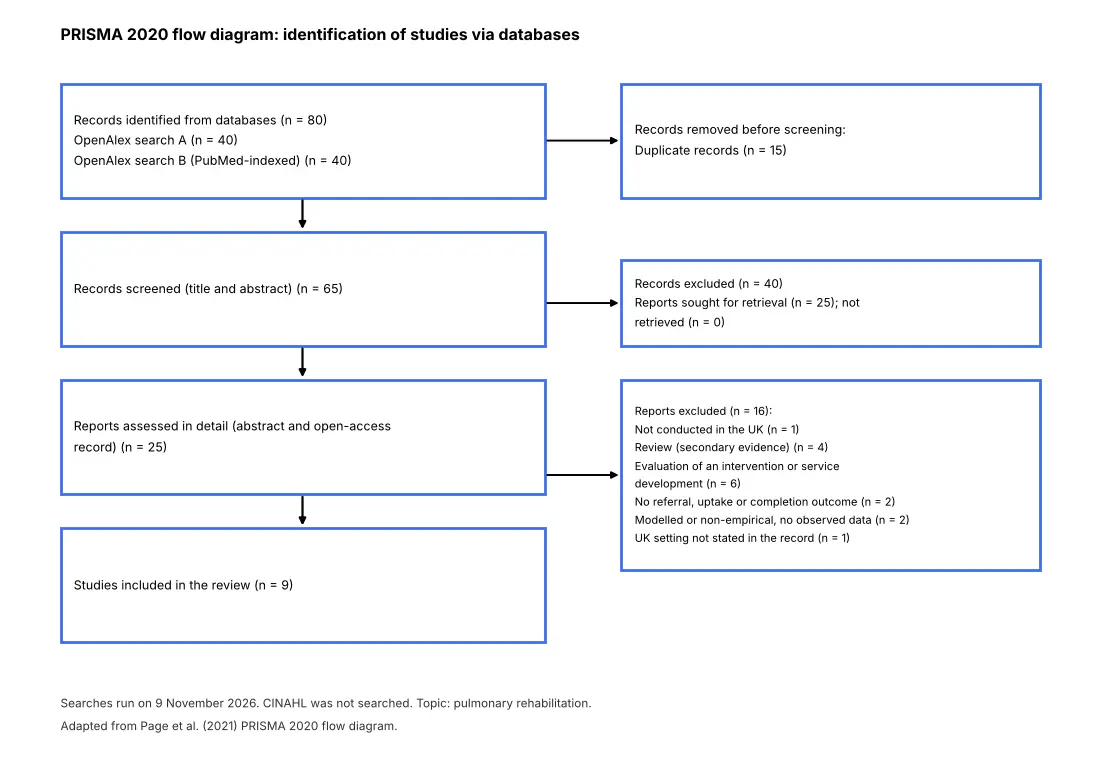
This literature-based dissertation is a structured literature review of published primary research. It aims to be transparent and reproducible, but it is smaller in scope than a full systematic review, which would normally involve several reviewers, many more databases and exhaustive searching (Aveyard, 2023). The review is reported with reference to the PRISMA 2020 statement, which sets out the items that should be described and recommends a flow diagram showing how records move through identification, screening and inclusion (Page et al., 2021). Appendix D presents that flow diagram, Appendix A records every search string, Appendix B tabulates the included studies and Appendix C gives a worked critical appraisal. Together, the appendices allow another reader to check each decision and to repeat the process.
The review question was framed using the Population, Exposure and Outcome (PEO) structure, which suits questions about factors rather than the effects of a treatment. The population was adults with COPD, together with the practitioners who refer them. The exposures were patient, practitioner, service and system factors. The outcomes were referral, uptake and completion of pulmonary rehabilitation. Practitioners were included because referral decisions are made by clinicians as well as by patients. Structured frameworks help to translate a broad topic into searchable concepts, although the choice of framework affects how sensitive a search is (Methley et al., 2014; Aveyard, 2023). Because the question concerned factors rather than interventions, no single study design was required, and qualitative, quantitative and mixed-methods research was eligible for inclusion.
Two searches were run on 9 November 2026 in OpenAlex, an open index of scholarly works that covers a large and growing proportion of the published literature (Priem et al., 2022). The first search combined the phrase pulmonary rehabilitation with uptake and barriers. The second combined the phrase with referral and completion and was restricted to records carrying a PubMed identifier, which is a practical way of capturing journal articles that are indexed in biomedical databases. Both searches were limited to open-access records published between 2015 and 2026 with at least one author affiliated to a UK institution. Combining more than one source is advised because a single database misses relevant studies (Bramer et al., 2017). The exact strings and settings are given in Appendix A.
CINAHL, the main nursing database, could not be accessed, and a planned search of MEDLINE through Europe PMC was not completed because the service refused repeated requests on the day of searching. The second OpenAlex search was therefore used in its place. These gaps mean that some relevant nursing studies may not have been found, a risk that is well recognised when the combination of databases is restricted (Bramer et al., 2017). OpenAlex matches terms anywhere in the text, so many records were not relevant. It also ranks records by relevance, and the two searches matched 398 and 627 records. Only the first 40 records of each search, 80 in total, were screened, so the review should be read as a structured sample of the literature and not as a complete search (Aveyard, 2023).
Studies were eligible if they reported primary research on adults with COPD in the UK and examined factors associated with referral to, uptake of or completion of pulmonary rehabilitation, whether from the perspective of patients, practitioners or routine data. Reports had to be peer-reviewed, written in English, open access and published from 2015 onwards. UK origin was judged from the stated setting and, where the abstract did not name one, from author affiliations. Reviews, protocols, guidelines, commentaries, intervention trials and service-development studies were excluded, because the question concerned observed factors rather than the effects of an intervention. Clear criteria applied consistently reduce selection bias and allow the decisions to be audited. The extraction table is presented in Appendix B so that readers can compare studies at a glance (Page et al., 2021; Aveyard, 2023).
All 80 records were exported into a screening log, and 15 duplicates were removed, leaving 65 titles to screen. Titles that clearly concerned another condition, another country or an unrelated topic such as exercise physiology were excluded, which left 25 reports for closer assessment against the criteria. The abstract and open-access record of each of these reports were read, and the reason for every exclusion was recorded. The log lists every record by its identifier, the search in which it appeared and the decision reached, so that each exclusion can be traced. Nine studies met the criteria, and the numbers at each stage reconcile in the flow diagram (Page et al., 2021). Screening was carried out by one reviewer, which is a recognised limitation of student reviews because a second reviewer would normally check each decision (Aveyard, 2023).
Quality was considered using the Critical Appraisal Skills Programme checklists, which ask structured questions about aims, design, recruitment, data collection, ethics, analysis and value (CASP, 2024). The qualitative checklist was completed in full for one study, as a worked example in Appendix C, and indicative quality notes for every study are recorded in Appendix B. Those notes are based on the abstract and, for two studies, the open full text, so they are judgements of reporting and not a full audit of how the research was conducted. No study was excluded on quality alone, since appraisal was used to weigh the strength of the findings, which is a common approach in nursing reviews (Aveyard, 2023).
Data were extracted into a standard table covering aims, design, sample, setting, methods, findings and limitations. Numerical results were copied as reported and were not recalculated, and extraction was rechecked once against the source records, a step that reduces transcription errors but does not replace independent checking. Because the studies used different designs, findings were combined by thematic synthesis, in which the key findings of each study are coded, grouped into descriptive themes and then compared across studies (Thomas and Harden, 2008; Braun and Clarke, 2006). The review used published data only and involved no participants, so ethical approval was not required, although the findings of the included studies are reported accurately and with full attribution (Aveyard, 2023).
Findings
Characteristics of the included studies
Nine studies met the inclusion criteria. They were published between 2019 and 2024 and were all conducted in the UK. Three used qualitative interviews, four used mixed methods and two were cross-sectional analyses of routinely collected national audit data. The two audit studies were the largest by far. Stone et al. (2020) analysed the records of 82,696 people with COPD in Welsh primary care to identify predictors of referral, and Stone et al. (2021) analysed 7,060 people enrolled in PR programmes during the first three months of 2017 to identify predictors of completion. The remaining studies were much smaller, with samples ranging from 19 to 252 participants, and they explored the views and decisions behind the patterns that audit data can describe but cannot explain.
Referral to pulmonary rehabilitation: practitioner and service factors
Practitioner knowledge emerged as a consistent influence on referral. In an interview study of 19 primary healthcare practitioners in England, barriers included limited awareness of the clinical benefits of PR, little knowledge of local providers, pressure on consultation time and an assumption that patients lacked motivation, and practice nurses had the most knowledge but still found it hard to promote PR (Watson et al., 2020). A mixed-methods study in the East of England found that 89.7% of nurses (61 of 68) felt prepared to refer, compared with 47.5% of GPs (19 of 41), and respondents reported lacking training on who to refer (38.4%) and how to refer (35.7%) (Early et al., 2020).
A larger mixed-methods study of 252 practitioners, comprising 19 interviews and 233 questionnaire responses, identified barriers and enablers across all 13 domains of the Theoretical Domains Framework, with barriers outweighing enablers overall (Watson et al., 2022). Practitioners with a post-qualifying respiratory qualification referred more often, at 91 of 154 (59.1%) compared with 28 of 87 (32.2%) of those without one. The main barriers were infrequent feedback from PR providers, concern about patients’ physical ability and access, particularly for those in work, and an assumed lack of motivation. Enablers included dedicated referral time during annual reviews, on-screen prompts and support from respiratory-interested colleagues. Incentives, where they existed, were described as reminders that made referral feel legitimate (Watson et al., 2020).
Routine data show that referral is uneven. Among the 82,696 people with COPD, 13,297 (16%) had a recorded referral to PR in the previous three years (Stone et al., 2020). Referral was more likely for people with a higher MRC dyspnoea grade, more exacerbations in the previous year, bronchiectasis, depression, greater use of inhaled therapy, an influenza vaccination record or ex-smoker status. It was less likely for older people, women, people living in more deprived areas, and people with diabetes, asthma or a painful condition. The authors judged that suitable patients were generally prioritised but described lower referral of women, current smokers and deprived patients as a concern. Interviews suggest that judgements about patients, rather than clinical benefit alone, may shape these decisions (Watson et al., 2020).
Uptake of pulmonary rehabilitation: patient decisions and communication
Patients’ own understanding strongly influenced uptake. In the East of England, interviews and focus groups with 80 participants, including 42 people with COPD, found that patients often did not understand PR, found the term off-putting or believed that their breathlessness made exercise impossible. Some were anxious about group settings, feared being pressed to stop smoking or felt overwhelmed by appointments (Early et al., 2020). Barradell et al. (2022) reached a complementary conclusion from a different direction. Interviews with 11 patients and 14 referring professionals produced 276 critical incidents, grouped into five themes: understanding COPD, understanding PR, perceived ability to access PR, desire to accept PR and supporting the offer.
Communication emerged as an important facilitator. Skilled conversations that took place over several appointments helped patients to connect PR with their own circumstances, and patient testimonies, reassurance and an emphasis on the social support offered by the group also helped (Early et al., 2020). Barradell et al. (2022) proposed a menu-based approach, in which patients choose from the programme formats available, and suggested that a patient decision aid might support shared decision-making. They also noted that limited knowledge of the programmes would reduce how workable and acceptable patients found such a menu. Providers who checked understanding after referral and stayed in touch while patients waited helped to maintain engagement (Early et al., 2020).
Psychological factors also influenced whether patients accepted a referral. In a mixed-methods study of people admitted with an acute exacerbation of COPD, psychological flexibility was measured during the admission with the Acceptance and Action Questionnaire II (AAQ-II, n = 41) and a second flexibility scale (ELS, n = 40). Higher flexibility was associated with a greater chance of accepting referral within eight weeks of discharge. An AAQ-II score of 11 corresponded to a 60% probability of acceptance (37% to 82%), and an ELS score of 73 to a 68% probability (46% to 91%). Numbers were too small to analyse attendance or completion. Cognitive interviews with 23 patients identified family values, viewing oneself as abnormal, believing that nothing can be done, and disability-related emotions as barriers to action (Fernandes-James et al., 2019). These themes resemble the willingness to accept described by Barradell et al. (2022).
Completion of pulmonary rehabilitation: patient, programme and service factors
Completion was influenced by characteristics of both patients and programmes. Of 7,060 people enrolled in PR in early 2017, 4,635 (66%) completed the programme (Stone et al., 2021). Completion was more likely for people aged 60 years or over, those living in Wales, those referred within 90 days, ex-smokers and never-smokers, and those who received an exercise test and a health status questionnaire. It was less likely for people in the most deprived quintile, those who were underweight or very severely obese, those in rolling rather than cohort programmes, and those with a higher GOLD stage or MRC dyspnoea grade. Deprivation therefore appears to reduce both referral and completion (Stone et al., 2020).
Frailty added a further layer of difficulty. In an interview study of 19 people with COPD and frailty, with a median age of 78 years, nine did not complete their programme (Brighton et al., 2020). Participants described adapting to losses in several areas of life, balancing support with independence and finding rehabilitation a worthwhile challenge. Many were highly motivated and reported benefits, but changes in health caused frequent, unpredictable disruptions to attendance that wore down motivation for some. This is consistent with the audit finding that people with higher MRC dyspnoea grades were less likely to complete (Stone et al., 2021). Personal determination and flexible services helped some people to keep attending.
Motivation to complete was explored directly in a survey of people attending a PR discharge assessment at a UK service. Of 187 patients who attended an assessment over a six-month period spanning 2022 and 2023, 62 (33%) returned the anonymous survey (Harvey et al., 2024). A desire to improve health and wellbeing was the main reason for both starting and continuing, even among people who had briefly considered leaving, and the positive influence of staff was the second most common reason. Enjoyment of the programme, accountability for attending classes and the importance of other group members were also reported. The value of skilled staff echoes the role of skilled conversations at the referral stage described by Early et al. (2020).
Patterns across the pathway
Equity concerns ran across the pathway. Deprivation was associated with lower odds of referral (Stone et al., 2020) and lower odds of completion (Stone et al., 2021), and women and current smokers had lower odds of referral. Qualitative work added detail about how disadvantage operates in practice. South Asian patients in the East of England relied on family for transport and sometimes for interpreting, and information in South Asian languages and flexible delivery options improved access (Early et al., 2020). The abstracts of the audit studies do not report ethnicity, so the scale of inequality for minority ethnic groups cannot be judged from this evidence.
Weak communication between services was a recurring system-level problem. Staff turnover, rare face-to-face contact and limited feedback from PR providers weakened relationships between referrers and providers, while shared referral data and system prompts helped clinicians to refer (Early et al., 2020). The later Theoretical Domains Framework study identified infrequent feedback from providers as a main barrier and also found no clearly designated referrer in some practices (Watson et al., 2022). The interviews with practitioners highlighted pressure on consultation time as a further barrier (Watson et al., 2020). Taken together, these accounts point to the need for reliable two-way communication between those who refer and those who deliver the programme.
The studies varied in quality, and none could be judged free of limitations. The audit analyses were large but relied on coded routine data from a single three-month enrolment period, and they could show association rather than cause (Stone et al., 2021). The qualitative and mixed-methods studies were small, and Watson et al. (2020) acknowledged that practitioners with an interest in COPD may have been over-represented. The survey of motivation to complete had a 33% response and, because respondents were attending a discharge assessment, may have missed people who dropped out (Harvey et al., 2024). The findings should therefore be read as a consistent pattern across several UK settings and not as definitive estimates of effect.
Wider Discussion
Taken together, the findings suggest that referral and uptake depend as much on conversations and relationships as on clinical eligibility. Practitioners with a respiratory qualification referred more often, and infrequent feedback from providers was a main barrier (Watson et al., 2022). Patients who understood the programme and felt able to access it were more willing to accept the offer (Barradell et al., 2022). This pattern fits the wider review evidence, in which interventions have been aimed at patients, at professionals or at both, with partnership working between services appearing more promising although the evidence was weak (Watson et al., 2023). Interventions that address only one side of the relationship may therefore leave part of the problem untouched. Nurses are well placed to influence both sides in everyday practice.
The audit findings raise questions about fairness and programme design. People with a higher MRC dyspnoea grade were more likely to be referred (Stone et al., 2020), yet they were less likely to complete (Stone et al., 2021). Frailty, fluctuating health and unpredictable disruption help to explain that gap, and the interviews with frail participants suggest that flexibility, and not simply encouragement, is what such patients need (Brighton et al., 2020). Rolling entry may improve access for services, but completion was lower in rolling than in cohort programmes, so convenience for the service and benefit for the patient may not coincide. In practice, an offer of rehabilitation should be accompanied by a plan for flexibility when health fluctuates.
For nursing practice, the review points to three priorities. The first is knowledge: practice nurses had the most knowledge of pulmonary rehabilitation among the practitioners interviewed, yet still struggled to promote it (Watson et al., 2020), so training on who to refer and how to refer is justified. The second is the quality of the conversation, and tools such as a patient decision aid could support the health promotion and coordination of care expected of registered nurses (Barradell et al., 2022; NMC, 2018). The third is attention to people at risk of missing out, including women, current smokers and those living in deprived areas, using an approach to self-management that nurses already apply in other long-term conditions, such as hypertension self-monitoring. Each priority is realistic within existing nursing roles and does not depend on new services.
Several limitations qualify these conclusions. Only one database, OpenAlex, was searched, and it was searched twice, CINAHL was not accessible, and 80 records were screened from searches that matched 398 and 627 records, so relevant studies may have been missed. Eligibility was judged by one reviewer and extraction relied largely on abstracts, which limits detail and is reported here in line with PRISMA (Page et al., 2021). The evidence base is mainly observational and comes from a small number of UK regions. Future work should test the user requirements and interventions proposed so far, for example those derived from a systems approach (Early et al., 2024), using well-designed trials, as earlier reviewers have called for (Watson et al., 2023).
Reflection
Writing this review changed my assumptions about why people do not take up pulmonary rehabilitation. At the outset I expected the main barrier to be patient motivation. The evidence showed that motivation was often assumed by practitioners rather than demonstrated, and that organisational factors such as feedback between services, consultation time and the clarity of referral routes carried at least as much weight. That shift matters for nursing, because it moves the question from what is wrong with patients to what can be changed in the way care is offered. I also realised that I had been treating referral, uptake and completion as one problem, when the studies showed three distinct points at which different people and systems carry responsibility.
Searching and screening taught me how much a literature review depends on decisions that are easily hidden. I could screen only the first 40 records of each search, and I have to accept that a different cut-off, or access to CINAHL, might have produced a different set of studies. Because the flow diagram had to add up, I kept a log of every record and every exclusion reason. That was demanding, but it made my reasoning visible, and I came to see transparency as a matter of integrity as much as a technical requirement. I also learned that a careful search does not guarantee a complete one, and that the honest course is to say so plainly in the methodology and the appendices.
Appraisal was the most humbling stage. Working from abstracts for most studies, I found that I could judge reporting but not conduct, and I learned to describe my appraisal as indicative. Completing the CASP checklist in full for one study showed me how many questions a study can answer well on paper, such as ethics and analysis, while still leaving doubt about recruitment, since practitioners with an interest in COPD may have been the ones who came forward. Reading that full text also showed me how much detail an abstract leaves out. This has made me more cautious about quoting precise numbers from sources that I have not read in full, and more willing to check a figure against a second source before relying on it.
Looking ahead, I will bring three things to my practice. I will ask patients what they understand by rehabilitation before judging their motivation, I will check that referrals have been received and acted on, and I will treat deprivation, frailty and fluctuating health as reasons to offer flexibility and not as signs of reluctance. I also need to strengthen my skills in synthesising mixed-methods evidence, because combining survey percentages with interview themes is harder than it first appears. I can review these goals with my practice supervisor and academic tutor, and I intend to return to them as my experience grows. Finally, I want to keep questioning my own assumptions in practice, because this review showed how easily an untested belief about a patient’s motivation can shape a clinical decision.
Conclusion
This dissertation set out to identify what influences referral to, uptake of and completion of pulmonary rehabilitation among adults with COPD in the UK. Nine UK studies, ranging from national audit analyses to small interview studies, showed that the pathway is shaped at every stage by knowledge, communication, access and personal circumstances, and not by patient motivation alone. The review therefore answers the question by identifying a set of linked influences, rather than a single dominant barrier. Referral, uptake and completion are connected stages, and a weakness at one stage limits the benefit of strength at another.
At the referral stage, practitioner knowledge, qualifications, time and feedback from providers were the most consistent influences, and deprivation, sex and smoking status were linked with who was referred. At the uptake stage, patients’ understanding of the programme, anxiety, practical access and psychological flexibility affected the decision to accept. At the completion stage, deprivation, higher symptom burden, frailty, rolling programmes and unpredictable health changes reduced completion, while a desire for better health, supportive staff and group relationships helped people to continue. These influences operate together, so a single change, such as a leaflet or a reminder, may not be enough.
For nursing practice, the review supports training for referrers, structured conversations that check understanding, the use of decision support tools and flexible programme design, together with active attention to groups at risk of missing out. The strength of this evidence is limited by the restricted search, single-reviewer screening and reliance on abstracts, so the conclusions are best treated as a well-evidenced starting point for local audit and further research. Future work should examine how these factors vary by ethnicity and deprivation, and should evaluate the user requirements and interventions that have already been proposed.
Reference List
Aveyard, H. (2023) Doing a literature review in health and social care: a practical guide. 5th edn. Open University Press.
Barradell, A.C. et al. (2022) ‘A qualitative assessment of the pulmonary rehabilitation decision-making needs of patients living with COPD’, npj Primary Care Respiratory Medicine, 32, article 23. doi:10.1038/s41533-022-00285-9.
Bramer, W.M. et al. (2017) ‘Optimal database combinations for literature searches in systematic reviews: a prospective exploratory study’, Systematic Reviews, 6, article 245. doi:10.1186/s13643-017-0644-y.
Braun, V. and Clarke, V. (2006) ‘Using thematic analysis in psychology’, Qualitative Research in Psychology, 3(2), pp. 77-101. doi:10.1191/1478088706qp063oa.
Brighton, L.J. et al. (2020) ‘Experiences of pulmonary rehabilitation in people living with chronic obstructive pulmonary disease and frailty: a qualitative interview study’, Annals of the American Thoracic Society, 17(10), pp. 1213-1221. doi:10.1513/AnnalsATS.201910-800OC.
CASP (2024) CASP checklist: qualitative studies. Oxford: Critical Appraisal Skills Programme. Available at: https://casp-uk.net/casp-checklists/CASP-checklist-qualitative-2024.pdf (Accessed: 9 November 2026).
Early, F. et al. (2018) ‘Interventions to increase referral and uptake to pulmonary rehabilitation in people with COPD: a systematic review’, International Journal of Chronic Obstructive Pulmonary Disease, 13, pp. 3571-3586. doi:10.2147/COPD.S172239.
Early, F. et al. (2020) ‘Pulmonary rehabilitation referral and uptake from primary care for people living with COPD: a mixed-methods study’, ERJ Open Research, 6(1), article 00219-2019. doi:10.1183/23120541.00219-2019.
Early, F. et al. (2024) ‘A systems approach to developing user requirements for increased pulmonary rehabilitation uptake by COPD patients’, npj Primary Care Respiratory Medicine, 34, article 20. doi:10.1038/s41533-024-00370-1.
Fernandes-James, C. et al. (2019) ‘Association of psychological flexibility with engagement in pulmonary rehabilitation following an acute exacerbation of chronic obstructive pulmonary disease’, Chronic Respiratory Disease, 16, article 1479973119880893. doi:10.1177/1479973119880893.
Harvey, J. et al. (2024) ‘Motivations for completing pulmonary rehabilitation: a qualitative analysis’, Chronic Respiratory Disease, 21, article 14799731241264789. doi:10.1177/14799731241264789.
Man, W.D.-C. et al. (2023) ‘British Thoracic Society clinical statement on pulmonary rehabilitation’, Thorax, 78(Suppl 5), pp. s2-s15. doi:10.1136/thorax-2023-220439.
McCarthy, B. et al. (2015) ‘Pulmonary rehabilitation for chronic obstructive pulmonary disease’, Cochrane Database of Systematic Reviews, article CD003793. doi:10.1002/14651858.CD003793.pub3.
Methley, A.M. et al. (2014) ‘PICO, PICOS and SPIDER: a comparison study of specificity and sensitivity in three search tools for qualitative systematic reviews’, BMC Health Services Research, 14, article 579. doi:10.1186/s12913-014-0579-0.
National Institute for Health and Care Excellence (NICE) (2019) Chronic obstructive pulmonary disease in over 16s: diagnosis and management (NICE guideline NG115). London: NICE.
Nursing and Midwifery Council (NMC) (2018) Future nurse: standards of proficiency for registered nurses. London: NMC.
Page, M.J. et al. (2021) ‘The PRISMA 2020 statement: an updated guideline for reporting systematic reviews’, BMJ, 372, article n71. doi:10.1136/bmj.n71.
Priem, J., Piwowar, H. and Orr, R. (2022) ‘OpenAlex: a fully-open index of scholarly works, authors, venues, institutions, and concepts’, arXiv, 2205.01833. doi:10.48550/arXiv.2205.01833.
Spruit, M.A. et al. (2013) ‘An official American Thoracic Society/European Respiratory Society statement: key concepts and advances in pulmonary rehabilitation’, American Journal of Respiratory and Critical Care Medicine, 188(8), pp. e13-e64. doi:10.1164/rccm.201309-1634ST.
Stone, P.W. et al. (2020) ‘Predictors of referral to pulmonary rehabilitation from UK primary care’, International Journal of Chronic Obstructive Pulmonary Disease, 15, pp. 2941-2952. doi:10.2147/COPD.S273336.
Stone, P.W. et al. (2021) ‘Predictors of pulmonary rehabilitation completion in the UK’, ERJ Open Research, 7(1), article 00509-2020. doi:10.1183/23120541.00509-2020.
Stone, P.W. et al. (2023) ‘Prevalence of chronic obstructive pulmonary disease in England from 2000 to 2019’, International Journal of Chronic Obstructive Pulmonary Disease, 18, pp. 1565-1574. doi:10.2147/COPD.S411739.
Thomas, J. and Harden, A. (2008) ‘Methods for the thematic synthesis of qualitative research in systematic reviews’, BMC Medical Research Methodology, 8, article 45. doi:10.1186/1471-2288-8-45.
Watson, J.S. et al. (2020) ‘Referral of patients with chronic obstructive pulmonary disease to pulmonary rehabilitation: a qualitative study of barriers and enablers for primary healthcare practitioners’, British Journal of General Practice, 70(693), pp. e274-e284. doi:10.3399/bjgp20X708101.
Watson, J.S. et al. (2022) ‘Investigating primary healthcare practitioners’ barriers and enablers to referral of patients with COPD to pulmonary rehabilitation: a mixed-methods study using the Theoretical Domains Framework’, BMJ Open, 12(1), article e046875. doi:10.1136/bmjopen-2020-046875.
Watson, J.S. et al. (2023) ‘A systematic review of the effectiveness of interventions to promote referral, adherence and uptake of pulmonary rehabilitation for patients with chronic obstructive pulmonary disease’, International Journal of Chronic Obstructive Pulmonary Disease, 18, pp. 1637-1654. doi:10.2147/COPD.S396317.
Appendix A: Search strategy
This appendix records the searches run for the pulmonary rehabilitation review so that the process can be repeated and checked.
Two searches on pulmonary rehabilitation were run on 9 November 2026 using the OpenAlex works API. Each retrieved the first 40 records ranked by relevance, which were then screened by title and abstract.
| Database | Platform | Date run | Search string | Limiters | Hits |
|---|---|---|---|---|---|
| OpenAlex search A | OpenAlex API | 9 November 2026 | search=”pulmonary rehabilitation” AND uptake AND barriers | Filter: authorships.countries:GB; is_oa:true; publication_year:2015-2026; type:article. 398 matches in total; the first 40 by relevance were screened. | 40 |
| OpenAlex search B (PubMed-indexed) | OpenAlex API | 9 November 2026 | search=”pulmonary rehabilitation” AND referral AND completion | Filter: authorships.countries:GB; is_oa:true; publication_year:2015-2026; has_pmid:true. 627 matches in total; the first 40 by relevance were screened. | 40 |
CINAHL could not be accessed and was not searched, so no CINAHL results are reported. A planned MEDLINE search through Europe PMC was attempted on the same day but the service refused repeated requests, so it was not completed for pulmonary rehabilitation; search B, restricted to records that have a PubMed identifier, was used instead.
OpenAlex matches search terms in the title, abstract or full text, and the country filter matches any record with at least one author affiliated to a UK institution. UK setting and relevance were therefore checked for each study at the assessment stage. Records identified: 80 (40 + 40); duplicates removed: 15; records screened: 65.
Appendix B: Data extraction table
The table summarises each study included in this pulmonary rehabilitation review: its aim, design, sample, methods, key findings, limitations and relevance to pulmonary rehabilitation.
| Author / year / country | Aim | Design | Sample and setting | Methods | Key findings | Limitations / quality | Relevance to pulmonary rehabilitation |
|---|---|---|---|---|---|---|---|
| Early et al. (2020), UK (England and Wales) | To explore barriers and facilitators to referral to and uptake of pulmonary rehabilitation from primary care. | Mixed methods (online surveys, interviews and focus groups), framed by normalisation process theory and burden of treatment theory. | Surveys: 107 of 415 East of England practices (25.8%), 14 of 20 East of England pulmonary rehabilitation services (70%) and 46 of 179 services elsewhere in England and Wales (25.7%). Interviews and focus groups: 80 participants (42 patients, 32 clinicians, 6 commissioners). | Framework analysis of qualitative data; descriptive statistics for surveys; chi-squared comparison of GP and nurse responses. | 89.7% of nurses (61 of 68) felt prepared to refer versus 47.5% of GPs (19 of 41). Patients often did not understand pulmonary rehabilitation or found the term off-putting. Skilled, repeated conversations, referral prompts and contact between referrers and providers helped. | Indicative (abstract and open full text): short report format, survey response around 26% for practices, one main region. | Covers referral and uptake, patients and practitioners. |
| Stone et al. (2020), UK (Wales) | To identify patient characteristics associated with referral to pulmonary rehabilitation. | Cross-sectional analysis of routinely recorded primary care audit data. | 82,696 people with COPD in Welsh primary care; records as at 31 March 2017. | Referral defined as any code for pulmonary rehabilitation referral in the previous three years; backward stepwise mixed-effects logistic regression with a random effect for practice. | 13,297 (16%) referred. Higher odds: bronchiectasis, depression, MRC score recorded, higher MRC grade, more exacerbations, more inhaled therapy, influenza vaccination, ex-smoker. Lower odds: older age, female sex, greater deprivation, diabetes, asthma, painful condition. | Indicative (abstract only): association not cause; coded referral may be incomplete; one UK nation; odds ratios not available in the abstract. | Large sample describing who is referred. |
| Stone et al. (2021), UK (national audit) | To identify characteristics associated with completion of pulmonary rehabilitation. | Cross-sectional analysis of UK national COPD audit data. | 7,060 people with COPD enrolled in pulmonary rehabilitation between 1 January and 31 March 2017. | Mixed-effects logistic regression with a random intercept for each pulmonary rehabilitation service. | 4,635 (66%) completed. Higher odds: age 60 or over, living in Wales, referral within 90 days, ex- or never-smoker, exercise test, health status questionnaire. Lower odds: most deprived quintile, underweight or very severely obese, rolling programme, higher GOLD stage and MRC grade. | Indicative (abstract only): one three-month cohort; association not cause; odds ratios not available in the abstract. | Large sample on programme and patient factors for completion. |
| Watson et al. (2020), UK (England) | To understand barriers and enablers to referral by primary healthcare practitioners, the influence of patient characteristics, and how referral might increase. | Qualitative study: semi-structured interviews with image prompts; rapid qualitative analysis. | 19 practitioners from 16 practices in Cambridgeshire and Peterborough and the West Midlands (practice nurses, GPs, advanced nurse practitioners, one practice manager, one healthcare assistant). | Interviews of 18 to 63 minutes (February to November 2017), recorded, transcribed and checked by participants; two-stage team analysis; NHS ethics approval. | Four themes: awareness of pulmonary rehabilitation, characteristics of pulmonary rehabilitation services, perceptions of patients, and working environment and referral processes. Barriers outweighed enablers. Practice nurses had the most knowledge. Referral was often based on judgements about patients rather than benefit. | CASP qualitative appraisal in Appendix C (open full text). Interested practitioners may be over-represented; one lead interviewer; findings may differ elsewhere. | Rich account of referral decisions in primary care. |
| Watson et al. (2022), UK | To identify practitioner barriers and enablers to referral using the Theoretical Domains Framework. | Multiphase sequential mixed methods (interviews, then questionnaire). | 252 primary healthcare practitioners: 19 interviewed; 233 completed a 54-item questionnaire. | Content and descriptive analysis; data combined at instrument design and interpretation. | Barriers and enablers across all 13 domains, barriers outweighing enablers. Respiratory-qualified practitioners referred more often (91 of 154, 59.1%, versus 28 of 87, 32.2%). Main barriers: infrequent provider feedback, concern about patients’ ability and access, assumed low motivation, no clear designated referrer. | Indicative (abstract only): self-reported referral; self-selected respondents; no response rate in the abstract. | Quantifies practitioner factors identified qualitatively by Watson et al. (2020). |
| Fernandes-James et al. (2019), UK | To examine whether psychological flexibility during an exacerbation admission relates to accepting pulmonary rehabilitation referral, and how inflexibility appears in this group. | Mixed methods (quantitative measures and cognitive interviews). | Questionnaire samples of 41 (AAQ-II) and 40 (ELS) patients; 23 patients in cognitive interviews. Setting not named in the abstract; all authors UK-affiliated. | Psychological flexibility measured in hospital; referral acceptance within eight weeks of discharge; thematic analysis of interviews. | Higher flexibility was associated with a greater chance of accepting referral (AAQ-II 11: 60%, 37% to 82%; ELS 73: 68%, 46% to 91%). Four barrier themes: family values, viewing oneself as abnormal, believing nothing can be done, disability-related emotions. | Indicative (abstract only): small samples; attendance and completion could not be analysed; UK setting inferred from affiliations. | Psychological influences on uptake. |
| Barradell et al. (2022), UK | To compare current referral practice with a menu-based approach and to identify what patients need to decide about pulmonary rehabilitation. | Qualitative study: semi-structured interviews analysed with the enhanced critical incident technique. | 25 participants: 11 patients with COPD referred to pulmonary rehabilitation and 14 referring healthcare professionals. Country not named in the abstract; all authors UK-affiliated. | Face-to-face or telephone interviews, recorded and transcribed verbatim. | 276 critical incidents, 28 categories and 30 sub-categories, in five themes: understanding COPD, understanding pulmonary rehabilitation, perceived ability to access pulmonary rehabilitation, desire to accept pulmonary rehabilitation, and supporting the offer. A menu-based approach and a patient decision aid were suggested. | Indicative (abstract only): modest sample; UK setting inferred from affiliations. | Decision-making needs at the uptake stage. |
| Brighton et al. (2020), UK | To explore experiences, needs and preferences of people with COPD and frailty referred to outpatient pulmonary rehabilitation. | Qualitative study: semi-structured interviews; thematic analysis from a critical realist perspective. | 19 people with COPD and frailty, median age 78 years (range 58 to 88), sampled by age, living situation, frailty and completion; nine did not complete. Site not named in the abstract; all authors UK-affiliated. | Interviews with stakeholder checking of interpretations. | Four themes: adapting to multidimensional loss, balancing support and independence, rehabilitation as a worthwhile challenge, and overcoming unpredictable disruptions to attendance. Fluctuating health disrupted attendance and eroded motivation for some. | Indicative (abstract only): small purposive sample; UK setting inferred from affiliations. | Completion in a high-need subgroup. |
| Harvey et al. (2024), UK (London) | To identify modifiable factors that help patients to complete pulmonary rehabilitation. | Mixed-methods survey with descriptive statistics and inductive thematic analysis. | 62 of 187 patients (33%) attending a pulmonary rehabilitation discharge assessment between November 2022 and April 2023 returned the anonymous survey. Service in London named in the authors’ affiliations. | Survey offered at discharge assessment; investigator triangulation. | Desire for better health and wellbeing was the main reason for starting and continuing; staff influence was second. Enjoyment, accountability for attending and other group members also mattered. | Indicative (abstract only): 33% response; respondents had reached discharge, so people who dropped out are absent; one service. | Facilitators of completion, recent evidence. |
Appendix C: Critical appraisal checklist
CASP qualitative studies checklist (CASP, 2024), completed for Watson et al. (2020), a study included in this pulmonary rehabilitation review. Answers: Yes, No or Can’t tell, each with a short justification.
| # | Question | Answer | Justification |
|---|---|---|---|
| Section A: Are the results valid? | |||
| 1 | Was there a clear statement of the aims of the research? | Yes | Three aims are stated: barriers and enablers to referral to pulmonary rehabilitation, the influence of patient characteristics, and how referral could increase. |
| 2 | Is a qualitative methodology appropriate? | Yes | Exploring practitioners’ views and reasoning about pulmonary rehabilitation suits qualitative inquiry, although the authors gave no explicit design rationale beyond the case for rapid qualitative inquiry. |
| 3 | Was the research design appropriate to address the aims of the research? | Yes | Semi-structured interviews about pulmonary rehabilitation, with a piloted topic guide and image prompts, fit the aims. |
| 4 | Was the recruitment strategy appropriate to the aims of the research? | Can’t tell | Practices were sampled at random, but practitioners were then invited on the basis of interest in pulmonary rehabilitation, with adaptive and link-trace sampling; 19 of 23 who agreed were interviewed. Interested practitioners may be over-represented. |
| 5 | Was the data collected in a way that addressed the research issue? | Yes | Eighteen face-to-face and one telephone interview on pulmonary rehabilitation referral, of 18 to 63 minutes, were recorded and transcribed, transcripts were checked by participants, and sampling continued to saturation. |
| 6 | Has the relationship between researcher and participants been adequately considered? | Can’t tell | One author, an experienced respiratory nurse with knowledge of pulmonary rehabilitation, conducted all interviews and acknowledged a possible influence, but no wider reflexive account is given. |
| Section B: What are the results? | |||
| 7 | Have ethical issues been taken into consideration? | Yes | NHS Health Research Authority approval is reported, with sponsorship by a university. |
| 8 | Was the data analysis sufficiently rigorous? | Can’t tell | Rapid two-stage team analysis of the pulmonary rehabilitation data is described, with coding after five and 14 interviews, but no reliability check is reported and little is said about contradictory data. |
| 9 | Is there a clear statement of findings? | Yes | Four themes and eleven subthemes about pulmonary rehabilitation referral are presented in a model, with quotations labelled by role and a table of enablers. |
| Section C: Will the results help locally? | |||
| 10 | How valuable is the research? | Yes | The study adds practitioner-level detail on pulmonary rehabilitation referral in primary care; the authors state limits on transferability. |
Appendix D: PRISMA flow diagram
This dissertation is a worked example that shows the structure and standard of a 5,000-word literature-based Independent Project. It is provided for learning and is not to be submitted as a student’s own work.