

What is the Coaching Leadership Style?
Definition of Coaching Leadership Style
- Coaching leadership style focuses on guiding and developing individuals within a team rather than solely directing tasks. It aims to empower employees by encouraging self-reflection, providing constructive feedback, and helping them grow both personally and professionally.
- A coaching leadership approach emphasizes developing leadership skills in others, enabling them to find solutions on their own and fostering a high degree of trust within the team.
- The coaching leadership style differs from other approaches in that it’s not about giving orders but about creating an environment where employees feel motivated to achieve their potential.
Dissertation Writing Services
Need expert help with your dissertation? Trust Best Dissertation Writers for top-quality, custom writing services that meet your academic standards. Let us guide you through every step—get in touch today!
How does the Coaching Leadership Style differ from Traditional Leadership Styles?
- Traditional leadership styles, such as transactional leadership, often rely on a top-down approach, where leaders focus on tasks, control, and setting clear boundaries. In contrast, the coaching leadership style encourages collaboration and focuses on personal development.
- Unlike transactional leadership styles that emphasize rewards and punishments, the coaching leadership style prioritizes growth, feedback, and encouragement.
- The coaching leadership approach stands apart from the democratic leadership style in that it is more personalized. While democratic leadership values group decision-making, coaching leaders are great at tailoring their leadership to the needs of each individual, helping each team member reach their full potential.
- Coaching leaders are committed to developing effective leaders by identifying strengths and weaknesses and offering guidance to improve performance.
- Coaching leadership style fosters a learning environment where employees feel more engaged, as leaders actively listen to their team members and work to build a trusting relationship.
What Makes Coaching Leadership Different from Other Leadership Styles in Management
- Coaching leadership style is distinctly different from laissez-faire leadership style, which is more hands-off. While laissez-faire leaders give employees autonomy without much guidance, coaching leaders actively engage in the development of team members, helping them improve both their professional and personal skills.
- Coaching leadership is focused on the long-term growth of the team, while other styles like autocratic leadership are more concerned with short-term task completion and decision-making by the leader.
- The coaching leadership style fosters employee engagement by making team members feel valued and supported. Coaching leaders are great at helping team members achieve their goals through constant feedback and mentorship, creating a positive environment for both team performance and individual growth.
- Leaders who embrace a coaching leadership style take the time to understand the strengths and weaknesses of each person on their team and tailor their approach accordingly, making sure they provide the right kind of coaching for each individual’s development needs.
- The benefits of coaching include increased trust within teams, better employee satisfaction, and improved team collaboration, as coaching leaders focus on both professional and personal development, fostering an environment where team members are motivated to perform at their best.
- Effective coaching can be instrumental in transforming team dynamics, as leaders help employees build valuable skills and realize their potential. Coaching leadership is therefore crucial for companies aiming for high performance and continuous improvement.
What are the Benefits of Embracing the Coaching Leadership Style?
Impacts of Coaching Style on Team Productivity
- Coaching leadership style is known for significantly boosting team productivity. By fostering a supportive and growth-oriented environment, leaders help their team members improve their skills, which translates to better performance and increased output.
- Unlike traditional leadership styles, the coaching leadership style encourages collaboration and problem-solving, making employees feel more invested in the success of the team. This higher engagement typically leads to more creative solutions and quicker decision-making, improving overall productivity.
- Leaders are great at creating an environment where team members feel empowered to take ownership of their tasks. This sense of autonomy, combined with regular feedback, encourages individuals to perform at their best.
- Coaching leadership style focuses on long-term growth, ensuring that team members not only meet short-term goals but also improve their skills for future success.
How Coaching Leaders Help Build Emotional Intelligence
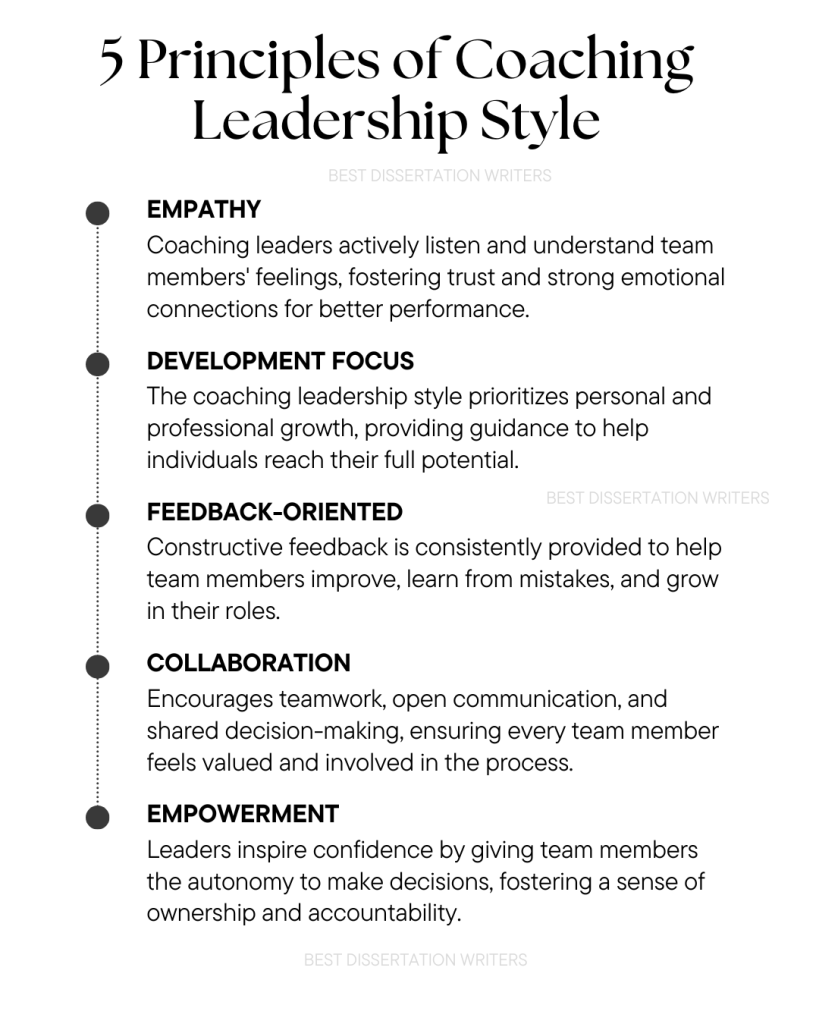
- One of the major benefits of the coaching leadership style is its role in developing emotional intelligence among team members. By actively listening and providing constructive feedback, coaching leaders help employees recognize and manage their emotions, improving their interpersonal skills.
- Coaching leaders create an environment where empathy, self-awareness, and emotional regulation are valued. These qualities are essential for effective leadership and contribute to healthier work relationships and improved workplace wellbeing.
- Leaders who embrace a coaching leadership approach help individuals understand their own emotional responses and those of others. This emotional intelligence is crucial for navigating difficult situations and collaborating more effectively within teams.
- Coaching leadership style also helps leaders develop their emotional intelligence. Through executive coaching and self-reflection, they improve their ability to understand and respond to the emotional needs of their teams, creating a compassionate and supportive atmosphere.
Constructive Feedback and Its Role in Growth
- Giving constructive feedback is a key element of the coaching leadership style. This feedback is specific, actionable, and focused on helping team members improve their skills and performance. It emphasizes personal and professional growth rather than merely pointing out mistakes.
- Coaching leadership style encourages leaders to focus on the strengths and weaknesses of each individual, providing tailored feedback that supports their development. This personalized attention leads to higher levels of job satisfaction and overall team effectiveness.
- Unlike traditional leadership styles, where feedback can sometimes be negative or one-sided, the coaching leadership style prioritizes a two-way conversation. Leaders actively listen to their team members and encourage them to take responsibility for their growth and development.
- Coaching leadership style also fosters an environment where feedback is not only about improving performance but also about boosting morale and motivating employees. Leaders who adopt this style create a culture of continuous improvement, which benefits teams and organizations.
- Leaders may also guide team members in setting personal and professional development goals. This helps employees understand their own progress and gives them the tools to make meaningful improvements in their work.
Coaching leadership style offers numerous benefits, including enhanced productivity, improved emotional intelligence, and effective growth through constructive feedback. Leaders who embrace this style create an environment where team members feel valued, supported, and empowered to reach their full potential.
How to Use the Coaching Leadership Style Effectively?
Key Skills Coaching Leaders Need
- Coaching leadership style requires leaders to develop specific skills that help them guide and empower their team. These skills go beyond simply managing tasks and focus on fostering growth and collaboration within the team.
- Effective communication is one of the most important skills for coaching leaders. They must be able to communicate clearly and empathetically, listening actively to their team members’ needs and concerns.
- Coaching leadership style also emphasizes the need for emotional intelligence. Leaders should be attuned to the emotions of their team members, showing empathy and understanding, which is crucial for building strong, trusting relationships.
- Transformational leadership is closely tied to the coaching leadership style. Leaders need to inspire and motivate their teams, focusing on long-term growth rather than short-term results. This means coaching every person in a way that aligns with their individual strengths and areas of improvement.
- Leaders also need to be adaptable. While coaching leadership style focuses on collaboration, one style may not work for every individual. A successful coaching leader must adjust their approach based on the needs of each team member.
- Compassionate leadership is another key skill. Compassionate leaders empathize with their team members, taking time to understand their concerns and challenges, which helps in providing the right support and guidance.
One-on-One Coaching: Best Practices
- One-on-one coaching is one of the most effective ways to apply the coaching leadership style. This personalized approach allows leaders to focus on individual team members, helping them overcome challenges and achieve their personal and professional goals.
- Leaders can create a safe, supportive space for team members to discuss their development. Coaching every person involves understanding their specific needs and working with them to build a customized growth plan.
- During one-on-one coaching, leaders may use open-ended questions to encourage reflection and self-assessment. This helps team members take responsibility for their development and empowers them to make meaningful improvements.
- It’s also important to remember that giving constructive feedback is an essential part of one-on-one coaching. Coaching leadership style provides feedback in a way that focuses on growth, recognizing strengths while addressing areas for improvement.
- Leaders and managers need to create an atmosphere where feedback is viewed as an opportunity for growth, not as criticism. This helps build confidence among team members, ultimately leading to better performance.
Creating a Growth Mindset Among Team Members
- Coaching leadership style helps leaders foster a growth mindset within their teams. A growth mindset encourages employees to view challenges as opportunities to learn and improve, which aligns perfectly with the coaching leadership approach.
- Leaders can create this mindset by modeling it themselves. When leaders embrace learning and development, they inspire their team members to do the same. Leaders also need to reinforce the idea that effort leads to progress and that setbacks are part of the learning process.
- Coaching leadership style prioritizes collaboration and continuous improvement. Leaders should encourage team members to share ideas, collaborate on solutions, and learn from one another. This creates a culture of innovation and problem-solving that benefits the entire team.
- Coaching focuses on the long-term development of employees, helping them build the skills they need to advance in their careers. By adopting this mindset, team members feel motivated to contribute more effectively to the success of the organization.
- One of the benefits of using a coaching leadership style is that it helps to bring out the best in each team member, helping them reach their full potential while contributing to the overall success of the team.
Using the coaching leadership style effectively involves developing key skills like emotional intelligence and communication, practicing one-on-one coaching to provide personalized feedback, and fostering a growth mindset among team members. Leaders who embrace this approach can create an environment where employees feel supported, motivated, and empowered to reach their highest potential.
What are Examples of the Coaching Leadership Style in Action?
Successful Coaching Leaders and Their Approaches
- Coaching leadership style is exemplified by leaders who focus on developing their team members through guidance, feedback, and empowerment. One notable example is transformational leaders, who use the coaching leadership style to inspire personal and professional growth among their teams.
- Servant leaders, who are also effective coaching leaders, prioritize the well-being of their team. Their compassionate leadership style encourages a supportive environment where team members feel valued and motivated to contribute their best work.
- Successful coaching leaders help team members take ownership of their tasks and personal development. They encourage self-reflection and provide constructive feedback, allowing individuals to continuously improve.
- The coaching leadership style is distinct from traditional leadership approaches, which are more task-focused and may rely on more hierarchical structures. In contrast, coaching leaders emphasize collaboration, which benefits both individual team members and the entire team.
Case Studies: Companies Utilizing Coaching Leadership
- Daniel Goleman, a pioneer in emotional intelligence, highlights how organizations embracing the coaching leadership style see significant benefits. Companies like Google and Zappos have incorporated this coaching approach to leadership, fostering a culture of continuous learning and open communication.
- Zappos is a prime example where the coaching leadership style is integral to their leadership and management approach. Their servant leadership style encourages leaders to actively engage with employees, helping them achieve both personal and professional goals. This model promotes an environment where leaders provide regular feedback, resulting in a motivated and engaged workforce.
- Companies utilizing coaching leadership style foster mindful leadership practices, where leaders support their team through empathy and focus on the personal growth of each individual. This creates a high-performing culture where employees feel empowered and aligned with the company’s goals.
Coaching leadership style is widely adopted in forward-thinking organizations that value personal development and teamwork. By focusing on the growth of their people, these leaders create lasting impacts on their teams and organizations.
How Does the Coaching Leadership Style Compare to Other Leadership Styles?
Coaching Leadership vs. Laissez-Faire Leadership
- Coaching leadership style is distinctly different from the laissez-faire leadership style. While coaching leadership style focuses on providing guidance, support, and growth opportunities for team members, the laissez-faire style tends to be more hands-off, with leaders giving employees more freedom and autonomy without much intervention.
- Coaching leadership style emphasizes the importance of feedback and development. Leaders actively engage with their team, offering constructive feedback, which helps individuals improve both personally and professionally. In contrast, laissez-faire leaders may allow team members to take full control without offering necessary guidance or direction.
- While coaching leadership style fosters continuous growth, the laissez-faire leadership style may fail to provide adequate direction, which could lead to confusion and lack of focus among team members.
- Coaching leadership style focuses on collaboration and team development, whereas laissez-faire leadership may result in a lack of structure, making it harder for teams to thrive in environments that require consistent guidance.
Coaching Leadership vs. Autocratic Leadership
- Coaching leadership style and autocratic leadership style differ in how decisions are made and how team members are involved. Autocratic leaders make decisions unilaterally, with little to no input from the team, which contrasts sharply with the coaching leadership style, where leaders encourage collaboration and provide opportunities for team members to take ownership of decisions.
- Coaching leadership style creates a mindful leadership style by fostering empowerment, enabling individuals to grow through feedback and support. This is different from autocratic leadership, which relies on top-down decision-making and typically doesn’t allow for much employee involvement.
- The coaching leadership style prioritizes the personal and professional development of each team member, while autocratic leadership is more focused on task completion and control. Leaders who use the coaching leadership style create a more positive work culture, where team members are motivated and engaged, whereas autocratic leaders may generate compliance, but not necessarily team engagement.
- The coaching leadership style also aims to develop leadership potential within the team, unlike autocratic leadership, which tends to centralize power in the hands of the leader.
Coaching Leadership vs. Servant Leadership
- Both coaching leadership style and servant leadership style emphasize the well-being of the team and focus on serving others, but there are important differences in how these approaches are applied.
- Coaching leadership style is more development-focused, concentrating on helping individuals reach their full potential through feedback and continuous learning. Servant leadership, on the other hand, prioritizes the needs of the team and seeks to empower and support them on a broader, more holistic level.
- While both styles create a supportive environment, coaching leadership style is particularly effective at fostering team growth and skill development. In contrast, servant leadership tends to focus more on removing barriers and ensuring that the team has the resources they need to succeed.
- Coaching leadership style tends to be more structured, with clear goals for team members’ development, whereas servant leadership style may allow for a more flexible, nurturing approach, prioritizing emotional intelligence and team relationships.
- Both styles emphasize collaboration, but coaching leadership style places a stronger emphasis on measurable personal and professional growth, ensuring team members receive tailored support to reach their goals, while servant leadership focuses more on fostering a caring and empathetic environment.
While the coaching leadership style shares similarities with other leadership approaches, such as servant leadership and laissez-faire leadership, it distinguishes itself by its focus on development, empowerment, and collaboration. Leaders who adopt the coaching leadership style aim to create a culture of growth and engagement that is different from autocratic and traditional leadership styles, making it a highly effective approach for nurturing team success.
What Challenges Do Coaching Leaders Face?
Balancing Authority and Support
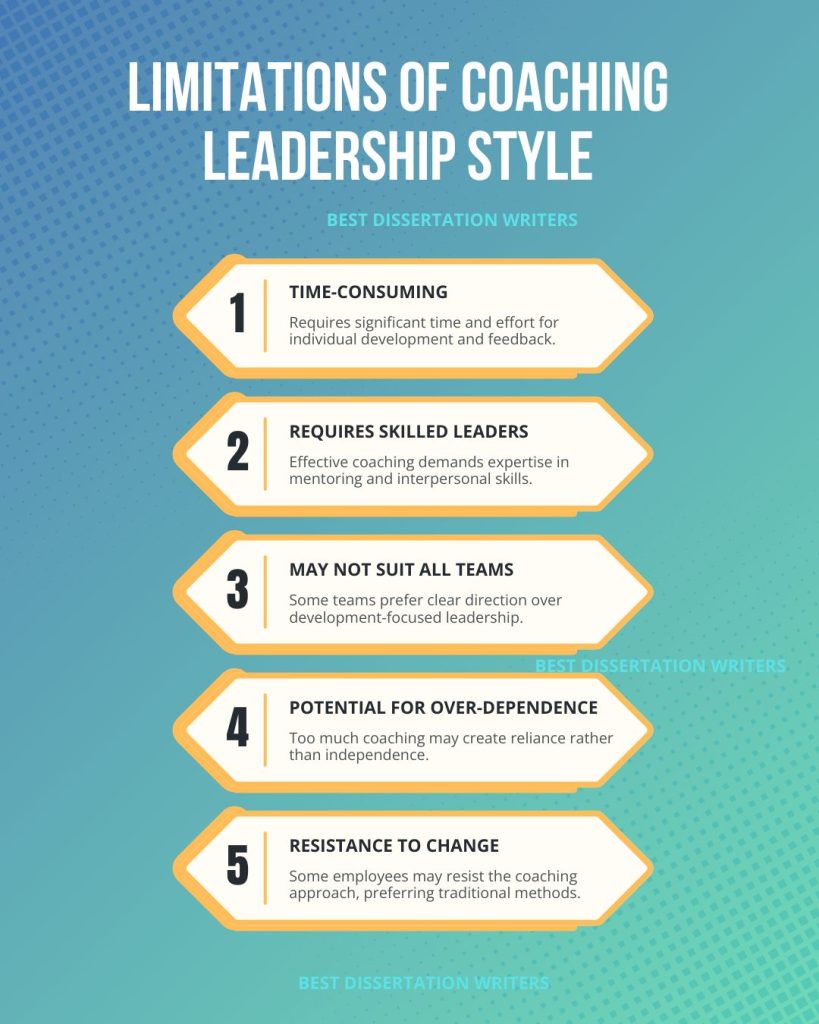
- Coaching leadership style requires leaders to find the right balance between authority and support. Unlike traditional leadership, which may lean heavily on command and control, the coaching leadership style emphasizes collaboration and empowerment.
- Leaders must lead their teams while providing guidance and support. This dual role can be challenging, as leaders must remain authoritative enough to direct team efforts while offering enough autonomy for team members to take ownership of their tasks.
- Mindful leadership style is often used to balance authority and support, as it emphasizes self-awareness and empathy. However, this coaching leadership style may falter if leaders become too lenient, making it difficult to maintain clear expectations.
- It’s also important to remember that the coaching leadership style requires a level of patience. Leaders must guide and mentor their team members without stepping into a more autocratic style where control and decision-making are solely top-down.
Overcoming Resistance to Change
- Coaching leadership style faces challenges in overcoming resistance to change within teams. Many people view change as disruptive, making it difficult for leaders to encourage growth and development.
- When team members take on new responsibilities or methods, there may be hesitation or reluctance. The coaching leadership style requires leaders to help team members see the benefits their teams will gain from embracing change, focusing on long-term growth and success.
- Leaders practicing coaching leadership style must be adept at fostering trust and understanding, which can sometimes be challenging when employees are accustomed to more traditional or autocratic leadership approaches.
- Resistance to change may also stem from a lack of confidence. Leaders may need to provide additional support and mentorship to help team members gain confidence in their abilities. Regular coaching and receiving coaching can help mitigate this resistance and encourage personal and professional growth.
The coaching leadership style involves balancing support with authority and overcoming resistance to change. Leaders who embrace this style must continuously adapt, ensuring that their approach remains both nurturing and effective in achieving long-term success.
How to Develop Your Coaching Leadership Style?
Training and Development Opportunities
- Coaching leadership style is continuously evolving, and one of the most effective ways to develop it is through training and development opportunities. Many leadership programs focus on building skills that align with the coaching leadership style, such as emotional intelligence, active listening, and providing constructive feedback.
- Participating in leadership development programs helps leaders build the foundational skills necessary for the coaching leadership style. These programs typically focus on developing a mindful leadership style, which is essential for creating a supportive environment where employees feel empowered.
- Coaching leadership style also focuses on ongoing learning. Leaders should seek out workshops, seminars, and resources that cover the latest leadership theories and tools. By doing so, they ensure that their approach to leadership remains different from traditional or autocratic leadership styles.
- Training and development can help leaders understand how to effectively communicate, collaborate, and build trust within their teams. These opportunities support the continuous growth of the leader and their ability to lead their teams toward long-term success.
Personal Reflection and Growth
- Personal reflection and growth are essential when developing the coaching leadership style. Leaders need to assess their strengths and areas for improvement, which allows them to adjust their approach and better support their teams.
- Coaching leadership style requires leaders to reflect on their own leadership practices and how they impact their team. This includes examining how they provide feedback, how they empower their team members, and how they handle conflicts.
- Personal growth as a leader involves understanding and improving areas like emotional intelligence, patience, and adaptability. Coaching leadership style is rooted in self-awareness, which helps leaders build stronger relationships with their team members.
- Leaders who practice personal reflection are more likely to see the benefits their teams will gain from their leadership style, such as increased engagement, better communication, and higher morale among their team members. Leaders who focus on their own development can create an environment where everyone grows together.
Essay Writing Services
Stuck with your essay? Let Best Dissertation Writers assist you in crafting well-researched, high-quality essays that impress your professors. We offer personalized solutions for all your academic writing needs. Contact us now!
Seeking Feedback from Team Members
- Seeking feedback from team members is a vital part of developing a successful coaching leadership style. Leaders who ask for regular feedback show their team that they value input and are committed to improving their leadership approach.
- Coaching leadership style emphasizes collaboration and open communication. By regularly asking for feedback, leaders create a culture of trust where team members feel comfortable sharing their thoughts, which can help identify areas where the leader can improve.
- Feedback from team members helps leaders gain a better understanding of how their approach to leadership impacts the team. It also allows leaders to adapt their coaching leadership style based on the individual needs of their team.
- One of the foundational aspects of the coaching leadership style is that it is flexible and responsive. Leaders who actively seek feedback are more likely to refine their approach to leadership, making it more effective and tailored to the needs of their team.
Developing your coaching leadership style involves engaging in training and development opportunities, practicing personal reflection and growth, and actively seeking feedback from team members. These steps are key to becoming a more effective coach and leader, ultimately benefiting both the leader and their team.