

Patient Care Technician vs Medical Assistant – Key Takeaways
Both Patient Care Technicians (PCTs) and Medical Assistants (MAs) play essential roles in healthcare support, but they differ in training, duties, work settings, and career focus. This comparison helps students and job seekers decide which role aligns best with their goals. Below is a clear breakdown of key distinctions and similarities.
- Core Job Roles & Responsibilities:
- Patient Care Technician (PCT): Focuses on direct patient support such as taking vital signs, assisting with daily living activities (bathing, mobility), drawing blood, performing EKGs, and supporting nursing staff.
- Medical Assistant (MA): Combines clinical tasks (vitals, injections, preparing exam rooms) with administrative duties (scheduling, record keeping, billing, patient intake).
- The PCT role centers more on hands‑on patient care, while MAs balance clinical and office responsibilities.
- Work Settings & Environments:
- PCTs are most often found in hospitals, long‑term care facilities, and rehabilitation centers where continuous patient monitoring and personal care are needed.
- MAs typically work in physicians’ offices, outpatient clinics, and specialty practices that require both clinical and administrative support.
- Both roles may interact closely with other healthcare professionals.
- Education & Certification:
- PCT Training: Shorter programs (weeks to months) with focus on hands‑on care; certification like CNA or specialized PCT credentials is common.
- MA Training: Certificate or diploma programs (often 1 year) or associate degrees, with optional national certification (AAMA, AMT) boosting job prospects.
- Educational focus differs: PCTs emphasize patient care skills, MAs cover clinical and administrative competencies.
- Salary & Job Outlook:
- Salaries for both roles are competitive for allied health fields, with variations based on region, experience, and employer.
- Job growth for both careers is strong due to aging populations and increasing healthcare demand.
- PCTs and MAs often see reliable entry‑level opportunities.
- Skills & Personal Fit:
- PCTs suit individuals who enjoy direct patient contact and physical caregiving.
- MAs are ideal for those who like a blend of clinical tasks and office work.
- Both need strong communication, teamwork, and compassion.
- Career Advancement:
- Experience as a PCT or MA can serve as a stepping‑stone to further healthcare careers (nursing, specialized allied roles, health administration).
- Additional certification, education, and clinical experience enhance growth opportunities.
Choosing between a career as a Patient Care Technician or a Medical Assistant depends on your interests in patient care, clinical responsibilities, and the type of work environment you prefer. Both roles offer rewarding career opportunities in the healthcare sector, with room for professional development and growth.
Patient Care Technician vs Medical Assistant: Key Differences Explained
What Is a Patient Care Technician?
A Patient Care Technician (PCT) plays a crucial role in providing direct care to patients, particularly in long-term care and clinical settings. The role of a PCT varies depending on the type of care facility, but the main focus is always on providing high-quality care to patients.
- Job Focus: A PCT primarily offers hands-on patient care. They work directly with patients, performing activities such as bathing, dressing, and assisting with mobility.
- Patient Interaction: PCTs have a high level of patient interaction, helping patients with daily tasks that they cannot perform themselves due to injury or illness.
- Work Environment: PCTs often work in nursing homes, hospitals, or long-term care facilities, where their primary role is to provide personal care.
- Certifications: To become a certified patient care technician, one typically completes a patient care technician program that includes a combination of classroom learning and hands-on experience.
- Skills Required: PCTs must be skilled in patient care techniques, including wound care, bedside care, and monitoring patient vital signs. They are also trained in administrative work, such as maintaining patient records and handling patient information.
- Supervision: A PCT typically works under the supervision of a registered nurse or doctor, especially when performing medical procedures.
What Is a Medical Assistant?
A Medical Assistant (MA) is a healthcare professional who performs both clinical and administrative duties. Medical assistants play an essential role in healthcare settings, acting as a bridge between patients and the medical staff.
- Job Focus: Unlike PCTs, medical assistants often split their time between administrative work and direct patient care. They may handle medical records, assist with medical procedures, or perform clinical tasks like taking vital signs or preparing patients for examinations.
- Patient Interaction: Medical assistants have patient interaction in various forms, such as assisting during medical procedures, handling patient records, and communicating with patients about their medical concerns.
- Work Environment: Medical assistants typically work in medical offices, outpatient care centers, or clinics, where they help maintain the day-to-day operations and assist doctors during appointments.
- Certifications: Most medical assistants choose to become certified medical assistants (CMA) by completing medical assistant programs. These programs teach administrative skills such as scheduling, insurance handling, and medical coding.
- Skills Required: Medical assistants need to have a combination of clinical and administrative skills. Clinical skills include assisting with medical procedures, taking patient histories, and performing lab tests, while administrative skills involve medical office management like patient records and insurance processing.
Need Help With Your Dissertation?
Get professional academic support from Best Dissertation Writers . Our expert team is ready to help you with high-quality dissertation writing services tailored to your academic goals.
Get Dissertation HelpPatient Care Technician vs Medical Assistant: Key Skills Compared
When comparing the skills of patient care technicians vs medical assistants, both roles require specific training and expertise, but each focuses on different aspects of patient care.
1. Patient Care Techniques
- PCT Skills: A PCT is trained to perform hands-on patient care, such as helping with personal care, administering wound care, and assisting patients with mobility. They focus on bedside care and ensuring that patients are comfortable and well cared for.
- Medical Assistant Skills: A medical assistant, on the other hand, focuses on assisting with medical procedures, taking vital signs, and preparing patients for examination. They also have skills in patient information management.
2. Administrative Duties
- PCT Skills: While a PCT may assist with some administrative duties, their primary focus is on patient care. Administrative work might include maintaining patient records, but they typically don’t handle medical billing or insurance claims.
- Medical Assistant Skills: A medical assistant is trained in medical office management, including patient records, scheduling appointments, and billing procedures. They often work in medical offices and perform the bulk of the administrative work in healthcare settings.
3. Medical Procedures
- PCT Skills: PCTs are trained to assist with minor medical procedures, such as wound care, catheter insertion, and monitoring vital signs. They help with tasks that are primarily aimed at supporting patients’ physical needs.
- Medical Assistant Skills: Medical assistants play a bigger role in clinical procedures like drawing blood, preparing patients for exams, and assisting with minor surgeries or treatments.
4. Patient Interaction
- PCT Skills: PCTs have direct patient interaction for extended periods, focusing on hands-on care and providing assistance with activities of daily living (ADLs), such as eating, dressing, and grooming.
- Medical Assistant Skills: Medical assistants interact with patients in both clinical and administrative capacities. They help ensure that patients are comfortable, conduct basic health assessments, and assist with medical procedures.
Table 1: Patient Care Technician vs Medical Assistant Compared
| Category | Patient Care Technician (PCT) | Medical Assistant (MA) |
|---|---|---|
| Primary Focus | Hands-on patient care, daily living assistance | Clinical and administrative tasks |
| Work Environment | Nursing homes, hospitals, long-term care facilities | Medical offices, outpatient care centers, clinics |
| Key Responsibilities | Mobility, personal care, wound care | Vital signs, assisting with exams, managing records, billing |
| Patient Interaction | Direct, hands-on care | Patient interaction and administrative duties |
| Required Training | PCT program (6-12 months) | MA program (9-12 months) |
| Certification | Certified Patient Care Technician (CPCT) | Certified Medical Assistant (CMA) |
| Salary Range | $35,000 to $45,000 | $38,000 to $50,000 |
| Job Growth | Growth in long-term care and nursing homes | High demand in medical offices and outpatient care centers |
| Work Hours | Night shifts, weekends, holidays | Day shifts, regular hours |
| Career Advancement | Supervisory roles, specialization in wound care | Medical office manager, specialized fields like pediatrics |
| Stress Level | Physical and emotional demands | Balancing clinical and administrative duties |
Patient Care Technician vs Medical Assistant: Salary Comparison
The salary comparison between patient care technicians (PCTs) and medical assistants (MAs) is essential for anyone considering these careers.
- Patient Care Technician Salary: According to the Bureau of Labor Statistics (BLS), the average salary for a patient care technician is approximately $35,000 to $45,000 annually, depending on factors such as experience, location, and the type of facility they work in.
- Medical Assistant Salary: Medical assistants typically earn a higher salary than PCTs. On average, a medical assistant earns between $38,000 and $50,000 annually, with certified medical assistants earning slightly more due to their additional qualifications.
Highest Paying Roles in This Field: If you are aiming for the highest paying bachelor degrees, medical assisting and patient care technician positions can lead to better-paying opportunities. Medical assistants working in specialized care facilities or larger hospitals can expect to earn salaries closer to the top of the range. A patient care technician, when working in more advanced medical settings like outpatient care centers, may also see higher pay.
Patient Care Technician vs Medical Assistant: Job Outlook in 2026
Both patient care technicians and medical assistants are projected to see growth in the coming years. According to the Bureau of Labor Statistics, the healthcare sector is expanding, and these roles are essential for supporting patient care.
- Patient Care Technician Job Outlook: The job outlook for PCTs is expected to grow by 8% to 10% between 2026 and 2036, which is faster than the average for all occupations. The demand for hands-on care in long-term care facilities, nursing homes, and hospitals is driving this growth.
- Medical Assistant Job Outlook: Medical assistants are also in high demand, with a projected growth rate of 16% over the same period, driven by the expanding healthcare industry. Medical assistants are crucial in managing both clinical and administrative tasks in medical offices, outpatient care centers, and hospitals.
The highest paying bachelor degrees for those in the healthcare industry are often linked to roles in medical assisting and patient care technician work. With the increasing need for patient interaction, direct care, and medical assistance, these fields are expected to thrive in the near future.
Career Progression: Patient Care Technician vs Medical Assistant
Both Patient Care Technicians (PCTs) and Medical Assistants (MAs) offer promising career paths in the healthcare industry. However, the progression for each role varies significantly depending on the type of work, the skills required, and the certifications earned. This section will explore how each role progresses, the differences in career growth, and how one can transition from one to the other.
Career Path for Patient Care Technicians
Patient Care Technicians (PCTs) focus on hands-on patient care, working directly with patients in various healthcare settings. As PCTs gain experience, they can advance in several ways, either through additional certifications or by transitioning into more specialized roles.
- Certifications and Advanced Training: Many PCTs start by obtaining basic certification, such as a Certified Patient Care Technician (CPCT), which can increase job opportunities and salary potential. With further training in specialized areas such as wound care or ambulatory care, PCTs can work in more advanced settings, including outpatient care centers and hospitals.
- Supervisory Roles: As PCTs gain experience, they may transition into supervisory roles, overseeing a team of nursing assistants or certified nursing assistants (CNAs) in settings such as nursing homes or long-term care facilities.
- Expanding Scope of Care: Patient care technicians typically work in a variety of healthcare environments, including residential care facilities, extended care facilities, and hospital settings. They focus on direct patient care, including vital signs monitoring, wound care, and assisting patients with daily living activities.
- Transitioning to Other Roles: With further education, PCTs can also transition into other healthcare careers, such as becoming a nursing assistant or pursuing a nursing career. For those interested in more hands-on patient care, transitioning to a nursing assistant or certified nursing assistant position is an option.
Growth for Patient Care Technicians:
- Patient Care Technicians often have the opportunity to specialize further by working in critical care, emergency care, or palliative care settings. The experience gained in these environments can also provide the foundation for a career in nursing or medical assisting.
Career Path for Medical Assistants
Medical Assistants (MAs) also have a variety of career growth opportunities, though their path focuses more on both clinical and administrative roles within healthcare settings. The flexibility and demand for medical assistants make this role attractive for those looking to grow within healthcare.
- Dual Skillsets in Clinical and Administrative Work: Medical assistants balance clinical and administrative responsibilities. They typically assist in vital signs monitoring, preparing patients for examination, and managing patient records. They also handle medical office administration, including scheduling, billing, and insurance processing. Because of this dual role, MAs can branch out into various positions.
- Medical Assistant Certification: Most MAs pursue medical assistant certification to enhance job opportunities and salary potential. Certification programs offer specialized training in areas such as EKG, phlebotomy, and medical billing.
- Types of Medical Assistants: Medical assistants help in a variety of settings. Some work in ambulatory care or outpatient care centers, where they assist with office-based procedures. Others may choose to specialize in fields like pediatric or geriatrics care, focusing on the type of patient they enjoy working with.
- Growth for Medical Assistants: As medical assistants gain more experience, they can transition into roles such as medical office manager, medical coding specialist, or clinic supervisor. The growth for medical assistants is strong, with an expected job growth rate of 23% by 2026, much faster than the average for other occupations.
- Salary for Medical Assistants: Medical assistants generally earn more than PCTs on average, with salaries ranging from $38,000 to $50,000 annually, depending on location and experience. Certified medical assistants typically earn at the higher end of the salary spectrum.
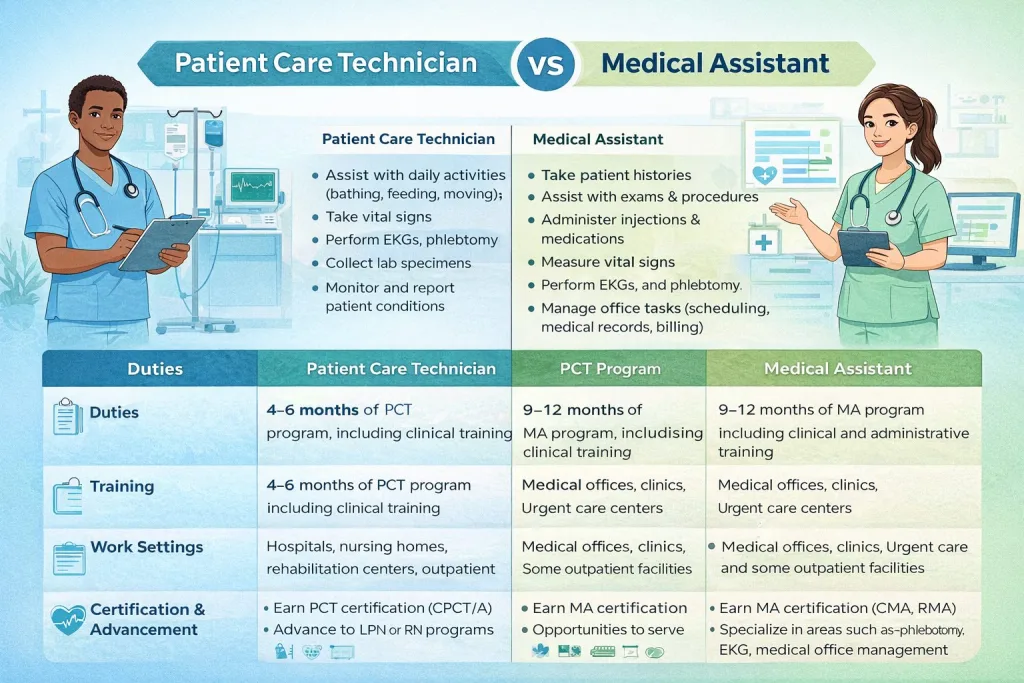
Key Differences Between Patient Care Technicians and Medical Assistants
The differences between a medical assistant vs patient care technician are significant, especially when it comes to the type of care provided and the work environment.
- Patient Care Technicians Focus on Hands-On Patient Care: PCTs emphasize hands-on patient care by assisting with daily activities like bathing, dressing, and helping patients with mobility. They work closely with patients in nursing homes, long-term care facilities, or hospitals. In contrast, medical assistants balance both clinical and administrative tasks.
- Medical Assistants Work in Medical Offices and Clinics: MAs typically work in medical offices, outpatient care centers, or clinics, where they assist with both clinical tasks, like taking vital signs, and administrative duties, such as managing medical records and assisting with insurance claims. PCTs, on the other hand, focus on physical patient care in settings that require direct patient interaction.
- Differences in Responsibilities: While PCTs may work more closely with patients in extended care or residential care facilities, medical assistants have a broader set of responsibilities in ambulatory care settings, where they often assist with medical office management and perform more clinical tasks.
Salary and Career Growth for Patient Care Technicians vs Medical Assistants
The potential for career growth and salary differs for patient care technicians and medical assistants. While both roles offer rewarding career paths, medical assistants typically earn more due to their dual skillset.
- Patient Care Technicians Make Less Than Medical Assistants: PCTs generally make less than medical assistants, with salaries ranging from $35,000 to $45,000 annually, depending on experience and location. Medical assistants, however, generally earn between $38,000 to $50,000, with certified medical assistants earning at the higher end of the salary range.
- Growth for Medical Assistants: The growth for medical assistants is strong, with opportunities to transition into specialized fields, such as cardiology or pediatrics, where they can further develop their expertise and increase their earning potential. MAs also have opportunities to advance into administrative roles like medical office managers or medical billing specialists.
How to Transition Between Patient Care Technicians and Medical Assistants
Many healthcare professionals start their careers in one field and later transition into another, and it is possible to move between being a medical assistant vs patient care technician.
- Transitioning from PCT to MA: A PCT can transition into a medical assistant role by enrolling in a medical assistant program that provides training in both clinical and administrative areas. This additional training typically takes 9-12 months to complete and will qualify the individual to sit for the certified medical assistant (CMA) exam.
- Transitioning from MA to PCT: Medical assistants who want to focus more on direct patient care can transition to a patient care technician role. This transition typically involves completing a patient care technician program, which will provide more in-depth training in hands-on patient care, such as wound care and assisting with daily living activities.
Need Help With Your Dissertation?
Get professional academic support from Best Dissertation Writers . Our expert team is ready to help you with high-quality dissertation writing services tailored to your academic goals.
Get Dissertation HelpChoosing Between Becoming a Patient Care Technician vs Medical Assistant
Ultimately, the decision to pursue a career as a patient care technician vs medical assistant depends on what you value most in your healthcare career.
- If You Prefer Hands-On Patient Care: If you enjoy working closely with patients and providing direct care, becoming a patient care technician may be the right path. PCTs focus on hands-on care in settings such as nursing homes and hospitals, where they assist with personal care and help patients with mobility.
- If You Want a Balanced Role in Clinical and Administrative Work: If you enjoy a mix of clinical and administrative responsibilities, a medical assistant role may be a better fit. Medical assistants work in ambulatory care settings, clinics, and medical offices, where they handle everything from patient records to assisting with medical procedures.
In both cases, there are ample opportunities for career growth through certifications and further education. Whether you choose a career as a medical assistant or a patient care technician, both roles offer stability and the potential for advancement within the healthcare sector.
Can You Transition Between Patient Care Technician and Medical Assistant Roles?
Many individuals interested in healthcare may wonder if they can transition from a patient care technician to a medical assistant, or vice versa. Both roles share some similarities, but there are key differences in responsibilities and training.
- Similarities: Both PCTs and MAs work directly with patients, providing essential care and assisting medical staff. The patient care technician vs medical assistant roles require strong interpersonal skills and a foundation of healthcare knowledge, making it possible to move between the two careers with additional training.
- Transitioning from PCT to MA:
- Training Program: PCTs interested in becoming medical assistants can enroll in a medical assistant training program, which typically takes 9 to 12 months to complete. This program will provide the clinical and administrative skills needed to work in a medical office, outpatient care center, or hospital.
- Medical Assistant Certification: After completing the training program, a certified medical assistant (CMA) certification may be pursued. Medical assistants have more administrative duties than PCTs, such as scheduling appointments, managing medical records, and dealing with insurance claims.
- Transitioning from MA to PCT:
- Patient Care Focus: Medical assistants can transition to PCT roles if they prefer more hands-on patient care. A patient care technician program would be required, which focuses on direct patient care and may involve learning skills like wound care, patient mobility assistance, and bedside care.
- Training Time: Training for a PCT can often be completed more quickly than for an MA, with some programs taking as little as 6 to 9 months, depending on the region and certification requirements.
While transitioning between these two careers is feasible, the specific certification and training requirements will need to be met based on the desired role.
Common Challenges for Patient Care Technicians vs Medical Assistants
Both Patient Care Technicians (PCTs) and Medical Assistants (MAs) face unique challenges, and understanding these difficulties is essential for making an informed career choice.
- Challenges for PCTs:
- Physically Demanding: PCTs work in environments like extended care facilities, hospitals, or nursing homes, where their jobs are physically demanding. Tasks like assisting patients with mobility, administering wound care, or providing hands-on care can be strenuous.
- Emotionally Challenging: The emotional toll of caring for patients, especially in residential care facilities or long-term care settings, can be difficult. Many patients have chronic conditions or terminal illnesses, which can be emotionally taxing for PCTs.
- Limited Career Advancement: While there are growth opportunities for PCTs in specialized areas like wound care or management roles, the career progression often requires additional certifications or a move into different healthcare fields like nursing.
- Challenges for MAs:
- Balancing Clinical and Administrative Work: Medical assistants must balance both clinical duties (such as vital signs, assisting with exams, and preparing patients) and administrative tasks (such as managing patient records, billing, and scheduling). This dual responsibility can be overwhelming in busy medical settings.
- Work Environment Stress: MAs who work in medical offices or outpatient care centers may face high patient volumes and tight schedules. Managing these responsibilities can lead to job stress, especially if they’re understaffed.
- Keeping Up with Technology: With the growing use of Electronic Health Records (EHR), medical assistants must keep up with new technologies to remain effective in their administrative tasks.
While both careers offer stability and essential roles within healthcare, the challenges differ. Understanding these challenges and how they align with personal interests is key in deciding between becoming a medical assistant vs patient care technician.
Is It More Stressful: Patient Care Technician vs Medical Assistant?
Stress levels vary across healthcare roles, but both PCTs and MAs face significant challenges that can contribute to a high-stress environment. However, the type of stress they experience differs.
- Stress Factors for PCTs:
- Direct Patient Care Demands: PCTs work closely with patients, especially those in long-term or residential care facilities. The physical and emotional toll of hands-on patient care can be exhausting.
- Irregular Hours: PCTs working in hospitals or extended care facilities may need to work nights, weekends, or holidays, which can add to stress due to irregular shifts.
- Emotional Strain: PCTs may experience emotional stress due to witnessing patients’ suffering, particularly in nursing homes or long-term care settings, where patients may have terminal conditions.
- Stress Factors for MAs:
- Clinical and Administrative Workload: The most significant stressor for medical assistants is balancing both clinical and administrative duties. Managing multiple tasks simultaneously can create a high-pressure environment, particularly in busy medical offices.
- Patient Interaction: While MAs do interact with patients, they often handle sensitive medical issues, including patient records, billing, and assisting with medical procedures, which can contribute to stress.
- Tight Schedules and Deadlines: MAs are often responsible for ensuring appointments are scheduled efficiently, patient records are up-to-date, and insurance claims are processed correctly. Any delays can lead to significant stress, especially when dealing with upset patients or frustrated medical staff.
In terms of stress, both roles have their own unique pressures. However, medical assistants may experience more administrative stress and deadlines, while PCTs face the physical and emotional strain of hands-on patient care.
How to Choose Between Becoming a Patient Care Technician vs a Medical Assistant
Choosing between a career as a Patient Care Technician (PCT) or a Medical Assistant (MA) requires careful consideration of personal interests, career goals, and job environment preferences.
- Considerations for Becoming a PCT:
- Enjoyment of Hands-On Patient Care: If you find satisfaction in providing direct patient care and assisting patients with their daily activities, a PCT role may be ideal. PCTs work in environments like nursing homes, hospitals, and long-term care facilities, where they focus on patient interaction and bedside care.
- Physical Strength and Stamina: The role of a PCT can be physically demanding, as it often requires lifting and moving patients. If you have the physical stamina for such duties, this may be a rewarding career path.
- Career Progression: PCTs can pursue specializations in areas like wound care or medical assisting if they wish to further their careers.
- Considerations for Becoming an MA:
- Interest in Both Clinical and Administrative Work: If you prefer a role that involves both clinical tasks (like taking vital signs) and administrative responsibilities (like managing patient records and appointments), becoming a medical assistant could be the right choice.
- Desire for Certification: A medical assistant certification can open doors for career advancement. Many MAs work in medical offices and outpatient care centers, where they have the opportunity to specialize in areas such as billing or insurance.
- Growth Opportunities: Medical assistants can expand their careers by pursuing higher education, such as a degree program in nursing or healthcare administration, or specializing in specific medical fields.
Final Thoughts: Patient Care Technician vs Medical Assistant
When deciding between a Patient Care Technician (PCT) and a Medical Assistant (MA), it’s important to consider your interests, career goals, and preferred work environment. Here’s a breakdown of key factors:
- Hands-On Patient Care vs Clinical and Administrative Balance:
- PCTs: Focus on hands-on patient care in settings like nursing homes, long-term care facilities, and hospitals. Responsibilities include monitoring vital signs, wound care, and assisting with daily living activities. Ideal for those who enjoy direct patient interaction.
- MAs: Balance clinical tasks (e.g., vital signs, assisting with exams) and administrative duties (e.g., patient records, billing). Work in medical offices, clinics, and outpatient care centers. Suitable for those interested in a diverse role combining patient care and office management.
- Salary Comparison:
- PCTs: Average salary ranges from $35,000 to $45,000 annually, depending on location and experience.
- MAs: Typically earn $38,000 to $50,000, with certified medical assistants earning more due to their broader skillset.
- Career Advancement:
- PCTs: Opportunities to specialize in wound care or advance to nursing assistant roles with additional training. Patient care technicians often progress to supervisory positions or specialized care.
- MAs: Can move into roles like medical office manager or specialize in areas like pediatrics or geriatrics. Growth in medical assisting is strong, with additional education opening doors to managerial positions.
- Certification and Education:
- Both careers benefit from certification. PCTs can earn certifications in specific care areas, while MAs can gain Certified Medical Assistant (CMA) certification, increasing job prospects and salary potential.
Ultimately, your choice depends on whether you prefer hands-on patient care or a role that combines clinical and administrative work. Both fields offer stable career opportunities and room for growth.
References
- Patient Care Technician vs. Certified Medical Assistant – https://advclinical.org/patient-care-technician-vs-certified-medical-assistant/
- 22 Low-Stress Medical Jobs – Happiest Careers to Consider – https://www.stepful.com/post/low-stress-medical-jobs
- What is the difference between an MA, CNA and CPCT/A? – https://info.nhanow.com/blog/what-is-the-difference-between-an-ma-and-a-cna
- Medical Assistant vs. Patient Care Technician: What You Need to Know – https://www.rasmussen.edu/degrees/health-sciences/blog/medical-assistant-vs-patient-care-technician/
- Medical Assistant vs. Patient Care Technician – https://americancareercollege.edu/blog/medical-assistant-vs-patient-care-technician