

Understanding the Doctor of Education (EdD)
What is a Doctor of Education for?
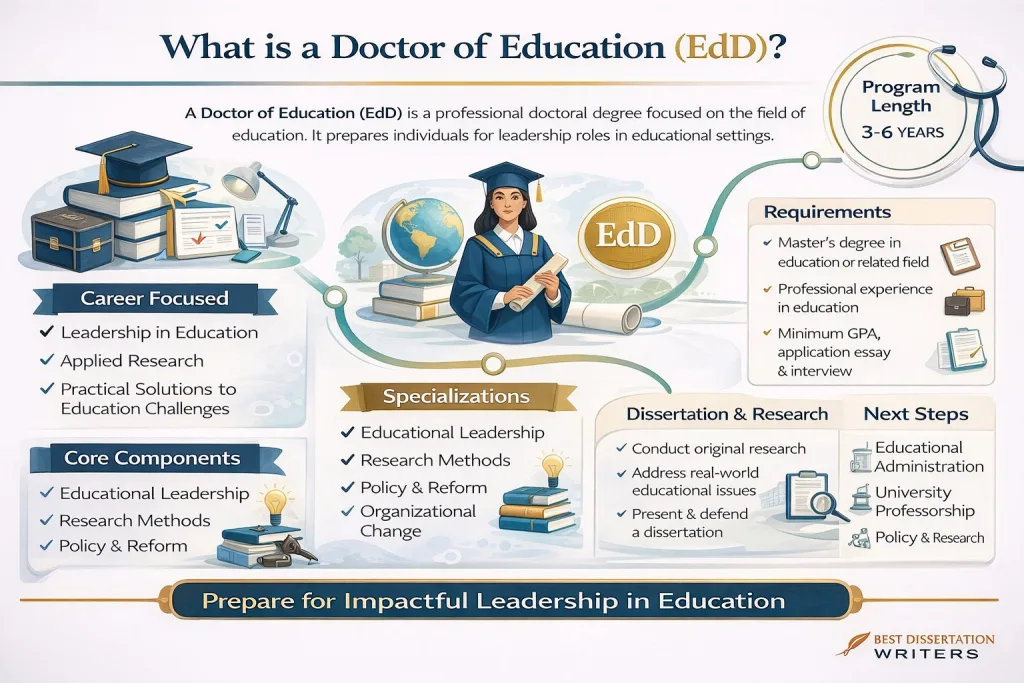
- The Doctor of Education (EdD) is a professional doctoral degree designed to prepare individuals for leadership roles in the field of education.
- This degree focuses on the application of research and advanced educational theories to address real-world problems in education systems.
- EdD graduates are prepared to tackle issues such as educational inequality, curriculum development, and leadership in educational institutions.
- The program is designed for professionals in the field of education who wish to deepen their knowledge and enhance their leadership skills.
- Key Areas of Focus:
- Educational Leadership: Provides skills to lead and manage educational institutions, such as schools, colleges, and universities.
- Problem of Practice: Involves identifying and solving specific challenges within educational settings using research-driven solutions.
- Apply Research: Emphasizes the application of research to address issues in educational practices and systems.
- How to Abbreviate Doctor of Education
- The official abbreviation for Doctor of Education is EdD.
- This abbreviation is commonly used in academic and professional settings to identify those who have earned the Doctor of Education degree.
- The abbreviation EdD distinguishes this degree from a Doctor of Philosophy (PhD) in Education, although both are doctoral-level qualifications.
- When applying for jobs or academic positions, it’s important to use the abbreviation correctly as it reflects your professional qualifications and expertise in educational leadership.
Comparison Between Doctor of Education vs Doctor of Philosophy
- Educational Focus:
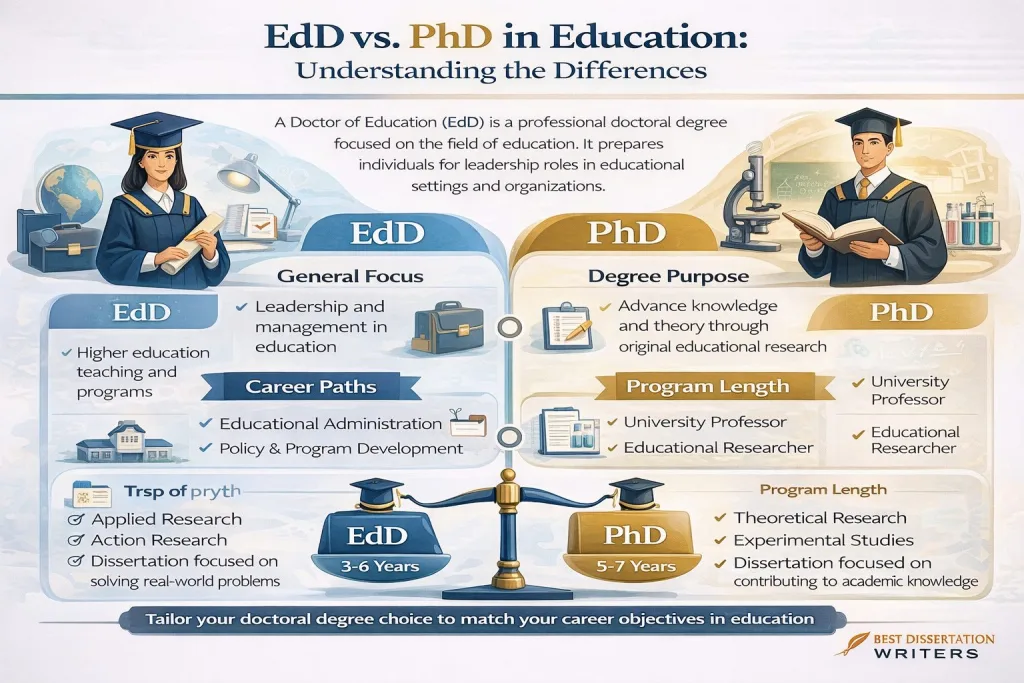
- Doctor of Education (EdD): Primarily focused on practical, applied research in real-world educational settings. It prepares graduates for leadership roles where they can directly influence and improve educational practices.
- Doctor of Philosophy (PhD) in Education: Emphasizes theoretical research and the development of new knowledge in the field of education. A PhD is often more research-focused, leading to careers in academia or research institutions.
- Program Design:
- EdD Program: Structured to provide advanced knowledge and leadership skills, with a strong emphasis on educational leadership and practical applications. Coursework includes both theoretical and practical subjects, preparing graduates to apply their knowledge in a variety of educational environments.
- PhD Program: Typically requires more coursework in research methodology and theory, followed by the completion of a dissertation that contributes original knowledge to the field.
- Career Paths:
- EdD Graduates: Often take on leadership roles such as school administrators, district leaders, or educational consultants. Their focus is on improving the functioning of educational systems and practices.
- PhD Graduates: Typically pursue careers in higher education, teaching, and conducting academic research. Some may also work in educational policy or governmental agencies.
- Time to Completion:
- The EdD usually takes less time to complete than a PhD. EdD students can typically finish their doctoral degree in 3 to 5 years, depending on the program.
- A PhD often requires a longer period of study due to the heavy research focus and dissertation requirements, typically taking 5 to 7 years or more to complete.
| Aspect | Doctor of Education (EdD) | Doctor of Philosophy (PhD) |
|---|---|---|
| Focus | Practical application of research in real-world education settings | Theoretical research and development of new knowledge in education |
| Program Design | Emphasizes educational leadership and practical problem-solving | Focuses on research methodology, theory, and dissertation completion |
| Career Path | Leadership roles in education (e.g., school administration, educational consulting) | Careers in academia, research institutions, and policy development |
| Time to Completion | Typically 3 to 5 years | Typically 5 to 7 years or more |
| Coursework | Mix of theory and practical applications, including educational leadership | Focused on research methods, theory, and dissertation work |
| Final Project | Focus on problem of practice, often involving practical research application | Extensive dissertation that contributes original research to the field |
| Target Audience | Professionals aiming for leadership roles in education systems | Individuals interested in conducting academic research and teaching |
| Learning Format | Often includes online courses and flexible formats | Typically requires in-person coursework and long-term research |
| Flexibility | High flexibility, especially with online doctoral programs | Less flexibility, especially for research and dissertation completion |
| Accreditation | Accredited colleges of education | Accredited universities offering research-focused programs |
| Graduate Outcome | Equipped for leadership roles, educational reform, and institutional change | Prepared for academia, policy-making, and advanced educational research |
This table highlights the key distinctions and similarities between an EdD and a PhD in Education. Let me know if you’d like any further adjustments!
Is EdD Better than PhD?
- Purpose of the Degree:
- EdD is better suited for individuals who want to engage in educational leadership roles, focusing on practical applications of research in educational settings.
- PhD, on the other hand, is better suited for those interested in contributing to academic research, pursuing careers in universities or research institutions.
- Curriculum and Coursework:
- EdD Programs: These programs are typically designed for working professionals, such as teachers, school administrators, and other educational practitioners. They offer flexible online courses and provide opportunities to apply research in real-world contexts. The official transcript of an EdD program will reflect a blend of theoretical knowledge and practical coursework aimed at solving current educational challenges.
- PhD Programs: These are more research-intensive and focused on the development of new educational theories and research methodologies. Students in PhD programs often pursue more in-depth research projects and complete a dissertation that contributes original knowledge to the field.
- Target Audience:
- EdD is aimed at professionals who wish to enhance their leadership capacity in education, as opposed to those looking for a purely academic or research-focused career.
- PhD is aimed at individuals who are interested in becoming researchers or professors, and who want to conduct in-depth studies in educational theory and policy.
- Flexibility and Learning Opportunities:
- EdD Programs are often offered in a hybrid or online format, making it easier for individuals with busy schedules to complete their doctoral program while working. This format offers flexibility in terms of when and where students complete their coursework.
- PhD Programs are less flexible and typically require more in-person coursework and extended time commitments, especially for research and dissertation projects.
- Accreditation and Reputation:
- Both EdD and PhD programs in education are offered by accredited colleges of education. However, the focus of each program differs depending on the institution’s goals and the career paths of their graduates.
- It’s important to check the accreditation status of the degree program to ensure that the program meets academic and professional standards.
- Personal Considerations:
- Whether an EdD or PhD is “better” depends largely on the individual’s career goals. If someone aims to pursue leadership roles in education or educational reform, an EdD is the ideal choice.
- For those passionate about research and wanting to contribute to academic knowledge, a PhD might be more suitable.
Additional Information on the EdD
- Admissions Requirements:
- To apply for an EdD program, prospective students must submit their official transcript from their graduate studies, demonstrating their academic qualifications.
- Many programs also require letters of recommendation, a statement of purpose, and proof of relevant work experience in education.
- Financial Aid and Costs:
- The cost of a doctorate in education varies by institution, but there are financial aid options available, such as scholarships, grants, and student loans, to help students manage the cost of tuition.
- Some online doctoral programs offer reduced rates or flexible payment options for students.
- Graduation and Career Success:
- Upon completing the doctoral degree, EdD graduates are equipped to step into leadership positions in the education sector, contributing to the advancement of educational systems at all levels.
- Graduates often join school districts, universities, or government agencies as leaders and advocates for education reform.
By understanding the key distinctions between the Doctor of Education (EdD) and the Doctor of Philosophy (PhD), prospective students can make informed decisions about which path is best for their personal and professional goals.
Navigating the Doctor of Education (EdD) Admission Process
The Doctor of Education (EdD) is the highest level of academic achievement in the field of education. It is a terminal degree designed to prepare individuals for leadership roles in various educational sectors, such as K-12 schools, higher education, educational policy, and administration. Below, we will guide you through the essential steps and details involved in applying for an EdD program.
Admission Requirements for Doctoral Programs in Education
- Educational Background:
- To apply for an EdD program, prospective students must hold a master’s degree from a regionally accredited institution. The master’s degree must generally be in education or a related field, though some programs may accept degrees in other disciplines.
- For example, an applicant with a master’s degree in educational leadership or educational administration is well-prepared to apply for an education doctorate.
- Transcripts and Academic Records:
- Applicants must submit their official transcripts from all previously attended institutions. These transcripts provide proof of academic history and show that the applicant has met the necessary degree requirements to enter a doctoral program.
- A regionally accredited degree ensures that the program attended meets high academic standards.
- Work Experience and Leadership Roles:
- Since the EdD is a professional degree, applicants are typically required to have substantial work experience in education. Many programs expect candidates to have held leadership positions or roles that demonstrate their knowledge and skills in managing educational environments.
- Experience in educational leadership, such as in educational administration or as a leader in postsecondary education, is a significant advantage.
- Statement of Purpose:
- A well-written statement of purpose is required as part of the online application. This document should outline the applicant’s area of interest, their reasons for pursuing an EdD, and how the program aligns with their career goals.
- Many applicants focus on how the degree will help them improve professional preparation in education or tackle pressing educational problems.
- Letters of Recommendation:
- Most EdD programs request letters of recommendation from professionals in education who can attest to the applicant’s abilities, leadership potential, and readiness for doctoral-level study.
- Standardized Test Scores:
- While many EdD programs do not require GRE scores, some may ask for Test of English as a Foreign Language (TOEFL) scores, especially for applicants whose first language is not English.
- Interview (If Applicable):
- Some programs, particularly those from renowned institutions like Harvard Graduate School of Education, may require an interview as part of the admissions process. The interview provides the admissions committee with an opportunity to assess the applicant’s leadership potential and alignment with the program’s goals.
Available Online EdD Programs and Learning Opportunities
- Accessibility and Flexibility:
- Many universities now offer an online Doctor of Education (EdD) program, which allows students to earn their degree while balancing professional responsibilities. The university’s online Doctor of Education programs provide an accessible and flexible learning environment, which is ideal for education professionals seeking to advance their careers without disrupting their current positions.
- Online programs typically allow students to complete coursework on their own schedule, offering flexibility for working professionals.
- Program Specializations:
- EdD programs generally offer multiple areas of focus, such as educational leadership, educational technology, policy, and higher education administration. Students can choose an area of interest that aligns with their career goals, helping them specialize in topics like leadership theory or educational administration.
- Online EdD programs from schools like Carnegie Project on the Education Doctorate offer different specializations, including courses that focus on learning environments, educational leadership, and education policy.
- Accreditation and Quality:
- It is essential to choose an online doctoral program that is accredited by a regionally accredited institution. This ensures the quality of education and that the conferred degree is recognized nationally.
- Many programs are also designed to help students build practical knowledge and skills that can be directly applied to leadership roles in educational institutions and systems.
- Support for Lifelong Learning:
- The structure of online EdD programs emphasizes lifelong learning, with an emphasis on continuous professional development and educational leadership. Students often engage in projects and coursework that prepare them for positions in educational leadership and help them implement educational programs aimed at improving educational systems.
Trusted Dissertation Writing Help
Get expert, research-driven dissertation support from Best Dissertation Writers . Strengthen your topic, refine your proposal, and polish your final draft to meet graduate-level standards.
Get Help NowExploring the Online Format for Doctorate in Education Degree
- Program Structure:
- Online EdD programs offer the flexibility to complete courses in an asynchronous format, allowing students to access lectures, assignments, and materials at their convenience. This makes it possible for students to continue working while earning their degree.
- The program is designed with modules and assignments that focus on real-world issues in education. Many programs incorporate project-based learning where students apply research and leadership theory to solve educational problems in their professional environments.
- Courses and Coursework:
- The coursework in an online Doctor of Education program is often designed around leadership in education and solving educational problems. Topics covered may include policy development, educational technology, and leadership theory. Students are expected to apply their learning to practical challenges within their own educational settings.
- The online format ensures that students have access to up-to-date learning opportunities and coursework tailored to educational leaders looking to improve their professional capabilities.
- Dissertation and Research:
- A significant component of most EdD programs is the dissertation or final project. This project typically revolves around a problem of practice within the student’s field of work. Students are expected to use the knowledge and skills they’ve gained throughout the program to propose solutions to pressing educational issues.
- In an online format, students are supported through virtual discussions, online resources, and one-on-one guidance from faculty members.
Financial Aid Options for Online Doctoral Students
- Tuition Costs and Payment Plans:
- The cost of obtaining a Doctor of Education degree can vary, but many universities offer online EdD programs that are more affordable than traditional on-campus degrees. Tuition fees for online programs are often lower, and some institutions offer flexible payment plans to ease the financial burden.
- Some institutions offer tuition discounts for educators or professionals working in postsecondary education.
- Scholarships and Grants:
- There are numerous scholarships and grants available for students pursuing an EdD. Many programs offer merit-based scholarships to highly qualified candidates.
- Educational organizations and government entities also provide funding for doctoral studies, particularly for students seeking to advance their careers in educational leadership or policy.
- Federal Financial Aid:
- Students enrolled in an online Doctor of Education program may be eligible for federal financial aid, including loans and grants. It’s essential to complete the FAFSA (Free Application for Federal Student Aid) to determine eligibility.
- Many programs offer guidance on obtaining financial assistance and help students navigate the financial aid process.
Doctor of Education (EdD) offers a valuable pathway for those seeking leadership roles in education. The admission process, availability of online EdD programs, flexible learning opportunities, and financial aid options provide a solid foundation for prospective students who are committed to advancing their careers. Whether through traditional or online programs, earning an EdD prepares educational professionals to tackle some of the most pressing challenges in education today.
Exploring Doctor of Education Programs
The Doctor of Education (EdD) is a prestigious and valuable degree designed for those aiming to achieve leadership roles in the field of education. These programs prepare graduates to work in various educational settings, including K-12 schools, universities, educational policy-making organizations, and more. The Doctor of Education program is crafted to focus on practical skills that address educational challenges, enabling students to apply their research and expertise to real-world problems. In this section, we will explore the core aspects of Doctor of Education programs, their requirements, and provide a closer look at specialized programs, including online options.
Doctor of Education Programs in California
- Leading Schools of Education:
- California is home to numerous reputable schools of education offering Doctor of Education programs, including programs designed for those aiming to become educational leaders in K-12 schools, higher education, and other sectors.
- Some top universities and 100 schools of education in California offer online and on-campus EdD programs. These programs are designed to provide quality education and develop leadership skills necessary for addressing complex educational issues.
- Specializations:
- California-based EdD programs often offer a wide variety of specializations, allowing students to tailor their education to their professional interests. These specializations may include areas such as education leadership, special education, and organizational leadership.
- Accessibility and Flexibility:
- Many EdD programs in California offer flexible scheduling options, including online courses, which are ideal for working professionals. These programs allow students to complete their degree at the highest level without sacrificing their professional commitments.
Doctor of Education in Special Education
- Focus on Specialized Leadership:
- A Doctor of Education in Special Education prepares professionals to become leaders in the field of special education. This program focuses on how to address the educational needs of students with disabilities and develop strategies for enhancing the inclusion of these students in mainstream education environments.
- Coursework and Research:
- Students in this program will engage in graduate programs that cover topics such as educational policy, inclusive education practices, behavioral interventions, and leadership in special education. The program’s coursework is designed to equip students with the knowledge and skills required to lead schools or districts in implementing effective programs for students with special needs.
- Career Path:
- Graduates of the Doctor of Education in Special Education are prepared for roles in educational administration, curriculum development, and policy-making in the special education sector.
Doctor of Education in Organizational Leadership
- Leadership in Educational Institutions:
- The Doctor of Education in Organizational Leadership is designed for those who aspire to hold leadership positions in educational organizations. The program prepares students to lead schools, colleges, universities, and educational institutions through transformational change.
- Key Areas of Study:
- Students will study organizational theory, leadership theory, strategic planning, and change management. Coursework is specifically designed to help students understand how educational organizations function and how they can be improved through strategic leadership.
- Career Path:
- Graduates often step into senior leadership roles such as school administrators, department heads, or directors of academic programs. The degree equips them with the tools to lead organizations effectively, using data-driven decisions and fostering collaborative environments.
Doctor of Education in Instructional Design
- Focus on Curriculum Development:
- A Doctor of Education in Instructional Design is focused on improving teaching and learning through the design of effective educational programs and resources. This program is ideal for individuals who want to enhance their skills in creating curriculum and instructional materials that improve educational outcomes.
- Coursework:
- Students will explore topics such as educational technology, curriculum development, and instructional leadership. This degree prepares students to design learning environments that maximize student engagement and achievement.
- Career Path:
- Graduates can work in K-12 education, higher education, or private educational consulting, focusing on developing instructional programs and strategies that enhance teaching and learning.
Doctor of Education in Health Professions
- Leadership in Healthcare Education:
- The Doctor of Education in Health Professions is tailored for professionals in the healthcare field who want to pursue leadership positions in medical and healthcare education. The program prepares students to lead healthcare education programs, including those in nursing, medical schools, and other healthcare training institutions.
- Specialized Coursework:
- Coursework typically covers health education policy, healthcare management, and leadership in health professions education. The focus is on developing strategies to improve healthcare training programs and ensure they align with current industry needs.
- Career Path:
- Graduates of this program often take on leadership roles in health education programs, overseeing the development of curricula and ensuring that healthcare professionals are adequately trained and prepared for the workforce.
Key Examples of Current Dissertation Topics in Doctor of Education (EdD)
- Educational Leadership Dissertation Topics:
- Improving Leadership Practices in K-12 Schools: Examining how leadership styles affect teacher performance and student outcomes.
- Transformational Leadership in Higher Education: Exploring how education leadership in colleges and universities can be reformed to improve academic success.
- Policy and Administration Dissertation Topics:
- Improving Educational Access for Minority Students: Investigating policies that can increase enrollment and graduation rates for underrepresented students.
- Creating Effective Educational Policies for Special Needs Education: Researching strategies to enhance educational outcomes for students with disabilities.
- Instructional Design Dissertation Topics:
- Integrating Technology in K-12 Education: Studying the impact of educational technology on teaching and learning in elementary and secondary education.
- Designing Curriculum for Online Learning: Exploring the effectiveness of online education programs in K-12 schools.
Doctor of Education (EdD) programs offer a variety of specialized areas of study that allow students to pursue leadership roles in education. Whether online or on-campus, these programs are designed to equip future educational leaders with the skills and knowledge they need to drive change and improve educational outcomes. Each specialization, from special education to organizational leadership, provides unique learning opportunities tailored to specific career goals, ensuring that graduates are well-prepared to lead and innovate in their respective fields.
Career and Financial Aspects of the EdD
The Doctor of Education (EdD) is a prestigious doctoral degree designed for individuals looking to advance their careers in educational leadership and administration. Whether you’re working in K-12 education, higher education, or educational policy, an EdD can open the door to high-level leadership roles. However, it’s important to understand the career prospects, salary potential, cost of the program, and how the EdD compares to other advanced degrees like the PhD and DBA. Here’s a breakdown of these aspects.
Doctor of Education Salary
- Salary Overview:
- One of the most important factors for prospective students considering an EdD is the potential salary. While salaries can vary depending on location, experience, and specific job roles, professionals with an EdD typically earn higher salaries compared to those with only a master’s degree.
- According to various education websites, individuals with an EdD in educational leadership or a related field can earn annual salaries ranging from $80,000 to over $150,000, depending on the position and level of responsibility.
- Salaries by Role:
- School Administrators: These individuals manage school districts, educational programs, and lead educational reforms. Their salaries can range from $95,000 to $130,000 annually, depending on the size of the district and their level of experience.
- University Professors: For those working in higher education, professors or education administrators with an EdD can earn between $80,000 and $130,000 annually.
- Educational Consultants: With an EdD, consultants specializing in education policy, leadership, or curriculum design may earn anywhere from $90,000 to $150,000 per year.
- Policy Analysts and Researchers: Working for governmental organizations or think tanks, individuals in these roles with an EdD can expect to earn $80,000 to $100,000 annually.
- Factors Influencing Salary:
- Experience and Location: Professionals in urban areas or at large educational institutions tend to earn higher salaries. Experience, particularly in leadership or administrative roles, is also a key factor in salary growth.
- Additional Certifications or Specializations: Those with a specialization in educational technology, special education, or health professions education may have higher earning potential due to the demand for these areas of expertise.
Average Cost of a Doctorate Degree in Education
- Tuition Costs:
- The cost of obtaining a Doctor of Education (EdD) varies widely based on the institution, program format (online or on-campus), and location. On average, tuition for an EdD program ranges from $30,000 to $80,000 for the entire program.
- Public universities generally offer more affordable options, with total tuition costs for an EdD ranging between $30,000 and $50,000, depending on whether the program is in-state or out-of-state.
- Private universities and highly ranked schools of education can charge upwards of $70,000 to $80,000 for a full EdD program. For example, programs at prestigious institutions like Harvard Graduate School of Education can cost around $75,000 or more.
- Additional Costs:
- Books, Materials, and Fees: Beyond tuition, students should also consider additional costs for books, software, and program fees, which can range from $2,000 to $5,000 per year.
- Online Programs: Online EdD programs tend to be slightly more affordable due to lower fees for physical facilities and campus services. However, some online programs still carry a high price tag, particularly at regionally accredited institutions.
- Financial Aid:
- Students pursuing a Doctor of Education can often qualify for various financial aid options, including federal student loans, scholarships, and grants. Many universities offer fellowships and assistantships for doctoral students, which can help offset tuition costs.
What is the Highest, PhD or EdD?
- Key Differences Between EdD and PhD:
- Both the EdD and PhD in Education are doctoral degrees, but they serve different purposes. The PhD focuses on research and the development of new knowledge in education, while the EdD is more practice-oriented and prepares individuals for leadership roles in educational institutions.
- The EdD is considered a terminal degree in education, meaning it represents the highest level of professional education in the field. However, the PhD is typically viewed as the highest level of academic education, with a greater emphasis on contributing to educational theory and academic research.
- Which is “Higher”?
- While both degrees are at the doctoral level, the PhD is often considered the most prestigious, particularly in academic and research settings. However, in terms of practical leadership and administrative roles, the EdD is just as valuable, if not more, as it equips graduates with the skills necessary to lead schools, districts, and educational organizations.
Is a DBA Equal to a PhD?
- Understanding the DBA:
- A Doctor of Business Administration (DBA) is a professional doctoral degree similar to the EdD in that it focuses on practical applications in the business world. The DBA, like the EdD, is designed to prepare professionals for leadership roles, but it is more business-focused.
- Differences Between DBA and PhD:
- While a PhD in Business Administration focuses on theoretical research and academic contributions to the field of business, the DBA is aimed at experienced professionals looking to enhance their business leadership skills through applied research.
- PhD vs DBA: In comparison, a PhD is more suited for individuals interested in pursuing careers in academia, while the DBA is ideal for those who want to focus on leadership in the private sector. Although both degrees are at the highest level, the PhD is more research-intensive, while the DBA is more practice-oriented.
- Are They Equivalent?
- While a DBA and PhD are both doctoral degrees, they are not considered equivalent. The PhD is often regarded as the higher academic achievement, particularly in fields like education, research, and academia. On the other hand, the DBA is more suited to business professionals who aim to apply research findings to practical challenges in the business world.
The Doctor of Education (EdD) provides substantial career and financial opportunities for professionals looking to lead in the education sector. While the cost of obtaining the degree can be significant, the potential salary and career advancements make it a worthy investment for those committed to improving education systems. Understanding the differences between the EdD and other advanced degrees like the PhD and DBA can help prospective students make informed decisions about their academic and career paths.