

Trade School for Women in 2026 – Key Takeaways
Trade school can be a strong career path for women seeking practical training, faster entry into the workforce, and access to stable, high-demand jobs. It highlights how more women are entering skilled trades such as construction, HVAC, plumbing, welding, automotive technology, and electrical work because these fields offer solid pay, lower education costs than many four-year degrees, and long-term advancement opportunities.
- Why More Women Are Choosing Trade Careers:
- Skilled trades offer job stability, strong earning potential, and faster training than many traditional degree paths.
- The article says women are increasingly drawn to trades because of independence, leadership opportunities, and lower student debt.
- Labor shortages in trade industries are also creating more openings for women.
- What Trade School Offers:
- Trade schools provide hands-on, career-focused training that prepares students for real job environments.
- Programs often last from a few months to a couple of years, allowing women to enter the workforce relatively quickly.
- Many schools also offer mentorship, networking, and career coaching to support women in male-dominated fields.
- Popular Skilled Trades for Women:
- The article highlights careers such as electrician, HVAC technician, automotive technician, plumber, pipefitter, welder, and construction professional.
- These jobs are presented as high-demand roles with good wages and room for advancement.
- It also notes that women are finding opportunities in both technical and leadership positions across these industries.
- Importance of Apprenticeships:
- Apprenticeships combine paid on-the-job training with classroom learning.
- Pre-apprenticeship programs help women build confidence and foundational skills before moving into full trade roles.
- Completing an apprenticeship can lead to certification, licensure, and better-paying positions.
- Career Growth and Long-Term Opportunities:
- With the right training and experience, women can move from entry-level jobs into supervisory, managerial, specialized, or self-employed roles.
- The article presents skilled trades as a path not just to immediate work, but to lifelong careers with advancement potential.
- Schools and Support Systems Mentioned:
- Top schools such as UTI, Lincoln Tech, Pennsylvania College of Technology, Northwest Lineman College, MIAT, Bates Technical College, Fox Valley Technical College, Thaddeus Stevens College of Technology, North Central Kansas Technical College, and Lake Area Technical College.
- It also emphasizes the value of supportive communities, advocacy groups, and women-focused training environments.
Trade school can be a practical and empowering option for women seeking stable careers, strong wages, and long-term advancement. With hands-on training, apprenticeship pathways, and supportive programs, women can build successful futures across a wide range of skilled trades.
Introduction: Why Women Are Choosing Trade Careers
- Empowerment Through Nontraditional Employment: Many women are opting for a career in the trades, recognizing the independence, stability, and growth that it offers. Skilled trades provide opportunities for women to take on leadership roles in industries that have long been dominated by men.
- Increasing Demand for Tradeswomen: With a growing labor shortage in skilled trades, women entering these fields are contributing to filling crucial gaps. This is particularly true in industries like construction, automotive, HVAC, and electrical trades, where demand far exceeds supply.
- Higher Earnings and Career Growth: Unlike some traditional career paths, skilled trades often offer above-average wages and low student loan debt due to shorter, more affordable training periods compared to four-year degrees. Women in the trades are capitalizing on these financial benefits.
- Job Security and Future Opportunities: The Bureau of Labor Statistics projects strong growth for many skilled trade occupations over the next decade. As women continue to enter these fields, they are positioning themselves in high-demand careers with promising long-term job security.
The Growing Number of Women in Trades
- Increase in Women Joining Trades: The number of women in the workforce in skilled trades has steadily increased in recent years. According to the Department of Labor, women now make up approximately 9% of workers in construction and other skilled trades, a significant rise from previous decades.
- Prominent Fields: Women in trades can be found in a wide array of fields such as construction, HVAC, plumbing, electrical, automotive, and welding. Tradeswomen are becoming a recognized and valued part of the workforce, contributing their skills to critical industries.
- Social Changes and Cultural Shifts: Changing societal attitudes, as well as the influence of workforce development initiatives and advocacy groups, have encouraged more women to consider careers in skilled trades. Cultural norms that once made certain trades seem “nontraditional” for women are being broken down.
- Trade Schools and Advocacy Groups: As the number of women in the trades continues to rise, trade school programs for women have become more common. These schools focus on hands-on training and equipping women with the specialized skills needed for trade jobs, from pre-apprenticeship to apprenticeship programs.
Trade School for Women: Your Path to a Skilled Trade Career
- Advantages of Trade School: For women seeking a rewarding career, trade schools offer an efficient and affordable way to gain specialized training. With programs that range from a few months to a couple of years, women can enter the workforce quickly without incurring significant student debt.
- Hands-On Training: Trade schools emphasize hands-on training, which is crucial for success in skilled trades. From plumbing to electrical work, HVAC systems, and more, women gain practical experience that prepares them for real-world scenarios.
- Specific Programs Tailored to Women: Many trade schools now offer programs designed to specifically help women succeed in male-dominated trades. These programs often include mentorship, career coaching, and networking opportunities to help women thrive.
- Vocational Training for Success: Trade school programs provide specialized training that directly prepares women for careers in skilled trades. Whether it’s becoming a certified electrician, automotive technician, or HVAC specialist, the skills gained are highly transferable and in demand.
- A Step Toward Lifelong Careers: For women looking for stability and security, skilled trade jobs offer long-term career prospects. With vocational training, women can quickly rise through the ranks, securing promotions and higher wages as they gain experience.
Top Universities Offering Trade School Programs for Women in 2026
Universal Technical Institute (UTI)
UTI offers a wide range of programs, including automotive, diesel, and welding. With hands-on training, UTI prepares women for careers in trades that require specialized skills. The institution helps fill essential roles in high-demand industries, offering strong support to help women thrive in nontraditional careers.
Visit SchoolLincoln Tech
Lincoln Tech provides training in automotive, HVAC, welding, and more. With a focus on hands-on career preparation, this institution is committed to providing women with the skills they need to pursue a career in skilled trades. The programs are designed to help women overcome obstacles and build a rewarding career in high-demand sectors.
Visit SchoolPennsylvania College of Technology
Known for its skilled trade programs, Penn College offers hands-on learning in fields such as construction, machining, and electrical. This institution empowers women to pursue a career in the trades, providing the necessary training to succeed and fill key roles in industries facing labor shortages.
Visit SchoolNorthwest Lineman College
Northwest Lineman College specializes in training for electrical linemen, offering women the opportunity to enter a high-demand field that requires specialized skills. The college’s programs actively support women as they pursue careers in trades that are crucial to the U.S. energy sector.
Visit SchoolMIAT College of Technology
MIAT College provides hands-on training in aviation maintenance, HVAC, and welding, helping women gain the technical expertise required in these growing sectors. With training and support, MIAT prepares women to fill critical trade roles that offer excellent opportunities for advancement.
Visit SchoolBates Technical College
Bates Technical College offers diverse trade programs including automotive, electrical, and HVAC. Through hands-on training and industry partnerships, this college helps women overcome barriers and build a career in the skilled trades, where opportunities for advancement are continually growing.
Visit SchoolFox Valley Technical College
Fox Valley offers comprehensive trade programs, from HVAC to welding and electrical. Women interested in pursuing a career in construction and other skilled trades can benefit from hands-on training and career support to ensure they succeed in their chosen fields.
Visit SchoolThaddeus Stevens College of Technology
Thaddeus Stevens College is dedicated to training women in high-demand fields such as plumbing, electrical work, and welding. The college provides training and support to help women place themselves in rewarding trade careers, addressing labor shortages across industries.
Visit SchoolNorth Central Kansas Technical College
North Central Kansas offers programs in HVAC, electrical, and welding, equipping women with the skills needed for high-paying and rewarding careers. As a result of labor shortages, many industries actively seek skilled trade professionals to fill these roles.
Visit SchoolLake Area Technical College
Lake Area Technical College trains women in a variety of skilled trades, from welding to automotive technology. Through specialized programs, the college supports women entering nontraditional careers, providing them with the knowledge and hands-on experience they need to succeed.
Visit SchoolTop Skilled Trades and In-Demand Jobs for Women
- Construction Industry: Women in construction are increasingly taking on roles such as project managers, electricians, and welders. The demand for skilled tradeswomen in construction is particularly high, as the industry faces a significant labor shortage.
- Electricians: Electricians are in high demand across the U.S., with the Bureau of Labor Statistics projecting 8% growth from 2020 to 2030. As an electrician, women can enjoy job stability, excellent pay, and opportunities for career advancement.
- HVAC Technicians: HVAC technicians are another sought-after role, with rapid technological advancements creating even more demand. Women entering the HVAC field can expect robust career growth, with a median salary of around $50,000 to $60,000 annually, depending on experience and location.
- Automotive Technicians: The automotive industry is also a key area where women are making strides. Women in automotive repair and maintenance are in demand as skilled workers. Automotive technicians can earn anywhere from $40,000 to $70,000 annually, with opportunities to open their own businesses or move into supervisory roles.
- Plumbers and Pipefitters: Women are also entering plumbing, a highly lucrative field with a median annual wage of $56,000, according to the Bureau of Labor Statistics. With aging infrastructure, the demand for plumbing professionals is expected to rise, offering job security and long-term career opportunities.
Apprenticeship Programs: Gaining Hands-On Training in Skilled Trades
- Structured Learning: Apprenticeships combine on-the-job training with classroom education, providing women with the real-world experience needed to succeed in skilled trade occupations. Women working as apprentices gain practical knowledge under the supervision of experienced tradespeople.
- Pre-Apprenticeship Programs: Pre-apprenticeship programs are designed to help women prepare for apprenticeships by offering introductory courses and hands-on learning experiences. These programs help women build foundational skills and boost confidence before they start full apprenticeships.
- Paid Apprenticeships: Many apprenticeship programs for women offer a paid learning experience, allowing them to earn while they learn. This helps to reduce the financial burden of training, making apprenticeships an accessible and attractive option for many women.
- Diversity and Inclusion in Apprenticeships: As more women enter these programs, apprenticeship organizations are focusing on creating more inclusive and supportive environments. Women-only apprenticeships and mentorship programs are emerging as a way to help women succeed in male-dominated fields.
- Certifications and Licenses: Completing an apprenticeship often leads to certification or licensure in the chosen trade, which opens doors to higher-paying job opportunities and long-term career advancement.
How Trade School Programs Empower Women in the Trades
- Skill Development for Success: Trade school programs are designed to provide women with the specific skills they need to excel in the workforce. These programs are often focused on practical, hands-on training that prepares women for jobs in industries such as construction, automotive, and HVAC.
- Customized Learning Environment: Trade school programs for women create supportive and inclusive learning environments. Many women feel more confident and encouraged when surrounded by like-minded individuals and instructors who understand their needs and goals.
- Mentorship and Networking Opportunities: Trade school programs often connect women to networks of professionals in the trades, providing mentorship and career guidance. This can help women navigate their careers, find job placements, and build lasting professional relationships.
- Focused Career Path Development: Women entering trade school for women have clear, direct pathways to high-paying, stable careers. Whether it’s through apprenticeships, certifications, or job placement assistance, these programs equip women with the resources they need to succeed in their chosen trades.
- Challenging Gender Stereotypes: By offering trade programs specifically designed for women, these schools help challenge and dismantle gender stereotypes that often discourage women from pursuing careers in nontraditional fields like construction or automotive repair.
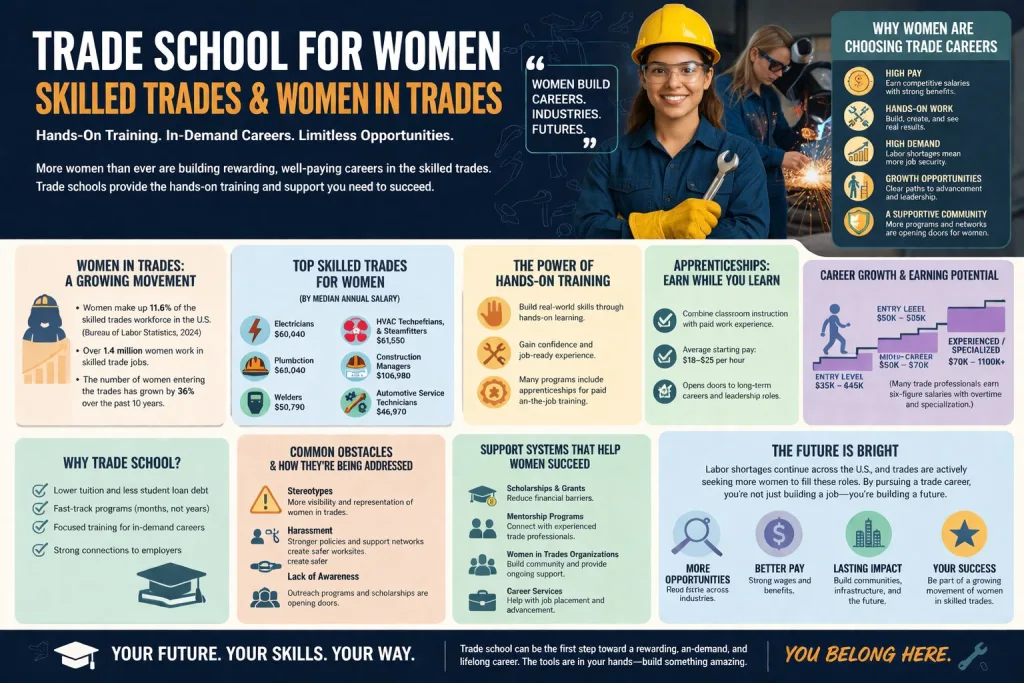
Career Advancement and Opportunities for Women in the Trades
- Women’s Role in Addressing Labor Shortages: With a significant labor shortage in skilled trades, women entering the field are addressing a crucial gap. By pursuing careers in trades, women can contribute to the growth and sustainability of the workforce, particularly in industries like construction, HVAC, and plumbing.
- Opportunities for Career Advancement: Women in skilled trades have ample opportunities for career growth. With the right training, apprenticeships, and certifications, women can move from entry-level positions to supervisory or managerial roles, boosting their salaries and job satisfaction.
- Diverse Career Paths: Skilled trades offer a wide range of career paths for women. From journeyman to business owner, women in trades have the flexibility to pursue various routes, such as becoming self-employed, running a small business, or specializing in high-demand areas like green energy or solar installation.
- Job Stability and High Earning Potential: Many trades offer excellent earning potential. According to the Bureau of Labor Statistics, skilled trades like electricians and HVAC technicians have median annual wages that range from $50,000 to over $70,000, depending on the specialization and experience level.
- Support and Resources for Women: As women continue to join the workforce in skilled trades, various advocacy organizations, trade unions, and educational programs provide support. These groups are dedicated to helping women overcome obstacles, network with other tradeswomen, and thrive in their careers.
- Long-Term Success and Lifelong Careers: Skilled trades are not only a path to immediate employment but also a route to lifelong, fulfilling careers. With ongoing training opportunities, professional certifications, and a strong workforce development network, women in trades are positioned to enjoy long-term success and job satisfaction.
The Power of Hands-On Training for Women in Skilled Trades
- Real-World Experience: Hands-on training is at the core of skilled trade programs. For women, this type of learning offers a direct and practical way to gain the specialized skills needed in fields such as construction, automotive repair, HVAC, and electrical work. Unlike traditional academic paths, trade programs focus on practical skills, preparing women to succeed in real-world job environments from day one.
- Confidence-Building: Hands-on training allows women to build confidence in their skills. Whether it’s welding, carpentry, or plumbing, the opportunity to practice and refine technical skills before entering the workforce gives women the self-assurance they need to excel.
- Employers Value Practical Skills: Employers in the trades highly value hands-on experience. They know that workers with practical, real-world skills are much more effective and productive on the job. Women who complete hands-on training programs are better equipped to meet the demands of the job, making them more desirable candidates for employers in construction and other skilled trades.
- Accelerates Learning: In hands-on environments, learning is often quicker and more efficient. Women are able to apply their knowledge in a practical setting, which helps to solidify the skills they’ve learned. This accelerates the learning curve and helps women enter the workforce faster with the skills needed to succeed.
- Tailored to Specific Trades: Hands-on training is tailored to the specific needs of each trade. Whether it’s the hands-on training required for a career in the construction trade, HVAC, or automotive, programs focus on specialized skills. For instance, HVAC training involves learning about the installation, maintenance, and repair of heating and cooling systems, which directly prepares women for high-demand jobs in that field.
Need Help With Your Dissertation?
Get professional academic support from Best Dissertation Writers . Our expert team is ready to help you with high-quality dissertation writing services tailored to your academic goals.
Get Dissertation HelpExploring Different Skilled Trade Training Programs for Women
- Wide Range of Programs: Skilled trade programs are varied and can cover a wide range of industries. Women entering the trades can choose from many options such as:
- Construction: Women in construction can pursue roles in project management, carpentry, plumbing, electrical work, and more. These programs focus on hands-on experience in building, renovating, and managing construction projects.
- Automotive: Automotive technician programs offer women the opportunity to work on vehicles, repairing and maintaining various automotive systems.
- HVAC: HVAC programs train women to work on heating, ventilation, and air conditioning systems, preparing them for in-demand careers in residential, commercial, and industrial settings.
- Welding: Welding training involves working with metal to join parts together, a highly specialized skill needed in construction, manufacturing, and automotive industries.
- Plumbing and Electrical: These programs equip women with the knowledge and skills necessary to install and maintain plumbing and electrical systems, which are always in demand.
- Hands-On Programs: Women interested in trades often find that hands-on programs offer the most practical and effective path to success. These programs can be found in top trade schools across the U.S., which emphasize on-the-job training and apprenticeships that prepare students for real-world tasks.
- Public Two-Year Colleges: Many women enter trade programs through public two-year colleges. These programs offer affordable training and access to valuable certifications that can help women land well-paying jobs quickly. For instance, electrical and HVAC programs at community colleges are often affordable and designed to quickly prepare graduates for immediate employment.
- Specialized Training: Different trade programs are designed to meet the unique needs of various industries. Whether it’s training women to work in the high-demand construction trade or automotive repair, specialized programs ensure that women are equipped with the skills and expertise needed in their chosen career fields.
- Financial Support: Many trade schools offer financial aid programs to help women cover tuition and fees. Scholarships, grants, and federal financial aid are available to make training programs more accessible. Women entering the trades can often complete their training with less student loan debt than their peers in traditional four-year degree programs.
How to Choose the Right Trade: A Practical Guide for Women
- Assessing Interests and Strengths: Choosing the right trade starts with understanding personal interests and strengths. Women interested in a career in the trades should take the time to assess their skills and determine which type of hands-on career excites them. Some women may thrive in the construction trade, while others may be drawn to automotive work, HVAC, or plumbing.
- Researching Career Options: It’s important to research career options and the demand for different trades. Women can look at labor market trends and projections from resources like the Bureau of Labor Statistics (BLS) to identify in-demand careers with high earning potential. Careers such as electricians, HVAC technicians, and welders are projected to experience significant growth in the coming years.
- Job Openings and Career Pathways: Women should consider job openings in the industry they are interested in. A trade with numerous job openings, such as plumbing or HVAC, may provide better long-term career opportunities and more potential for advancement. Researching available job openings will help women make informed decisions about which trade offers the best career path.
- Training Programs and Support: Women should choose training programs that offer strong mentorship, hands-on training, and job placement assistance. Many top trade schools for women provide specialized programs that support women throughout their training and into their careers. Support networks for women in trades are crucial for navigating challenges and ensuring success.
- Earning Potential: Salary potential is another important factor when choosing a trade. For example:
- HVAC Technicians: The median annual wage for HVAC technicians is around $50,000, with opportunities for higher earnings with more experience or specialized certifications.
- Electricians: Electricians earn a median wage of about $56,000 annually, with top earners making upwards of $80,000.
- Construction Workers: The average salary in construction varies depending on the role, but project managers, for example, can make well over $75,000 per year.
- Workplace Environment: It’s important to consider the work environment when choosing a trade. Some women may prefer the structured environment of the construction trade, while others may prefer the flexibility of automotive repair shops. Assessing work culture and the physical demands of different trades is essential.
Women Entering and Succeeding in Skilled Trades
- Overcoming Gender Barriers: Women in trades often face challenges, such as gender bias and stereotypes. However, many women are successfully breaking into nontraditional careers with the support of women’s advocacy groups, mentorship programs, and hands-on training. The growing number of women in construction, automotive, and HVAC fields shows that success is possible.
- Building Confidence and Skills: Women entering the trades are building both technical skills and confidence. Many women find that once they complete their training programs, they feel empowered to tackle any job in their field. With the right training, women are excelling in traditionally male-dominated fields.
- Labor Shortages and Job Demand: Labor shortages in skilled trades create excellent opportunities for women to enter the workforce. Women who pursue careers in the trades are helping to fill these crucial roles, ensuring a steady supply of skilled professionals in industries like construction, HVAC, and automotive repair.
- Workplace Harassment: While there are challenges, such as harassment on job sites, many organizations and companies are taking steps to ensure that women are supported in the workplace. Anti-harassment policies, women’s networks, and a growing culture of inclusion are making it easier for women to succeed in these fields.
- Mentorship and Advancement: Mentorship programs help women entering skilled trades find guidance and support throughout their careers. These programs connect women with experienced tradespeople who can offer advice and assistance as they navigate the early stages of their careers.
Supporting Women in Skilled Trades: Networks, Resources, and Communities
- Mentorship Programs: Organizations and trade unions are increasingly providing mentorship programs to help women succeed. These programs offer advice, career guidance, and job placement services. They also connect women with like-minded individuals who can provide moral support and industry insights.
- Networking Opportunities: Women in trades have access to specialized networks and communities that focus on supporting women entering these fields. These networks help women build connections, gain exposure to job opportunities, and learn about industry trends and advancements.
- Advocacy and Support Groups: Advocacy organizations like Tradeswomen Inc. and The National Association of Women in Construction are working to improve opportunities for women in the trades. They focus on increasing the number of women entering nontraditional careers and addressing barriers women face in the workforce.
- Ongoing Training and Development: Many organizations provide ongoing training programs for women in trades. These programs help women keep up with changing technology, gain new skills, and pursue career advancement opportunities.
Conclusion: A New Career Path for Women in the Trades
- Promising Future: Women entering the trades are entering a field with strong job growth, financial stability, and numerous career options. With fewer barriers and more support than ever, women can pursue fulfilling and rewarding careers in the skilled trades.
- Hands-On Career Success: Through hands-on training programs, mentorship, and supportive networks, women are finding success in nontraditional careers that offer high earning potential and job satisfaction. As the demand for skilled trades continues to rise, women will play a crucial role in shaping the future of the workforce.
- Opportunities for Growth: The skilled trades offer countless opportunities for women to grow, advance, and build lifelong careers. With access to training programs and career support, women in the trades can look forward to a bright future full of opportunity.