

6 Types of Sonographers in 2026 – Key Takeaways
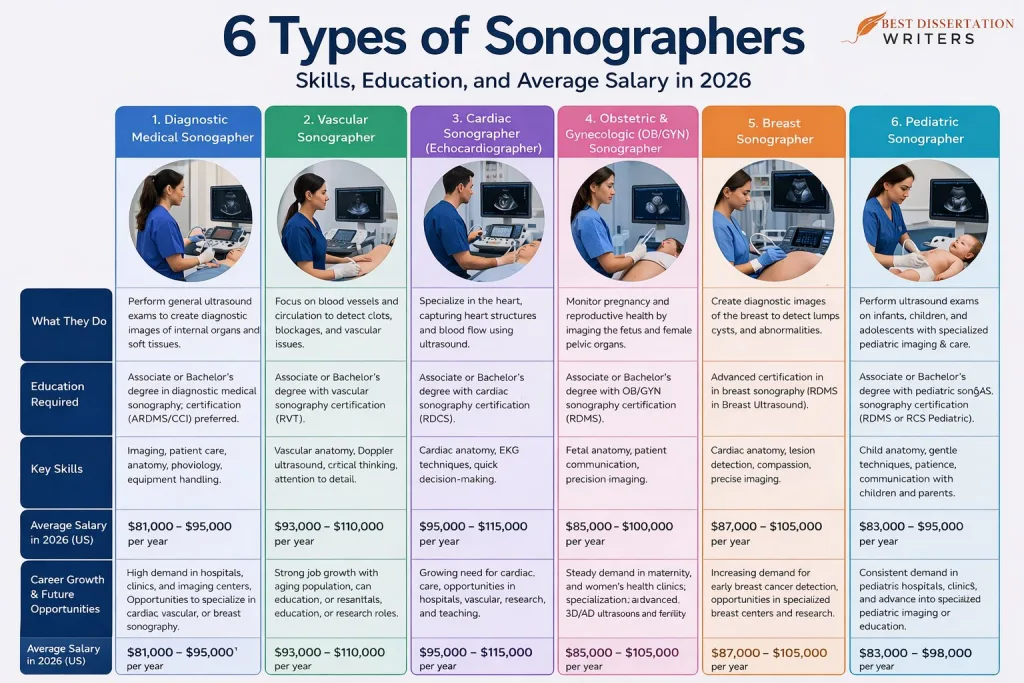
Sonographers use ultrasound technology to capture diagnostic images that help doctors diagnose and treat medical conditions. With growing demand for skilled professionals, sonography offers a rewarding career with competitive salaries and job stability. Here’s a compact overview of the six sonography specialties:
- Cardiac Sonographers: Specialize in imaging the heart through echocardiograms. Salary: $95,000 – $115,000. Job growth is strong due to the increasing need for cardiovascular care.
- Obstetric Sonographers: Focus on monitoring pregnancy and fetal development. Salary: $85,000 – $100,000. Expect increased demand in prenatal care and ultrasound imaging.
- Vascular Sonographers: Specialize in blood vessels and circulation to detect issues like blockages and clots. Salary: $93,000 to $110,000. Strong growth due to the aging population.
- Musculoskeletal Sonographers: Diagnose injuries and conditions of muscles, tendons, and joints. Salary: $75,000 – $95,000. High demand in orthopedic and rehabilitation centers.
- Breast Sonographers: Focus on detecting lumps, cysts, and abnormalities in breast tissue. Salary: $87,000 – $105,000. Increasing demand for breast cancer detection.
- Pediatric Sonographers: Specialize in ultrasound imaging for infants and children. Salary: $83,000 – $98,000. Steady demand in children’s hospitals and pediatric imaging centers.
Sonographers typically work in hospitals, diagnostic centers, and specialized clinics. To become a sonographer, you need a degree in diagnostic medical sonography, with certifications from the American Registry for Diagnostic Medical Sonography (ARDMS). The job market for sonographers is growing, with salaries ranging widely depending on specialty and location. This profession remains one of the highest paying bachelor degrees in healthcare.
Types of Sonographers: Understanding the Career and Its Scope
Who is a Sonographer? A Comprehensive Overview of the Profession
- Sonographer Definition: A sonographer is a healthcare professional who specializes in using ultrasound technology to create diagnostic images of the body’s internal structures. These images are essential for diagnosing various medical conditions and assisting in treatment planning.
- Key Responsibilities:
- Sonographers use ultrasound equipment to capture images of internal organs, tissues, and blood flow, aiding doctors in diagnosing diseases.
- Sonographers specialize in different fields such as obstetrics, cardiology, and musculoskeletal imaging, depending on their training and certification.
- Work Environment:
- Sonographers typically work in hospitals, medical clinics, private practices, and diagnostic imaging centers. They may also work in specialized settings, including cardiovascular or pediatric centers.
- Important Skill Sets:
- Sonographers must be skilled in operating advanced ultrasound equipment and understanding human anatomy to capture accurate diagnostic images.
- Communication skills are also crucial, as sonographers often work closely with patients to explain procedures and ensure comfort during the imaging process.
Career Opportunities in Sonography: Exploring Different Types of Sonographers
- Diagnostic Medical Sonographers: These professionals specialize in capturing ultrasound images for diagnosing medical conditions in various organs such as the heart, liver, and kidneys.
- They work in a variety of types of sonography fields, including abdominal sonographers who focus on imaging internal abdominal organs, and vascular sonographers who assess blood flow and vascular health.
- Breast Sonographers: This specialty involves using ultrasound technology to evaluate and detect abnormalities in breast tissue, aiding in the early detection of breast cancer.
- As part of their work, breast sonographers assist in guiding biopsies and monitoring treatment progress for patients with breast cancer.
- Cardiovascular Sonographers: These professionals specialize in examining the heart and blood vessels using echocardiograms. They play a vital role in diagnosing cardiovascular diseases such as heart failure or arterial blockages.
- Pediatric Sonographers: Specializing in imaging for infants and children, pediatric sonographers provide diagnostic images to assist in detecting congenital conditions or childhood diseases.
- This field requires specialized knowledge of pediatric anatomy and a compassionate approach to working with children.
- Ultrasound Technicians: Often used interchangeably with sonographers, these technicians work with ultrasound machines to capture diagnostic images. They may focus on a specific area such as cardiovascular sonography or obstetric sonography.
Education and Training: What’s Required for Sonographers in 2026
- Education Requirements:
- To become a sonographer, one must typically complete a sonography program offered by accredited colleges or universities. These programs typically lead to an associate’s or bachelor’s degree in diagnostic medical sonography.
- Courses in anatomy, physiology, medical terminology, and ultrasound technology form the core curriculum. A hands-on clinical rotation ensures students gain practical experience with ultrasound equipment.
- Certification and Licensure:
- Sonographers must pass certification exams from the American Registry for Diagnostic Medical Sonography (ARDMS) or other recognized bodies. Specializations in fields such as vascular sonography or cardiac sonography require additional certifications.
- Certification is essential as it is often required by employers and may improve job prospects, salary potential, and career growth.
- Key Skills for Success:
- Mastery of ultrasound technology to operate diagnostic machines.
- Ability to take diagnostic images that are clear and useful for physicians in diagnosing medical conditions.
- Good interpersonal skills to work closely with patients, explaining procedures, and ensuring comfort during exams.
- Continuing Education:
- Given the fast-paced advancements in ultrasound technology, sonographers must commit to lifelong learning. Many sonographers pursue additional certifications in emerging fields like pediatric sonography or musculoskeletal sonography to advance their careers.
- The Role of Continuing Education:
- For those looking to advance further in their careers, enrolling in advanced programs or gaining specialization in high-demand areas like cardiovascular sonography or vascular sonography can lead to opportunities in leadership roles or more specialized practice settings.
Types of Sonographers Comparison Table
| Type of Sonographer | Primary Focus | Education/Training | Key Skills | Average Salary in 2026 | Career Growth & Opportunities |
|---|---|---|---|---|---|
| Obstetric Sonographers | Imaging related to pregnancy and fetal development | Associate’s or Bachelor’s degree in diagnostic medical sonography; certification in obstetrics | Ultrasound proficiency, fetal development knowledge, patient care | $75,000 – $85,000 | Increased demand due to growing prenatal care. Opportunities in leadership or teaching roles |
| Cardiac Sonographers | Imaging the heart and diagnosing heart conditions using echocardiograms | Associate’s or Bachelor’s degree in diagnostic medical sonography; certification in cardiac sonography | Proficiency in echocardiography, cardiovascular anatomy, communication skills | $80,000 – $95,000 | High demand, increasing heart disease diagnoses. Opportunities for advancement in specialized roles |
| Musculoskeletal Sonographers | Imaging muscles, tendons, ligaments, and joints | Associate’s or Bachelor’s degree in diagnostic medical sonography with a focus on musculoskeletal imaging | Musculoskeletal anatomy expertise, attention to detail, image interpretation | $75,000 – $95,000 | Growing demand in orthopedics. Opportunities for specialization and leadership roles |
| Vascular Sonographers | Imaging veins and arteries to diagnose circulatory issues | Associate’s or Bachelor’s degree in diagnostic medical sonography; certification in vascular sonography | Doppler ultrasound proficiency, vascular anatomy knowledge, attention to detail | $75,000 – $95,000 | Strong growth, increasing demand for vascular health services. Specialization opportunities in vascular fields |
| Diagnostic Medical Sonographers | General sonography in various systems like abdominal, cardiac, and musculoskeletal | Associate’s or Bachelor’s degree in diagnostic medical sonography; certification in various specialties | Ultrasound proficiency, anatomy knowledge, diagnostic image interpretation | $75,000 – $90,000 | High demand with opportunities for specialization in different areas and leadership roles |
| Ultrasound Technologists | General ultrasound imaging for diagnostic purposes across body systems | Associate’s or Bachelor’s degree in diagnostic medical sonography; certification as required | Ultrasound proficiency, patient care, image capture for various body areas | $70,000 – $85,000 | Growing demand for diagnostic imaging. Career advancement in specialized fields or teaching roles |
Obstetric Sonographers
Who is an Obstetric Sonographer? Their Roles and Responsibilities
- Obstetric Sonographers specialize in using ultrasound technology to monitor pregnancies and assess fetal development.
- They specialize in taking diagnostic images of the fetus, placenta, and amniotic fluid, helping healthcare providers detect potential complications such as abnormalities, growth restrictions, or multiple pregnancies.
- The primary role is to perform abdominal ultrasound exams to obtain clear images of the fetus and the mother’s reproductive organs.
- Sonographers in this field work closely with obstetricians and gynecologists to provide critical information that aids in prenatal care and guides decision-making throughout the pregnancy.
- Sonographers also assist in diagnostic medical sonography for conditions such as ectopic pregnancies, gestational age assessment, and monitoring fetal heartbeat and movements.
- The role requires great attention to detail and a compassionate approach to working with expectant mothers, who may experience anxiety during the procedure.
Education and Skills Required for Obstetric Sonographers
- Educational Requirements:
- To become an obstetric sonographer, individuals typically need to complete an accredited diagnostic medical sonography program. These programs usually result in an associate’s or bachelor’s degree.
- Courses focus on anatomy, ultrasound technology, pregnancy and fetal development, and medical ethics.
- During the program, students receive both theoretical instruction and hands-on clinical experience, learning to operate sonography equipment and interpret diagnostic images.
- Skills Needed:
- Sonographers need strong technical skills to operate ultrasound equipment accurately, ensuring the best possible imaging results.
- They must also have excellent communication skills to explain procedures to expectant mothers, provide reassurance, and discuss any findings with medical staff.
- Attention to detail is crucial, as even minor errors in imaging could lead to misdiagnoses or unnecessary procedures.
- Sonographers in this field must stay updated on the latest advancements in sonography technology and ultrasound techniques to provide the highest level of care.
- Certifications:
- Certification from the American Registry for Diagnostic Medical Sonography (ARDMS) is typically required. Obstetric sonographers must pass specific exams to be registered in obstetric and gynecologic sonography.
- Continuing education is important, as sonographers in this field must keep up with evolving sonography uses and new prenatal care techniques.
Obstetric Sonographer Salary in 2026
- The salary for obstetric sonographers in 2026 is competitive, with the Bureau of Labor Statistics estimating the median annual wage for diagnostic medical sonographers at around $75,000. However, this can vary by experience, location, and specific work environment.
- Obstetric sonographers may earn slightly more depending on their geographic region and the complexity of their work. In high-demand areas, salaries can exceed $85,000.
- According to industry reports, obstetric sonographers in this field can earn higher salaries if they pursue additional certifications or work in specialized hospitals or healthcare systems.
- Compared to other healthcare professions, sonography is considered one of the highest paying bachelor degrees, offering both job security and a rewarding career in the medical field.
Need Help With Your Dissertation?
Get professional academic support from Best Dissertation Writers . Our expert team is ready to help you with high-quality dissertation writing services tailored to your academic goals.
Get Dissertation HelpCareer Growth and Future Opportunities for Obstetric Sonographers
- High Demand and Job Outlook:
- The demand for obstetric sonographers is expected to remain strong, especially as more women seek prenatal care and ultrasound services.
- Sonographers are medical professionals with a critical role in monitoring fetal health, and their services are integral to obstetrics. As the healthcare industry continues to expand, sonographers who specialize in obstetrics are increasingly sought after.
- According to the Bureau of Labor Statistics, the employment of diagnostic medical sonographers is projected to grow by 14% from 2020 to 2030, much faster than the average for other professions.
- Career Advancement:
- Sonographers can also advance in their careers by specializing in different types of sonography or by taking on leadership roles, such as becoming a lead sonographer or a clinical instructor for new sonography students.
- With experience, obstetric sonographers can transition into roles as sonography educators, guiding future professionals in diagnostic medical sonography programs.
- Additionally, sonographers can look into further specialization in areas such as neurosonology or vascular sonography, which can increase job satisfaction and salary potential.
- Job Security and Growth:
- Due to the continuous advancement in sonography technology, medical sonographers need to adapt to new equipment and imaging techniques, which makes ongoing education essential for career growth.
- As one of the highest paying bachelor degrees, a career in sonography offers excellent job security, competitive pay, and a strong demand for qualified professionals across different medical specialties.
- Global Opportunities:
- For those interested in exploring international opportunities, the demand for skilled obstetric sonographers is also growing globally, particularly in countries with developing healthcare systems that seek to expand access to prenatal care and ultrasound diagnostics.
Cardiac Sonographers
Who is a Cardiac Sonographer? Their Roles and Responsibilities
- Cardiac Sonographers, also known as echocardiographers, specialize in using ultrasound technology to capture diagnostic images of the heart. Their primary responsibility is to assess the structure and function of the heart using sonography and ultrasound techniques.
- They perform echocardiograms, which are key diagnostic tests that examine the heart’s chambers, valves, and blood flow. These tests help identify conditions such as heart disease, valve problems, and congenital defects.
- Cardiovascular sonographers often work closely with cardiologists to provide essential data that assists in diagnosing conditions like heart failure, arrhythmias, and cardiovascular diseases.
- They are responsible for operating ultrasound equipment to capture high-quality images, interpreting the results, and sometimes discussing these findings with patients to provide a better understanding of their health.
- Cardiac sonographers often monitor blood flow and heart function, looking for abnormalities such as clots, aneurysms, and other issues that can affect cardiovascular health.
Education and Skills Required for Cardiac Sonographers
- Educational Requirements:
- To pursue a career as a cardiac sonographer, individuals typically need to complete an accredited diagnostic medical sonography program. This can lead to an associate’s or bachelor’s degree.
- Many programs offer a specialization in diagnostic cardiovascular sonographers, where students receive specific training in cardiac sonography techniques, including echocardiography and Doppler ultrasound.
- Coursework covers anatomy, physiology, and medical terminology related to the heart, as well as practical training in using sonography equipment and capturing accurate images of the heart and blood vessels.
- Key Skills Required:
- Cardiovascular sonographers use specialized sonography equipment to create detailed heart images. Mastery of this technology is essential for producing high-quality diagnostic results.
- Strong analytical skills are needed to interpret complex heart images and assist in the diagnosis of various cardiac conditions.
- Sonographers need excellent communication skills to explain procedures to patients and interact with cardiologists about the findings.
- Attention to detail is crucial in ensuring that the diagnostic images are clear and accurate for proper analysis by healthcare providers.
- Certifications:
- Cardiac sonographers are usually required to obtain certification from the American Registry for Diagnostic Medical Sonography (ARDMS) or a similar organization.
- Continuing education and certification in echocardiography are often required to maintain professional standards and keep up with advancements in cardiovascular sonography technology.
Cardiac Sonographer Salary in 2026
- The average annual salary for cardiac sonographers in 2026 is expected to be around $80,000 to $95,000, with variations based on location, level of experience, and certification.
- Sonographers in this field who specialize in cardiac sonography or work in high-demand regions or healthcare facilities may see salaries closer to the upper range of this estimate.
- According to the Bureau of Labor Statistics, the overall salary for diagnostic medical sonographers is expected to grow steadily, with cardiac sonographers being among the highest paying bachelor degrees in healthcare.
- Additional factors that influence salary include the type of institution they work for—whether it’s a hospital, a diagnostic testing center, or a private practice.
Career Growth and Future Opportunities for Cardiac Sonographers
- Demand for Sonographers:
- The demand for cardiac sonographers continues to rise, fueled by the increasing prevalence of heart disease and an aging population. Sonographers and their specialties, including those who focus on cardiovascular health, are essential to diagnosing and treating a wide range of heart conditions.
- According to the Bureau of Labor Statistics, the employment of diagnostic medical sonographers is projected to grow by 14% from 2020 to 2030, which is much faster than the average for other professions. This is largely driven by the demand for imaging services as part of routine cardiovascular screenings.
- Career Advancement:
- For cardiac sonographers, career advancement opportunities are plentiful. With experience, they can move into supervisory roles, become clinical instructors, or even specialize further in areas like vascular sonography or neurosonology.
- Many sonographers also pursue advanced certifications in specific areas of cardiac sonography, such as echocardiography or cardiovascular sonography, which can lead to higher-paying positions and increased job security.
- Long-Term Opportunities:
- As one of the highest paying bachelor degrees, a career as a cardiac sonographer offers long-term job security and high earning potential.
- Sonographers can look into positions in musculoskeletal sonography or other emerging specialties, offering even more room for professional growth and development.
- With advancements in sonography technology, cardiac sonographers are positioned to stay at the forefront of diagnostic imaging, gaining access to innovative equipment and treatment methods in heart disease care.
- Work Environment:
- Cardiac sonographers typically work in hospitals, diagnostic imaging centers, and cardiovascular clinics. Some may also work in outpatient settings or for specialized cardiology practices. The growth of telemedicine and mobile ultrasound technology is also creating new opportunities in remote healthcare settings.
Musculoskeletal Sonographers
Who is a Musculoskeletal Sonographer? Their Roles and Responsibilities
- Musculoskeletal sonographers specialize in using ultrasound technology to assess and diagnose injuries or conditions related to muscles, tendons, ligaments, and joints.
- Their role is critical in detecting musculoskeletal injuries such as strains, tears, and joint damage, providing essential diagnostic images to assist in treatment planning.
- Sonographers specialize in taking diagnostic images of musculoskeletal areas, often focusing on areas like the shoulder, knee, and elbow, helping doctors evaluate joint mobility, inflammation, and muscle damage.
- Musculoskeletal sonographers often work closely with orthopedic surgeons, rheumatologists, and physical therapists to monitor the recovery of musculoskeletal injuries and guide physical rehabilitation programs.
- The sonographer operates ultrasound equipment to capture high-quality, real-time images that help physicians make accurate diagnoses without the need for invasive procedures.
- Unlike traditional X-rays, which only show bone structures, musculoskeletal sonography provides a dynamic and detailed view of soft tissues, helping in the evaluation of conditions like tendinitis, arthritis, and rotator cuff injuries.
Education and Skills Required for Musculoskeletal Sonographers
- Educational Requirements:
- To become a musculoskeletal sonographer, individuals must complete an accredited diagnostic medical sonography program. These programs typically offer either an associate’s or bachelor’s degree, with a focus on musculoskeletal imaging and ultrasound techniques.
- Students gain knowledge in anatomy, physiology, medical terminology, and musculoskeletal pathology. The coursework also includes hands-on experience in using sonography equipment and capturing images of musculoskeletal structures.
- Sonographers usually work in hospitals and diagnostic testing centers where they perform specialized ultrasound exams on injured or diseased soft tissue and joint areas.
- Skills Needed:
- Musculoskeletal sonographers need to have excellent attention to detail as they assess minute changes in soft tissue and joints.
- They must be highly skilled in using ultrasound equipment to create clear, accurate images for diagnosis. This includes proficiency in different types of sonography techniques such as Doppler and elastography for tissue elasticity.
- Sonographers in this field must also possess strong interpersonal skills to explain procedures and provide comfort to patients, many of whom may be experiencing significant pain or discomfort.
- Musculoskeletal sonographers often work closely with other healthcare professionals, so teamwork and the ability to collaborate with doctors, surgeons, and physical therapists is essential for effective patient care.
- As with all sonographers, they must stay up-to-date with the latest advancements in sonography technology and the treatment of musculoskeletal conditions.
- Certifications:
- Sonographers need to be certified by recognized organizations like the American Registry for Diagnostic Medical Sonography (ARDMS) or the American Society of Musculoskeletal Ultrasound (ASMUS). Certification in musculoskeletal sonography may require passing a specialized exam to demonstrate competency in this niche.
Musculoskeletal Sonographer Salary in 2026
- In 2026, musculoskeletal sonographers can expect a competitive salary. The average annual salary for diagnostic medical sonographers, including those specializing in musculoskeletal imaging, is projected to be $75,000 to $95,000.
- Salaries can vary based on location, experience, and the type of healthcare facility where the sonographer works. In specialized hospitals or high-demand areas, salaries can rise to $100,000 or more for highly experienced professionals.
- The Bureau of Labor Statistics reports that overall job growth for sonographers is expected to be strong, and musculoskeletal sonographers will see similar demand. This makes musculoskeletal sonography one of the highest paying bachelor degrees in the healthcare sector.
- As sonographers specialize in taking diagnostic images of complex musculoskeletal conditions, those with advanced certifications or who work in specialized clinics can command a premium salary.
Career Growth and Future Opportunities for Musculoskeletal Sonographers
- Job Demand and Outlook:
- The demand for musculoskeletal sonographers is expected to grow steadily as more patients seek non-invasive methods to diagnose musculoskeletal conditions. With an aging population and an increase in sports injuries, musculoskeletal sonography plays an important role in early detection and treatment.
- The Bureau of Labor Statistics projects the overall job growth for sonographers to be 14% from 2020 to 2030, which is much faster than the average for other occupations. This reflects the increasing reliance on diagnostic medical imaging in various specialties, including orthopedics and rehabilitation.
- Career Advancement:
- Sonographers can pursue a career in sonography by advancing to leadership or teaching roles, such as becoming a sonography program instructor or a lead diagnostic sonographer at a healthcare facility.
- With additional certifications in vascular sonography, cardiovascular sonography, or neurosonology, musculoskeletal sonographers can further specialize in taking diagnostic images of related fields, which can increase their salary and job opportunities.
- Musculoskeletal sonographers can also explore opportunities in research, working with academic institutions or medical technology companies to improve imaging techniques or develop new technologies for musculoskeletal diagnostics.
- Work Environment:
- Sonographers usually work in hospitals, outpatient clinics, private practices, or sports medicine centers. As musculoskeletal sonography is a specialized field, professionals can often find roles in orthopedic practices, physical therapy centers, or rehabilitation hospitals.
- As the field grows, there may also be opportunities to work with cutting-edge technologies, such as neurosonology sonographers use for imaging neurological conditions or advanced musculoskeletal ultrasound machines that provide more detailed images of tissue.
- Long-Term Outlook:
- As sonographers are highly valued in diagnostic imaging, career stability in this field is strong, with continued demand for musculoskeletal sonographers as a specialized profession.
- With consistent advancements in ultrasound technology, musculoskeletal sonographers will have opportunities to enhance their skills and expand their expertise in diagnosing a broader range of conditions, making this a career with significant long-term growth potential.
Vascular Sonographers
Who is a Vascular Sonographer? Their Roles and Responsibilities
- Vascular Sonographers specialize in using ultrasound technology to examine blood vessels and diagnose issues related to circulation, such as arterial blockages, blood clots, and aneurysms.
- Their primary responsibility is to use sonography equipment to capture diagnostic images of veins and arteries, helping physicians assess the condition of the vascular system.
- Vascular sonographers often perform Doppler ultrasounds, a technique used to assess blood flow, measure the speed and direction of blood flow, and detect irregularities like narrowing or blockage in the arteries.
- They play a crucial role in diagnosing conditions like peripheral artery disease (PAD), deep vein thrombosis (DVT), and carotid artery disease, which can lead to stroke or heart attack if left untreated.
- Sonographers in this field often work closely with vascular surgeons, cardiologists, and other healthcare providers to determine the best course of treatment based on the ultrasound findings.
- Vascular sonographers often perform non-invasive exams, offering a safer and more comfortable alternative to traditional diagnostic methods, such as angiography.
Education and Skills Required for Vascular Sonographers
- Educational Requirements:
- To become a vascular sonographer, individuals typically complete an accredited diagnostic medical sonography program, which can result in either an associate’s or bachelor’s degree.
- The program includes coursework in anatomy, physiology, medical terminology, and ultrasound physics, with specialized training in vascular sonography.
- Vascular sonographers must gain hands-on experience using sonography equipment in clinical settings to develop proficiency in capturing and interpreting diagnostic images of blood vessels.
- Many programs offer specializations in vascular sonography, equipping students with the skills needed to assess the vascular system effectively and identify a range of circulatory conditions.
- Key Skills Required:
- Sonographers need to be proficient in using advanced ultrasound technology, such as Doppler ultrasound and other specialized tools for vascular imaging.
- Attention to detail is crucial for vascular sonographers to accurately identify blockages, clots, or other abnormalities in blood vessels.
- Communication skills are necessary, as vascular sonographers work closely with patients to explain the procedure and ease any concerns they may have.
- Sonographers in this field must also be able to interpret images and provide accurate reports to the physician, which is essential for proper diagnosis and treatment planning.
- Some vascular sonographers also perform patient assessments and history-taking, which helps in diagnosing issues related to blood flow and circulation.
- Certifications:
- To become a certified vascular sonographer, professionals must pass the certification exam from the American Registry for Diagnostic Medical Sonography (ARDMS), specifically the Vascular Technology exam.
- Sonographers need to stay updated with ongoing training and certifications to ensure they are proficient in the latest vascular imaging techniques and technology.
Vascular Sonographer Salary in 2026
- The average salary for vascular sonographers in 2026 is estimated to be between $75,000 to $95,000 annually, depending on factors such as experience, location, and the type of healthcare facility.
- Vascular sonographers who work in metropolitan areas or for specialized hospitals or diagnostic centers may earn salaries toward the higher end of this range, potentially exceeding $100,000.
- The Bureau of Labor Statistics reports that the demand for diagnostic medical sonographers is expected to grow by 14% from 2020 to 2030, driven by the increasing need for imaging services, particularly in vascular health.
- Vascular sonographers are often considered some of the highest paying bachelor degrees in the healthcare field, with competitive salaries reflecting their specialized skills and expertise.
- Additional certifications, such as those in vascular technology or cardiovascular sonography, can increase earning potential for these professionals.
Career Growth and Future Opportunities for Vascular Sonographers
- Job Demand and Outlook:
- The demand for vascular sonographers is expected to rise as the population ages and the incidence of vascular diseases, such as peripheral artery disease (PAD) and varicose veins, increases.
- Vascular sonographers often work in specialized clinics, hospitals, and diagnostic testing centers, and the growing focus on early detection of vascular issues is likely to lead to continued job openings in this field.
- As vascular sonography is one of the different types of sonography specialties, professionals who specialize in this field will continue to be in high demand for the foreseeable future.
- Career Advancement:
- Sonographers in this field can advance in their careers by gaining further certifications or pursuing additional specialties, such as cardiovascular sonography or musculoskeletal sonography, expanding their skill set and job opportunities.
- There are also leadership roles in vascular sonography that sonographers can aim for, such as becoming a lead technologist, clinical supervisor, or educator in sonography programs.
- With experience, vascular sonographers can transition into administrative roles, overseeing departments or becoming involved in managing medical teams.
- Long-Term Outlook:
- Vascular sonographers can also look into positions in research, helping to develop new imaging technologies and techniques for vascular diagnostics.
- As sonography is often considered one of the highest paying bachelor degrees, a career in vascular sonography provides excellent job security, high earning potential, and opportunities for specialization and growth.
- In addition to opportunities within hospitals and clinics, vascular sonographers may also find roles in outpatient centers, private practices, or mobile diagnostic services, providing a wide range of work environments and flexible career paths.
Need Help With Your Dissertation?
Get professional academic support from Best Dissertation Writers . Our expert team is ready to help you with high-quality dissertation writing services tailored to your academic goals.
Get Dissertation HelpDiagnostic Medical Sonographers
Who is a Diagnostic Medical Sonographer? Their Roles and Responsibilities
- Diagnostic Medical Sonographers specialize in using ultrasound technology to create images of the body’s internal structures, helping to diagnose medical conditions.
- Sonographers perform a range of duties, such as capturing diagnostic images of organs like the heart, kidneys, liver, and reproductive organs, depending on their specialization.
- Diagnostic medical sonographers specialize in different types of sonography, including abdominal sonography, obstetric sonography, and cardiac sonography, each requiring a specific set of skills and knowledge to accurately capture and interpret images.
- Sonographers take images that aid doctors in diagnosing conditions such as tumors, kidney stones, or cardiac diseases, using advanced ultrasound equipment.
- In their role, medical sonographers work closely with physicians, radiologists, and other healthcare providers to interpret the results of their scans and assist in planning the treatment.
- While many diagnostic medical sonographers focus on general imaging, others specialize in particular areas, such as breast sonography, where they help detect and monitor breast cancer through ultrasound.
Education and Skills Required for Diagnostic Medical Sonographers
- Educational Requirements:
- To become a diagnostic medical sonographer, individuals typically complete an accredited sonography program that leads to an associate’s or bachelor’s degree in diagnostic medical sonography.
- These programs include both classroom education and hands-on clinical training, where students learn how to operate ultrasound equipment and capture images of various organs and systems.
- Courses typically cover subjects like anatomy, physiology, medical terminology, and patient care, with specialized courses in diagnostic medical sonography techniques for different body systems, such as vascular sonography or cardiac sonography.
- Key Skills Required:
- Diagnostic medical sonographers need to have excellent technical skills to operate ultrasound equipment accurately. This includes understanding the physics of sound waves and their interaction with human tissue to create clear images.
- Strong attention to detail is crucial for interpreting diagnostic images and identifying potential issues such as tumors, cysts, or organ abnormalities.
- Sonographers or echocardiographers must also possess good interpersonal skills to communicate effectively with patients and healthcare teams, as well as provide patient comfort during the procedure.
- Medical sonographers work closely with other medical professionals to provide imaging results that contribute to the diagnostic process, often requiring collaboration and clear communication.
- Certifications:
- Diagnostic medical sonographers typically need to become certified through organizations like the American Registry for Diagnostic Medical Sonography (ARDMS). These certifications demonstrate proficiency in specific areas such as abdominal ultrasound or cardiac sonography.
- Continuing education is essential in this field to stay up-to-date with advances in sonography technology and ultrasound techniques, ensuring high standards of patient care and diagnostic accuracy.
Diagnostic Medical Sonographer Salary in 2026
- The average salary for diagnostic medical sonographers in 2026 is expected to range between $75,000 and $90,000 annually. However, this can vary depending on geographic location, years of experience, and whether the sonographer specializes in high-demand areas like cardiac sonography or vascular sonography.
- Sonographers in this field who work in metropolitan areas or in private practices may earn higher salaries, sometimes exceeding $100,000. Additionally, those who work in hospitals with specialized departments, such as obstetric sonography or musculoskeletal sonography, may also earn premium wages.
- According to the Bureau of Labor Statistics, the job outlook for diagnostic medical sonographers is strong, with employment expected to grow by 14% from 2020 to 2030, which is faster than the average for all occupations. This growth is driven by an aging population and increased reliance on non-invasive diagnostic imaging.
- As one of the highest paying bachelor degrees in healthcare, sonography offers a competitive salary, making it an attractive career choice for those interested in diagnostic imaging and patient care.
Career Growth and Future Opportunities for Diagnostic Medical Sonographers
- Career Advancement:
- Diagnostic medical sonographers can specialize in taking diagnostic images in various medical fields, including vascular sonography, cardiac sonography, and obstetric sonography, each offering unique career opportunities.
- With experience, sonographers can transition into leadership positions, such as becoming lead sonographers, department managers, or clinical educators in programs in sonography.
- Many sonographers choose to further their education by earning certifications in advanced sonography techniques, such as musculoskeletal sonography or neurosonology, to enhance their skills and job prospects.
- Demand and Job Outlook:
- The demand for diagnostic medical sonographers continues to rise due to the growing reliance on non-invasive diagnostic imaging techniques. Sonographers will be needed to meet the demand for imaging services, especially in hospitals, outpatient clinics, and private practices.
- As technology evolves, sonographers will need to stay informed about the latest sonography technology and ultrasound equipment to remain competitive and efficient in the workplace.
- For those interested in a career as a sonographer, there are ample opportunities to specialize in emerging fields such as vascular sonography or cardiovascular sonography, both of which are expected to see increased demand.
- Work Environment and Flexibility:
- Sonographers usually work in hospitals, imaging centers, outpatient clinics, or even as part of mobile diagnostic units. This offers flexibility in choosing a work environment that suits one’s career goals and personal preferences.
- As diagnostic medical sonographers specialize in different types of imaging, they may have the opportunity to work in diverse settings or travel for assignments, especially if they choose to work with agencies that provide temporary staffing.
- Long-Term Career Opportunities:
- Sonographers who pursue a career in sonography can also look into academic roles, teaching future sonographers in accredited programs or conducting research to advance the field of diagnostic medical sonography.
- With continuous technological advancements, sonographers will be at the forefront of medical imaging, gaining access to new tools and techniques that will expand their career options and earning potential.
Ultrasound Technologists
What is an Ultrasound Technologist? Their Roles and Responsibilities
- Ultrasound Technologists, also called ultrasound technicians, specialize in using ultrasound technology to create diagnostic images of the body’s internal structures.
- They operate ultrasound equipment to capture real-time images of organs, tissues, and blood flow, which help healthcare providers diagnose medical conditions.
- Ultrasound technologists may work in a variety of settings, including hospitals, outpatient clinics, diagnostic imaging centers, and private practices, assisting physicians in diagnosing a range of conditions like tumors, heart disease, and organ abnormalities.
- Their role involves performing diagnostic medical sonography procedures such as abdominal ultrasound, cardiac sonography, and obstetric sonography, depending on their specialization.
- Breast sonographers can also specialize in using ultrasound to detect and monitor breast cancer, providing a critical role in the early detection and ongoing monitoring of breast abnormalities.
- Ultrasound technologists work closely with patients to explain procedures and ensure they are comfortable during the imaging process. They are responsible for ensuring the images they capture are clear, accurate, and suitable for diagnosis by doctors.
- Unlike traditional X-rays, ultrasound provides a non-invasive, safer imaging option for assessing soft tissues and organs.
Education and Skills Required for Ultrasound Technologists
- Educational Requirements:
- To become an ultrasound technologist, individuals must complete an accredited diagnostic medical sonography program, typically earning an associate’s or bachelor’s degree.
- These programs cover a range of topics, including anatomy, physiology, medical terminology, and ultrasound physics. Students receive both theoretical education and hands-on experience in using ultrasound equipment to capture diagnostic images.
- Specializations within diagnostic medical sonography, such as cardiac sonography or obstetric sonography, may require additional coursework or training to ensure competence in those areas.
- Some ultrasound technologists also pursue certifications in specific imaging areas, such as vascular sonography or breast sonography, to enhance their expertise and career prospects.
- Key Skills Required:
- Ultrasound technologists need strong technical skills to operate ultrasound machines effectively. They must understand how sound waves interact with the body to produce clear, accurate images.
- Attention to detail is essential in this field. Ultrasound technologists need to ensure the images they capture are of the highest quality for accurate diagnoses.
- Excellent communication skills are necessary, as ultrasound technologists must explain the procedure to patients, ease any concerns, and ensure they remain still during the imaging process.
- The ability to work under pressure and handle potentially uncomfortable situations for patients, especially when working with those experiencing pain, is important for ultrasound technologists.
- Understanding the different types of sonography specialties helps ultrasound technologists adapt to various medical fields, whether working in obstetrics, cardiology, or musculoskeletal imaging.
- Certifications:
- Certification from the American Registry for Diagnostic Medical Sonography (ARDMS) or other recognized bodies is often required. This ensures the technologist has the required knowledge and competency in performing ultrasound exams.
- Continuing education is important to stay up-to-date with advancements in ultrasound technology and new diagnostic procedures.
Ultrasound Technologist Salary in 2026
- Ultrasound technologists can expect a competitive salary in 2026, with the average annual income ranging between $70,000 and $85,000. However, the salary can vary based on experience, location, and specialization.
- Sonographers who specialize in high-demand areas like cardiac sonography or vascular sonography often command higher salaries, sometimes exceeding $95,000 annually.
- The Bureau of Labor Statistics reports that the median annual wage for diagnostic medical sonographers, which includes ultrasound technologists, is $75,000 in 2026. Those working in major metropolitan areas or specialized medical centers may earn significantly more.
- Ultrasound technologists are considered some of the highest paying bachelor degrees in healthcare, making the profession both lucrative and rewarding.
- In addition to base salary, ultrasound technologists often receive benefits such as healthcare coverage, retirement plans, and opportunities for paid continuing education.
Career Growth and Future Opportunities for Ultrasound Technologists
- Job Demand and Outlook:
- The demand for ultrasound technologists is expected to grow at a robust rate. According to the Bureau of Labor Statistics, employment for diagnostic medical sonographers is projected to grow 14% from 2020 to 2030, much faster than the average for other professions.
- As the population ages and the demand for non-invasive diagnostic imaging increases, ultrasound technologists will continue to be in high demand, especially in specialized fields such as vascular sonography and obstetric sonography.
- Sonographers or echocardiographers who specialize in cardiac imaging will find ample job opportunities due to the increasing prevalence of heart disease.
- Career Advancement:
- Ultrasound technologists can pursue a variety of career paths. With experience, they can transition into lead technologist or supervisory roles, managing ultrasound departments or teams of sonographers.
- Some technologists choose to pursue advanced certifications in additional specialties, such as neurosonology or musculoskeletal sonography, to increase their earning potential and career prospects.
- Teaching and academic roles are also an option for experienced ultrasound technologists. They can become instructors in programs in sonography, helping to train the next generation of sonographers.
- Long-Term Career Opportunities:
- As the field of diagnostic medical sonography continues to evolve, ultrasound technologists will have the opportunity to work with cutting-edge sonography equipment and emerging technologies in medical imaging.
- Ultrasound technologists can also look into opportunities in research or innovation, helping to develop new techniques and equipment for ultrasound imaging.
- With specialized training and certifications, ultrasound technologists can work in diverse medical fields, including pediatrics, cardiology, and oncology, expanding their job opportunities and professional satisfaction.
References
- How can an RN become an ultrasound technician? | BestAccreditedColleges.org – https://bestaccreditedcolleges.org/articles/careers-and-education/how-can-an-rn-become-an-ultrasound-technician.html
- How to Become a Sonographer | Salary & Programs – https://nurse.org/healthcare/how-to-become-sonographer/
- Diagnostic Medical Sonographer – Explore Healthcare Careers – Mayo Clinic College of Medicine & Science – https://college.mayo.edu/academics/explore-health-care-careers/careers-a-z/diagnostic-medical-sonographer/
- Sonographers’ experiences in coping with stress in the workplace in Gauteng, South Africa – ScienceDirect – https://www.sciencedirect.com/science/article/abs/pii/S107881742500104X