Midwifery Management of Gestational Diabetes Mellitus: A Literature Review
 By Dr. Robertson Prime, Research Fellow
Updated October 12, 2026
16 min read
About 3,200 words
In this review
Abstract
Background: Gestational diabetes is one of the most common medical complications of pregnancy, with an estimated global standardised prevalence of 14.0% when consistent diagnostic criteria are applied. It is linked to complications for mother and baby during pregnancy and to a much higher lifetime risk of type 2 diabetes.
Aim: This narrative review aimed to examine recent evidence on the risks, treatment and long-term follow-up of women with the condition, and what this means for midwifery practice.
Methods: Evidence was identified through targeted searches of openly accessible bibliographic records, publisher websites and the reference lists of key reviews. Six sources published between 2005 and 2022 were included: a randomised trial, a national guideline, a Cochrane review and three systematic reviews with meta-analysis, appraised with CASP checklists and synthesised narratively.
Findings: A meta-analysis of 156 studies found higher adjusted odds of caesarean section, preterm birth, macrosomia and large-for-gestational-age infants, and neonatal unit admission was more than twice as likely where insulin was used. In a landmark trial, treatment reduced serious perinatal complications from 4% to 1%, and lifestyle interventions lowered the risk of large-for-gestational-age babies (risk ratio 0.60). After birth, women with previous gestational diabetes had nearly ten times the risk of developing type 2 diabetes, so postnatal testing is essential.
Conclusion: Midwives should support timely screening, practical lifestyle advice and good glycaemic control within multidisciplinary antenatal care, and make sure every woman understands and attends long-term diabetes testing after birth.
Keywords: gestational diabetes, antenatal care, glycaemic control
Introduction
This narrative review critically examines recent evidence on gestational diabetes and its implications for midwifery practice.
Gestational diabetes is raised blood glucose that is first recognised during pregnancy. It usually develops in the second half of pregnancy, when hormones produced by the placenta make the body less sensitive to insulin, and most women return to normal glucose levels soon after birth. For many years the condition was regarded as a short-lived problem of pregnancy, but it is now understood to have consequences for the health of both mother and baby during pregnancy, at birth and for many years afterwards.
The condition is becoming more common as maternal age and rates of obesity rise, and as screening is extended to more women. A diagnosis can come as a shock, bringing finger-prick testing, dietary change, extra appointments and sometimes medication, often at a time when women expected a straightforward pregnancy. Midwives are usually the first professionals to discuss screening, to explain a positive result and to coordinate care with diabetes specialists, so the way they communicate risk and support self-management can strongly shape women’s experience of gestational diabetes.
A narrative design was chosen because the evidence spans a landmark randomised trial, a national guideline, a Cochrane review and large meta-analyses of observational studies. A narrative approach allows these different types of evidence to be brought together and discussed critically in relation to everyday antenatal care.
Review question
What does recent evidence show about the risks associated with gestational diabetes, the effectiveness of treatment, and the long-term follow-up women need, and what does this mean for midwifery practice?
Background to Gestational Diabetes
During normal pregnancy, insulin resistance increases so that more glucose is available to the growing fetus. Most women produce enough extra insulin to compensate, but in some the pancreas cannot keep up and blood glucose rises. Glucose crosses the placenta freely, while insulin does not, so the fetus responds to high maternal glucose by producing more of its own insulin. This promotes fetal growth and fat deposition, which explains why larger babies, birth injury and neonatal hypoglycaemia are among the best-known complications.
Estimating how common the condition is has been difficult because countries use different screening approaches and diagnostic thresholds. Wang et al. (2022), writing for the International Diabetes Federation Diabetes Atlas, standardised the results of 57 studies to the International Association of Diabetes and Pregnancy Study Groups criteria and estimated a global prevalence of gestational diabetes of 14.0%. Prevalence was highest in the Middle East and North Africa (27.6%) and South-East Asia (20.8%) and lowest in North America and the Caribbean (7.1%) and Europe (7.8%), showing marked regional variation.
Risk factors include a raised body mass index, previous gestational diabetes, a previous large baby, a family history of diabetes and an ethnic background with a high prevalence of diabetes. In the United Kingdom, the National Institute for Health and Care Excellence (NICE, 2015) recommends offering an oral glucose tolerance test to women with these risk factors, and diagnosing the condition when the fasting plasma glucose is 5.6 mmol/litre or above or the two-hour value is 7.8 mmol/litre or above. Other countries use universal screening and lower thresholds, which partly explains why prevalence figures differ so widely.
Management aims to keep blood glucose within target ranges through diet, physical activity and, where needed, metformin or insulin, alongside closer monitoring of fetal growth and planning for the timing and mode of birth. This care is usually delivered by a multidisciplinary antenatal team including midwives, obstetricians, diabetes specialist nurses or midwives, dietitians and physicians. Midwives provide continuity across these services and support women to integrate monitoring and treatment into daily life.
Search Strategy and Methods
Evidence for this example was identified through targeted searches of openly accessible bibliographic records, publisher websites and the reference lists of key reviews. Search terms combined keywords for the condition (“gestational diabetes”, “GDM”, “hyperglycaemia in pregnancy”) with terms for outcomes and care (“pregnancy outcome*”, “treatment”, “lifestyle”, “glycaemic control”, “type 2 diabetes”, “postnatal”), joined with the Boolean operators AND and OR. A full narrative review for assessment would run the same strategy in CINAHL, PubMed/MEDLINE, the Cochrane Library and Embase and report the number of records screened in a PRISMA flow diagram.
Sources were eligible if they reported maternal or neonatal outcomes of gestational diabetes, evaluated its treatment, examined long-term maternal risk or provided national guidance on screening, management and follow-up. Randomised trials, Cochrane reviews, systematic reviews with meta-analysis and national guidelines were prioritised. Studies of women with diabetes that was known before pregnancy were excluded, as were small single-centre studies where higher-level evidence was available.
Six sources on gestational diabetes published between 2005 and 2022 were included: one randomised controlled trial, one national guideline, one Cochrane review and three systematic reviews with meta-analysis (Table 1). The quality of each source was appraised using the Critical Appraisal Skills Programme (CASP) checklist appropriate to its design, and the AGREE domains were considered for the guideline. Findings were synthesised narratively and grouped into themes.
Key Findings on Gestational Diabetes
Three themes were identified: the risks for mother and baby, the effect of treatment and glycaemic control on pregnancy outcomes, and long-term risk and postnatal follow-up. Table 1 summarises the included sources, and Figure 1 presents the adjusted odds of adverse pregnancy outcomes for women with gestational diabetes compared with women without the condition.
| Author, year | Design | Setting and sample | Key finding |
|---|---|---|---|
| Crowther et al. (2005) | Randomised controlled trial | 1,000 women with gestational diabetes; 490 treated, 510 routine care | Treatment reduced serious perinatal complications (1% vs 4%) but increased induction of labour (39% vs 29%). |
| NICE (2015) | National clinical guideline | Women with diabetes in pregnancy; England | Diagnosis at fasting ≥5.6 or 2-hour ≥7.8 mmol/litre; stepwise treatment; postnatal glucose test and annual HbA1c. |
| Brown et al. (2017) | Cochrane systematic review | 15 RCTs; 4,501 women and 3,768 infants | Lifestyle interventions reduced large-for-gestational-age babies (RR 0.60); no clear effect on caesarean section. |
| Vounzoulaki et al. (2020) | Systematic review and meta-analysis | 20 studies; 1,332,373 women | A history of the condition was associated with a nearly tenfold risk of type 2 diabetes (RR 9.51). |
| Wang et al. (2022) | Systematic review and meta-analysis | 57 studies; global and regional estimates | Global standardised prevalence 14.0%, ranging from 7.1% to 27.6% across regions. |
| Ye et al. (2022) | Systematic review and meta-analysis | 156 studies; over 7.5 million pregnancies | Higher adjusted odds of caesarean, preterm birth, macrosomia and LGA; NICU admission OR 2.29 with insulin use. |
Theme 1: Risks for Mother and Baby
The largest recent synthesis of outcomes is the systematic review and meta-analysis by Ye et al. (2022), which included 156 studies with more than 7.5 million pregnancies. In studies where women were not treated with insulin, gestational diabetes was associated with higher adjusted odds of caesarean section (odds ratio 1.16), preterm birth (1.51), a low one-minute Apgar score (1.43), macrosomia (1.70) and a large-for-gestational-age baby (1.57). In studies where insulin was used, the odds of neonatal intensive care admission were more than doubled (2.29), and respiratory distress syndrome and neonatal jaundice were also more common.
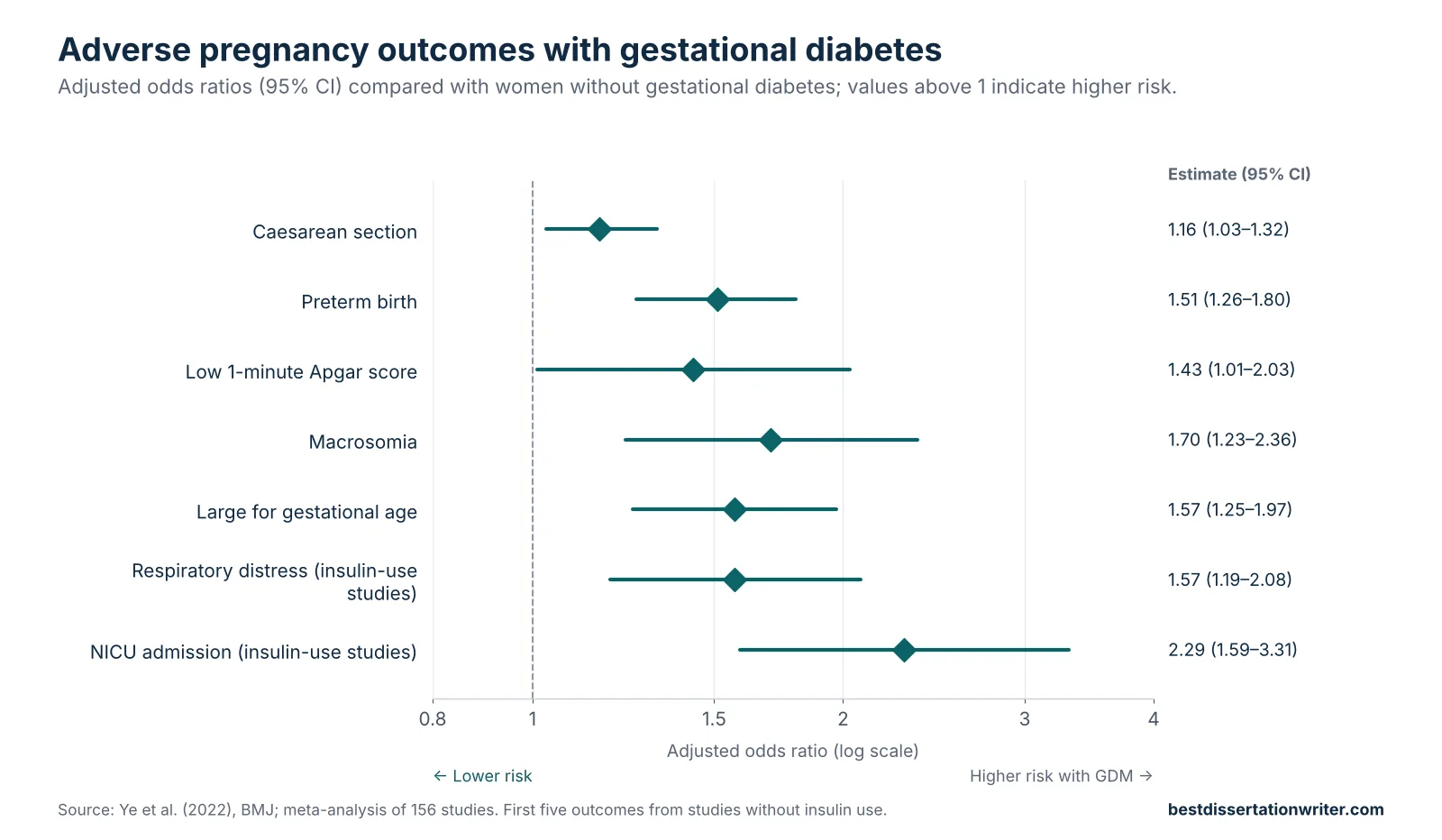
These findings confirm that the condition increases risk mainly through excessive fetal growth and its consequences. However, the review also found no clear difference after adjustment in instrumental birth, shoulder dystocia, postpartum haemorrhage, stillbirth or neonatal death. This is reassuring for women, but it may partly reflect the fact that most women in the included studies were diagnosed and treated, so the figures describe the risk that remains despite care rather than the natural course of untreated disease.
The strength of this evidence lies in its size, but it has important limitations. Only about a third of the included studies (32.1%) were judged to be at low or medium risk of bias, and heterogeneity was explained in part by country income level, adjustment for body mass index and the screening method used. Because obesity is both a cause of gestational diabetes and an independent cause of larger babies, studies that did not adjust for maternal weight are likely to overstate the effect of glucose alone. Midwives should therefore present these risks as real but moderate rather than alarming.
Theme 2: Treatment and Glycaemic Control
The case for treatment was strengthened by the Australian Carbohydrate Intolerance Study in Pregnant Women, a randomised trial of 1,000 women (Crowther et al., 2005). Women offered dietary advice, blood glucose monitoring and insulin when needed had fewer serious perinatal complications, defined as death, shoulder dystocia, bone fracture or nerve palsy, than women receiving routine care (1% compared with 4%). Women in the intervention group also had lower rates of depression and better health status three months after birth, suggesting that diagnosis and treatment need not harm wellbeing when care is supportive.
The trial also revealed trade-offs. Induction of labour was more common in the treated group (39% compared with 29%), as was admission to the neonatal nursery (71% compared with 61%), while caesarean section rates were similar (31% and 32%). Clinicians knew which women had been diagnosed, which may have influenced decisions about early birth, and the participants were mainly white and well educated, which limits generalisability. Even so, the trial remains a cornerstone of the argument that identifying and treating the condition improves outcomes.
Lifestyle change is the first step in treatment for most women. A Cochrane review of 15 randomised trials involving 4,501 women and 3,768 infants found that lifestyle interventions, usually combining dietary advice, physical activity and self-monitoring, reduced the risk of a large-for-gestational-age baby (risk ratio 0.60; moderate-certainty evidence) (Brown et al., 2017). There was no clear difference in caesarean section or in hypertensive disorders of pregnancy, and the evidence for perinatal death was too imprecise to draw conclusions, as only five deaths occurred. These results show that lifestyle support improves fetal growth outcomes but is not a complete solution.
NICE (2015) guidance translates this evidence into a stepwise approach to glycaemic control. Women are offered a trial of diet and exercise and, if targets are not met within one to two weeks, metformin, with insulin added or substituted when needed. Insulin is offered at diagnosis when the fasting glucose is 7.0 mmol/litre or above, and is considered when it is between 6.0 and 6.9 mmol/litre with signs of fetal macrosomia or polyhydramnios. Targets include a fasting value below 5.3 mmol/litre and a one-hour post-meal value below 7.8 mmol/litre, which women monitor themselves at home.
Theme 3: Long-Term Risk After Gestational Diabetes and Postnatal Follow-Up
The consequences of gestational diabetes extend well beyond pregnancy. In a systematic review and meta-analysis of 20 studies including more than 1.3 million women, Vounzoulaki et al. (2020) found that women with previous gestational diabetes had a pooled relative risk of 9.51 for developing type 2 diabetes compared with women whose pregnancy glucose was normal. The cumulative incidence was 16.46% in studies of mixed ethnic groups, 15.58% in predominantly non-white populations and 9.91% in white populations, although these subgroup differences were not statistically significant.
This finding reframes the condition as an early warning of future diabetes rather than a temporary complication. The review was rigorous, with a registered protocol and no evidence of publication bias, but the included studies used different diagnostic criteria and lengths of follow-up, and most came from high-income countries. The magnitude of the relative risk partly reflects the low baseline risk in young women, but the absolute numbers who go on to develop diabetes are still large enough to justify systematic follow-up.
NICE (2015) recommends that women whose glucose returns to normal after birth have a fasting plasma glucose test between 6 and 13 weeks postpartum, or an HbA1c test if this window is missed, followed by an annual HbA1c test. Women should also be offered further testing when planning a future pregnancy, and midwives can add practical advice about weight, diet and activity. In practice, attendance for postnatal testing is often poor once the pressures of caring for a newborn take over, which makes clear communication before discharge from maternity care particularly important.
Discussion
This review shows that gestational diabetes is common, increases the risk of several adverse outcomes that are largely driven by fetal overgrowth, responds to treatment and signals a high long-term risk of type 2 diabetes. The evidence is consistent across a randomised trial, a Cochrane review and large meta-analyses, which gives confidence that identifying and treating the condition matters for mothers and babies.
There are, however, tensions within the evidence. Treatment reduces serious perinatal complications and excessive fetal growth, but it also increases induction of labour and neonatal unit admission, at least partly because diagnosis changes how clinicians manage pregnancy. Labelling a pregnancy affected by gestational diabetes as high risk can lead to a cascade of monitoring and intervention, reduce choices such as birth in a midwifery-led setting and cause anxiety. Midwives need to balance the benefits of good glycaemic control against the risk of over-medicalising pregnancy for women whose glucose levels are only mildly raised.
Diagnostic criteria remain a source of uncertainty. The prevalence of 14.0% reported by Wang et al. (2022) is based on internationally standardised criteria that are lower than those used in England, which means more women would be diagnosed under some systems than others. Lower thresholds may identify more women who could benefit, but they also increase workload and the number of women whose pregnancies are medicalised. The best threshold therefore depends not only on biology but also on the resources available to support women once they are diagnosed.
The evidence also raises questions of equity. Prevalence of gestational diabetes is highest in regions and ethnic groups that already face a heavy burden of diabetes, and women from these groups may face language barriers, dietary advice that does not reflect their food culture and practical difficulties in attending extra appointments. Culturally adapted education, interpreters and flexible clinic times are therefore an essential part of effective care rather than optional additions.
This review has limitations. It relied on openly accessible, English-language sources and did not involve independent double screening or formal quality scoring of every primary study within the included reviews. Much of the evidence on long-term outcomes is observational, and few studies reported women’s experiences of being diagnosed with and treated for gestational diabetes. Future research should compare diagnostic thresholds in randomised trials, evaluate midwife-led and digital models of support, and test interventions to improve attendance for postnatal testing and reduce progression to type 2 diabetes.
Implications of Gestational Diabetes Evidence for Practice
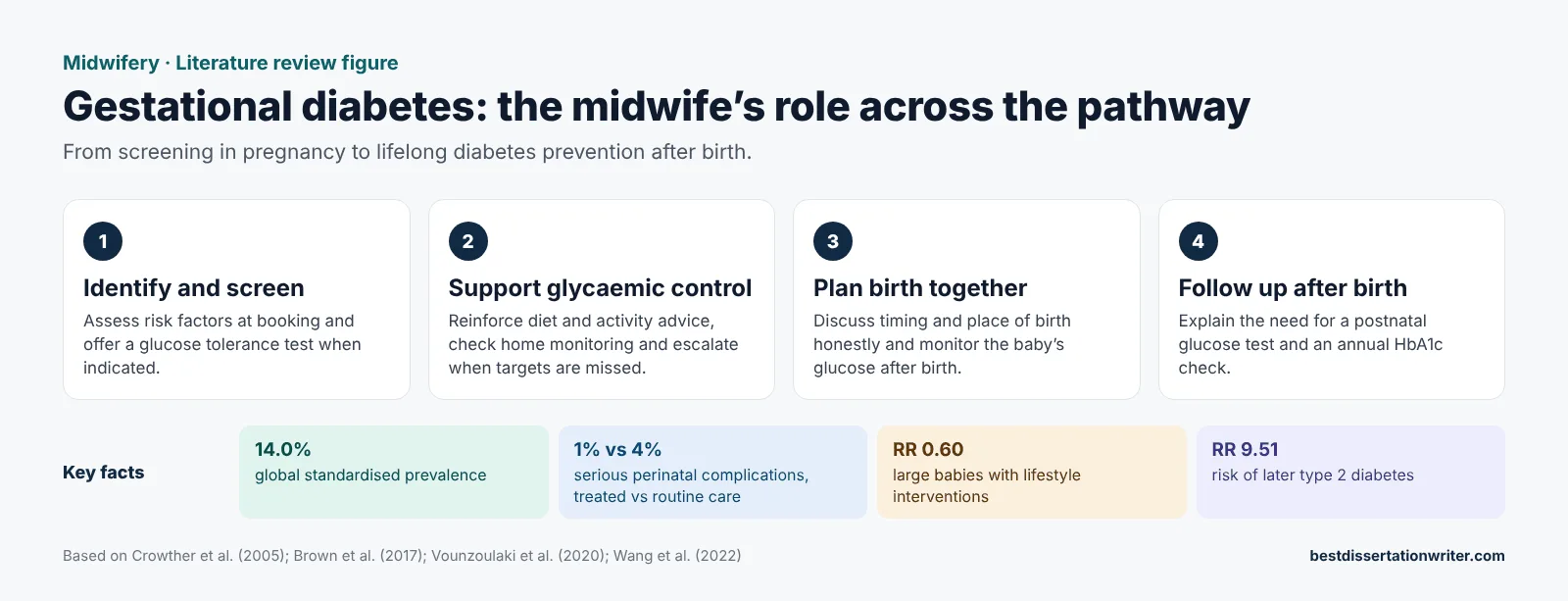
Midwives should identify risk factors at booking, explain the purpose of screening clearly and make sure that women with a positive result are referred promptly to the joint diabetes and antenatal care team. Once a diagnosis is made, midwives can reinforce dietary advice, teach and check blood glucose monitoring, encourage safe physical activity and recognise when targets are not being met. Discussions about the timing and place of birth should be honest about the evidence, and women’s preferences should be respected, including when considering options such as planned home birth or midwifery-led care where risk is low.
Care should always be delivered in the spirit of respectful maternity care, avoiding blame about weight or diet and recognising that diagnosis can be stressful. Midwives should also stay alert to related complications such as pre-eclampsia and support breastfeeding initiation, which helps to stabilise the baby’s blood glucose after birth. Before discharge, every woman should understand why postnatal and annual glucose testing matters and how to arrange it, and this should be clearly communicated to her general practitioner.
Conclusion
This narrative review examined evidence on the risks, treatment and long-term consequences of gestational diabetes. The condition increases the odds of excessive fetal growth, preterm birth and neonatal unit admission, treatment and lifestyle change reduce serious complications and large babies, and women face a nearly tenfold higher risk of type 2 diabetes in later life.
For midwives, the evidence supports timely screening, practical and culturally sensitive support for glycaemic control within multidisciplinary antenatal care, and a strong focus on postnatal follow-up. Seeing gestational diabetes as an opportunity to improve a woman’s lifelong health, rather than only as a pregnancy complication, is central to good midwifery practice.
References
Brown, J., Alwan, N. A., West, J., Brown, S., McKinlay, C. J. D., Farrar, D., & Crowther, C. A. (2017). Lifestyle interventions for the treatment of women with gestational diabetes. Cochrane Database of Systematic Reviews, (5), CD011970. https://doi.org/10.1002/14651858.CD011970.pub2
Crowther, C. A., Hiller, J. E., Moss, J. R., McPhee, A. J., Jeffries, W. S., & Robinson, J. S. (2005). Effect of treatment of gestational diabetes mellitus on pregnancy outcomes. New England Journal of Medicine, 352(24), 2477–2486. https://doi.org/10.1056/NEJMoa042973
National Institute for Health and Care Excellence. (2015). Diabetes in pregnancy: Management from preconception to the postnatal period (NICE Guideline NG3; updated 2020). https://www.nice.org.uk/guidance/ng3
Vounzoulaki, E., Khunti, K., Abner, S. C., Tan, B. K., Davies, M. J., & Gillies, C. L. (2020). Progression to type 2 diabetes in women with a known history of gestational diabetes: Systematic review and meta-analysis. BMJ, 369, m1361. https://doi.org/10.1136/bmj.m1361
Wang, H., Li, N., Chivese, T., Werfalli, M., Sun, H., Yuen, L., Hoegfeldt, C. A., Powe, C. E., Immanuel, J., Karuranga, S., Divakar, H., Levitt, N., Li, C., Simmons, D., & Yang, X. (2022). IDF Diabetes Atlas: Estimation of global and regional gestational diabetes mellitus prevalence for 2021 by International Association of Diabetes in Pregnancy Study Group’s criteria. Diabetes Research and Clinical Practice, 183, 109050. https://doi.org/10.1016/j.diabres.2021.109050
Ye, W., Luo, C., Huang, J., Li, C., Liu, Z., & Liu, F. (2022). Gestational diabetes mellitus and adverse pregnancy outcomes: Systematic review and meta-analysis. BMJ, 377, e067946. https://doi.org/10.1136/bmj-2021-067946
Cite this example
Best Dissertation Writers (2026) Midwifery Management of Gestational Diabetes Mellitus: A Literature Review. Available at: https://bestdissertationwriter.com/gestational-diabetes-literature-review/
Best Dissertation Writers
Get expert help with your nursing literature review
Share your topic and deadline with Best Dissertation Writers and get support tailored to your module brief.