The Role of Peer Support in Mental Health Recovery: A Systematic Review
 By Dr. Robertson Prime, Research Fellow
Updated October 12, 2026
15 min read
About 3,000 words
In this review
Abstract
Background: Peer support is provided by people with their own experience of mental health problems who are trained to use that experience to support others. Peer workers now work alongside mental health nurses in community teams, inpatient wards and crisis services, yet the growth of these roles has sometimes outpaced clarity about what peers should do and how their contribution should be measured.
Aim: This systematic review aimed to examine the evidence that peer-delivered interventions improve clinical and personal recovery outcomes for adults using mental health services, and what influences their successful implementation.
Methods: Evidence was identified through targeted searches of openly accessible bibliographic records, publisher websites and the reference lists of key reviews. Six sources published between 2013 and 2023 were included: one Cochrane review, three systematic reviews with meta-analysis, one systematic review of implementation influences and one multicentre randomised controlled trial, appraised with CASP checklists and synthesised narratively.
Findings: Earlier reviews found little consistent effect on hospitalisation, symptoms or satisfaction, while a later meta-analysis of 28 trials found a small effect on clinical recovery (Hedges’ g 0.19). In the CORE trial, 29% of people supported by a peer worker after crisis care were readmitted within a year compared with 38% of controls. One-to-one interventions produced small but significant improvements in self-rated recovery and empowerment, suggesting that the distinctive contribution of peers lies in personal recovery. Implementation was shaped most often by organisational culture, training and role definition.
Conclusion: Nurses can support recovery-oriented care by explaining the peer role, making timely referrals and involving peers in care planning. Teams should agree clear role descriptions, provide joint training and ensure that each peer worker receives supervision.
Keywords: peer support, peer worker, lived experience, mental health
Introduction
This systematic review critically examines recent evidence on peer support and its implications for mental health nursing practice.
Recovery from serious mental illness is increasingly understood as more than the absence of symptoms. For many people it means building a meaningful life, regaining hope and a sense of control, and reconnecting with relationships, work and community. Yet mental health services remain under pressure, with high rates of readmission after crisis and limited time for staff to focus on personal goals alongside risk and medication. People who use services often describe feeling defined by their diagnosis, and this can make recovery feel out of reach.
Peer support offers a different kind of help. It is provided by people who have their own experience of mental health problems and who are trained to use that experience to support others. Peer workers now work alongside mental health nurses in community teams, inpatient wards and crisis services, and nurses often refer to, share care with or supervise them. Understanding what peer support can and cannot achieve is therefore important for nursing practice.
A systematic approach was chosen so that Cochrane reviews, meta-analyses of randomised trials and implementation evidence could be identified, appraised and compared. This matters because peer roles are expanding rapidly, and nurses need to know where the evidence is strong and where expectations may run ahead of it.
Review question
What is the evidence that peer support improves clinical and personal recovery outcomes for adults using mental health services, and what influences its successful implementation?
Background to Peer Support
Peer support in mental health takes several forms. Lloyd-Evans et al. (2014) distinguished mutual support, in which people with shared experiences help each other in groups, from peer support services, in which trained peers are employed to support service users, and from peer-delivered services, in which peers fill conventional roles such as case manager. One-to-one support from an employed peer worker has become a common model in statutory services, while group approaches remain widespread in the voluntary sector.
The theoretical basis of this work lies in the recovery movement. Shared experience is thought to foster hope, because the peer worker shows that recovery is possible, and to create a more equal relationship in which people feel understood rather than judged. Peers also model self-management, help people to navigate services and challenge the low expectations that can accompany a diagnosis of severe mental illness.
In the United Kingdom, Australia, the United States and many European countries, peer roles have expanded within statutory mental health services over the past two decades. However, the growth of these roles has sometimes outpaced clarity about what peers should do, how they should be trained and supervised, and how their contribution should be measured.
For mental health nurses, peers can be valuable colleagues, but the relationship raises questions about boundaries, the sharing of personal experience, and how risk and confidentiality are managed. These questions make it important to examine not only whether peer interventions work, but also the conditions that allow them to work well.
Search Strategy and Methods
Evidence for this example was identified through targeted searches of openly accessible bibliographic records, publisher websites and the reference lists of key reviews. Search terms combined keywords for the intervention (“peer support”, “peer worker”, “consumer-provider”, “lived experience”) with terms for population and outcomes (“mental illness”, “severe mental illness”, “recovery”, “hospitalisation”, “empowerment”), joined with the Boolean operators AND and OR. A full systematic review for assessment would run the same strategy in CINAHL, PubMed/MEDLINE, the Cochrane Library and Embase and report the number of records screened in a PRISMA flow diagram.
Sources were eligible if they evaluated peer support delivered to adults using mental health services, or examined factors influencing its implementation, and were published from 2010 onward. Cochrane reviews, systematic reviews with meta-analysis and large randomised controlled trials were prioritised. Studies of peer support for physical health conditions, for carers alone or outside mental health settings were excluded.
Six sources published between 2013 and 2023 were included: one Cochrane review, three systematic reviews with meta-analysis, one systematic review of implementation influences and one multicentre randomised controlled trial (Table 1). The quality of each source was appraised using the Critical Appraisal Skills Programme (CASP) checklist appropriate to its design, and findings were synthesised narratively and grouped into themes.
Key Findings on Peer Support
Three themes were identified: the effects of peer support on clinical outcomes and service use, its contribution to personal recovery, hope and empowerment, and the influences on implementing peer worker roles in practice. Table 1 summarises the included sources, and Figure 1 presents pooled effects of one-to-one peer interventions on recovery-related outcomes.
| Author, year | Design | Setting and sample | Key finding |
|---|---|---|---|
| Pitt et al. (2013) | Cochrane systematic review | 11 RCTs, 2,796 adults in statutory mental health services | Consumer-providers achieved outcomes similar to professionals; small reduction in crisis service use (SMD −0.34). |
| Lloyd-Evans et al. (2014) | Systematic review and meta-analysis | 18 RCTs, 5,597 people with severe mental illness | Little or no effect on hospitalisation, symptoms or satisfaction; inconsistent benefits for hope, recovery and empowerment. |
| Johnson et al. (2018) | Multicentre randomised controlled trial | 441 adults discharged from six crisis teams in England | Readmission within one year 29% vs 38% (OR 0.66); recovery gain at 4 months not sustained. |
| White et al. (2020) | Systematic review and meta-analysis | 19 trials, 3,329 participants; one-to-one peer interventions | Small gains in self-rated recovery (SMD 0.22) and empowerment (SMD 0.23); no effect on symptoms or service use. |
| Ibrahim et al. (2020) | Systematic review (narrative synthesis) | 53 publications on implementation for adults with mental health problems | 14 influences identified; organisational culture, training and role definition most often reported. |
| Smit et al. (2023) | Systematic review and meta-analysis | 30 RCTs (28 meta-analysed), 4,152 individuals | Small effects on clinical (g 0.19) and personal recovery (g 0.15); no significant effect on functional recovery. |
Theme 1: Peer Support, Clinical Outcomes and Service Use
The earliest included source, a Cochrane review by Pitt et al. (2013), examined 11 randomised trials involving 2,796 people in which consumer-providers, people with lived experience of mental illness, delivered care in statutory services. When consumer-providers replaced professionals in similar roles, mostly case management, client outcomes such as quality of life, symptoms and satisfaction were no better or worse. There was a small reduction in crisis and emergency service use (standardised mean difference −0.34), although the authors rated this evidence as low quality. No study reported harm.
Lloyd-Evans et al. (2014) reached a more cautious conclusion. Their meta-analysis of 18 trials with 5,597 participants found little or no evidence that peer support affected hospitalisation, overall symptoms or satisfaction with services. Trials were heterogeneous, outcome reporting was often incomplete and risk of bias was high. The authors argued that current evidence did not justify mandatory requirements for services to provide peer interventions and recommended that new programmes be evaluated within rigorous research.
Later evidence suggests that some clinical effects may exist but are modest. Smit et al. (2023) meta-analysed 28 randomised trials with 4,152 participants and found a small effect on clinical recovery (Hedges’ g 0.19) at post-test, with low heterogeneity, but no significant effect on functional recovery. Although small, this effect was precise (95% CI 0.11 to 0.27), and the authors described the effects as modest but consistent while cautioning that the included studies were of modest quality. The larger trial base may help to explain why earlier reviews, which relied on fewer and smaller trials, found little effect.
The strongest single trial evidence comes from the CORE trial. Johnson et al. (2018) randomised 441 people discharged from six crisis resolution teams in England to up to ten sessions with a peer support worker, who helped them complete a personal recovery workbook, or to the workbook sent by post. Within one year, 29% of the intervention group were readmitted to acute care compared with 38% of controls (odds ratio 0.66, 95% CI 0.43 to 0.99), and the median time to first readmission was 112 days compared with 86 days. However, admission rates were lower than expected and confidence intervals were wide, so the size of the benefit remains uncertain.
Theme 2: Personal Recovery, Hope and Empowerment
Outcomes that matter most to the recovery movement, such as hope, empowerment and personal recovery, show more consistent benefit. In a meta-analysis of 19 trials with 3,329 participants, White et al. (2020) found that one-to-one peer support produced small but statistically significant improvements in self-rated recovery (standardised mean difference 0.22) and empowerment (0.23), whereas effects on quality of life, symptoms, social functioning and service use were not significant.
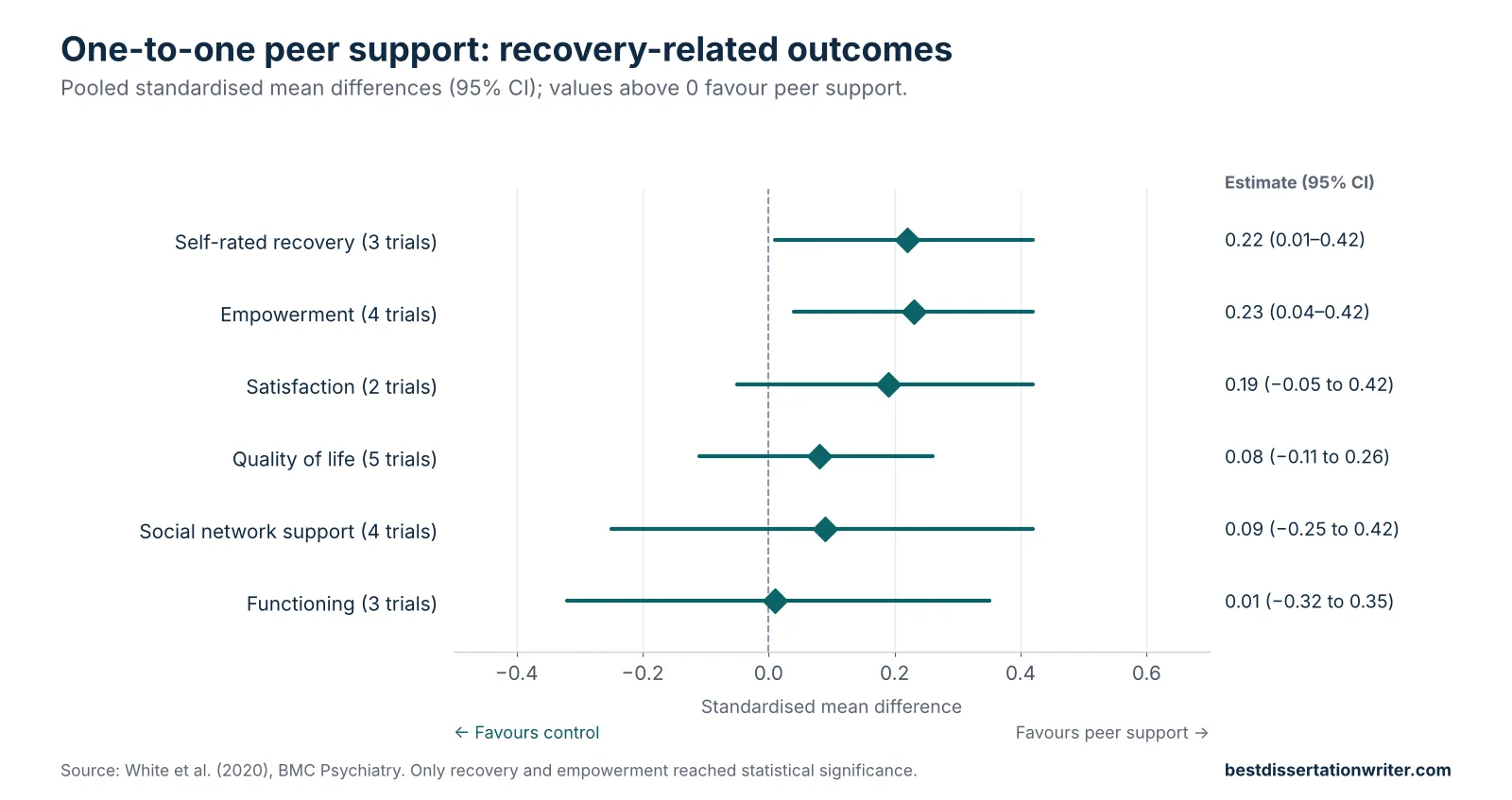
Smit et al. (2023) similarly reported a small effect on personal recovery (g 0.15). In the CORE trial, satisfaction with care and self-rated recovery were higher in the intervention group at four months, although the recovery difference did not survive a sensitivity analysis, and neither difference was significant at 18 months (Johnson et al., 2018). Lloyd-Evans et al. (2014) also found some evidence of benefit for hope, recovery and empowerment, although it was inconsistent across trials and may have been inflated by selective reporting.
These findings support the view that the distinctive contribution of peer workers lies in personal rather than clinical recovery. Peers may help people feel understood, regain hope and take more control over their lives, outcomes that conventional services often struggle to influence. However, self-rated measures of recovery are vulnerable to bias when participants know which intervention they received, and the effects are small. Claims that peer interventions transform outcomes are therefore not supported by current trial evidence.
Theme 3: Implementing Peer Worker Roles
Even where the evidence supports peer roles, implementation is often difficult. Ibrahim et al. (2020) systematically reviewed 53 publications and identified 14 influences on the implementation of peer support work. The most frequently reported were organisational culture (53% of papers), training (42%) and role definition (40%). The authors recommended that services consider role support, including training, role clarity, resourcing and access to a peer network, together with the attitudes of existing staff.
Staff attitudes and role clarity matter because they shape what peers are able to do. Where colleagues doubt the value of lived experience, or are unclear about what a peer worker should do, peers may be drawn into conventional tasks or left isolated. Pitt et al. (2013) noted that consumer-providers worked differently from professionals, spending more time face to face with clients, which suggests that their value may be lost if the role is reshaped to resemble existing jobs.
Engagement is also a practical concern. In the CORE trial, 72% of intervention participants were treated according to the protocol (Johnson et al., 2018), indicating good but not universal uptake. Training, supervision and a clear structure, such as the self-management workbook used in that trial, may help peers to deliver consistent support while still drawing on their own experience.
Discussion
This review suggests that peer support is safe, acceptable and associated with small improvements in personal recovery, empowerment and, in more recent analyses, clinical recovery. There is also evidence from one large trial that structured peer-delivered self-management can reduce readmission after a mental health crisis. However, effects on symptoms, quality of life and overall service use are inconsistent, and earlier reviews found little evidence of benefit on these outcomes.
The tension between the reviews deserves attention. Lloyd-Evans et al. (2014) concluded that the evidence did not support mandatory provision, while Smit et al. (2023) described modest but consistent effects. Part of the difference reflects the growth of the trial base and the inclusion of different interventions and outcomes. It also reflects how outcomes are framed: if the aim of peer support is personal recovery rather than symptom reduction, then small gains in hope and empowerment may be meaningful in their own right.
The quality of the evidence remains a concern. Many trials were small, open-label and at high risk of bias, and interventions varied from informal group support to manualised one-to-one programmes. Self-rated outcomes may be influenced by expectations, and outcome reporting was frequently incomplete. These weaknesses do not show that peer support is ineffective, but they make it difficult to identify which components produce benefit and for whom.
The implementation evidence helps to explain inconsistent results. If peers are poorly integrated, inadequately trained or unclear about their role, even a well-designed intervention may be diluted in practice. The findings of Ibrahim et al. (2020) suggest that organisational readiness may be as important as the intervention itself. Mental health nurses, as a large professional group in most teams, have considerable influence over whether peer colleagues are welcomed, understood and supported.
The CORE trial also illustrates how the comparison condition shapes conclusions. Because the control group received the same recovery workbook by post, the trial tested the added value of the peer relationship rather than of self-management materials alone (Johnson et al., 2018). This is a stronger test than comparison with no intervention, and it suggests that the human contact provided by a peer worker, not simply the content of the workbook, contributed to fewer readmissions. Mental health nurses who give written crisis plans or self-help materials at discharge should therefore consider whether peer support could help people to use them.
The evidence base also has limitations of scope. Most trials took place in high-income countries, few examined costs, and little is known about long-term effects or about outcomes for peer workers themselves. This review relied on openly accessible, English-language sources and did not involve independent double screening or formal meta-analysis. Future research should use larger, well-reported trials with standardised recovery measures, longer follow-up, economic evaluation and qualitative work exploring how peer support works in different settings.
Implications of Peer Support Evidence for Practice
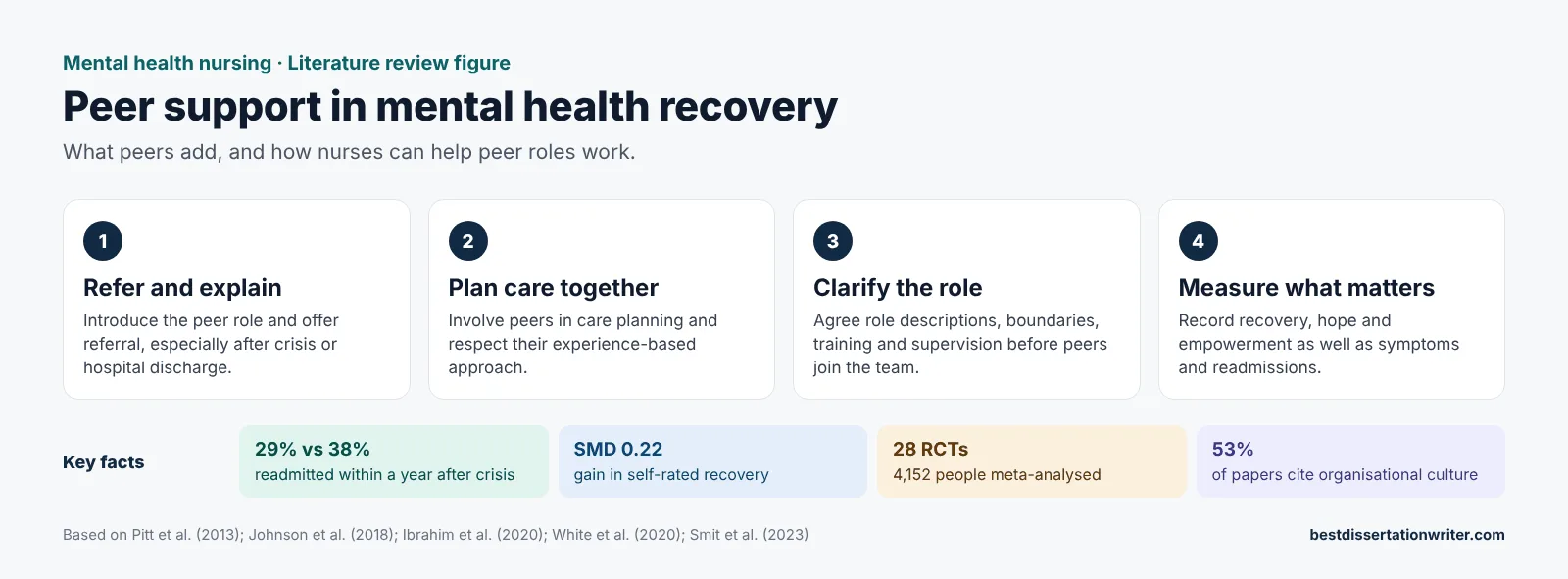
For mental health nurses, the evidence supports offering peer workers as part of recovery-oriented care, particularly after discharge from crisis services and for people who want help to rebuild hope and confidence. Nurses can help by explaining the peer role to service users, making timely referrals, involving peers in care planning and respecting the experience-based nature of their contribution. Teams should agree clear role descriptions, provide joint training and ensure that peers receive supervision from both peer and professional colleagues.
Peer approaches complement rather than replace professional interventions such as cognitive behavioural therapy, and peer roles are increasingly part of early intervention services for young people. Shared lived experience within teams can also help to challenge mental illness stigma, while the value that peers place on equal, trusting relationships echoes the therapeutic relationship at the heart of mental health nursing.
Conclusion
This systematic review examined the role of peer support in mental health recovery. The evidence shows small but consistent benefits for personal recovery and empowerment, a modest effect on clinical recovery and a promising effect on readmission after crisis, alongside inconsistent effects on symptoms and service use and generally low-quality trials.
Peers bring lived experience that conventional services cannot replicate, but their impact depends on how well they are integrated into teams. Mental health nurses can help to realise the potential of peer support by valuing peer roles, sharing care and supporting rigorous evaluation of new programmes.
References
Ibrahim, N., Thompson, D., Nixdorf, R., Kalha, J., Mpango, R., Moran, G., Mueller-Stierlin, A., Ryan, G., Mahlke, C., Shamba, D., Puschner, B., Repper, J., & Slade, M. (2020). A systematic review of influences on implementation of peer support work for adults with mental health problems. Social Psychiatry and Psychiatric Epidemiology, 55(3), 285–293. https://doi.org/10.1007/s00127-019-01739-1
Johnson, S., Lamb, D., Marston, L., Osborn, D., Mason, O., Henderson, C., Ambler, G., Milton, A., Davidson, M., Christoforou, M., Sullivan, S., Hunter, R., Hindle, D., Paterson, B., Leverton, M., Piotrowski, J., Forsyth, R., Mosse, L., Goater, N., … Lloyd-Evans, B. (2018). Peer-supported self-management for people discharged from a mental health crisis team: A randomised controlled trial. The Lancet, 392(10145), 409–418. https://doi.org/10.1016/S0140-6736(18)31470-3
Lloyd-Evans, B., Mayo-Wilson, E., Harrison, B., Istead, H., Brown, E., Pilling, S., Johnson, S., & Kendall, T. (2014). A systematic review and meta-analysis of randomised controlled trials of peer support for people with severe mental illness. BMC Psychiatry, 14, 39. https://doi.org/10.1186/1471-244X-14-39
Pitt, V., Lowe, D., Hill, S., Prictor, M., Hetrick, S. E., Ryan, R., & Berends, L. (2013). Consumer-providers of care for adult clients of statutory mental health services. Cochrane Database of Systematic Reviews, (3), CD004807. https://doi.org/10.1002/14651858.CD004807.pub2
Smit, D., Miguel, C., Vrijsen, J. N., Groeneweg, B., Spijker, J., & Cuijpers, P. (2023). The effectiveness of peer support for individuals with mental illness: Systematic review and meta-analysis. Psychological Medicine, 53(11), 5332–5341. https://doi.org/10.1017/S0033291722002422
White, S., Foster, R., Marks, J., Morshead, R., Goldsmith, L., Barlow, S., Sin, J., & Gillard, S. (2020). The effectiveness of one-to-one peer support in mental health services: A systematic review and meta-analysis. BMC Psychiatry, 20, 534. https://doi.org/10.1186/s12888-020-02923-3
Cite this example
Best Dissertation Writers (2026) The Role of Peer Support in Mental Health Recovery: A Systematic Review. Available at: https://bestdissertationwriter.com/peer-support-literature-review/
Best Dissertation Writers
Get expert help with your nursing literature review
Share your topic and deadline with Best Dissertation Writers and get support tailored to your module brief.