Perioperative Nursing Interventions for the Prevention of Surgical Site Infection: A Systematic Review
 By Dr. Robertson Prime, Research Fellow
Updated October 26, 2026
14 min read
About 2,800 words
In this review
Abstract
Background: Surgical site infection is one of the most common healthcare-associated infections and causes pain, delayed healing, longer hospital stays and readmission. Many preventive measures, such as skin preparation, preoperative bathing and hair removal, are delivered or supervised by perioperative nurses.
Aim: This systematic review aimed to examine the evidence for preoperative measures to prevent surgical site infection, focusing on skin antisepsis, preoperative bathing and hair removal.
Methods: Evidence was identified through targeted searches of openly accessible bibliographic records, publisher websites and the reference lists of key reviews. Five sources published between 2010 and 2021 were included: one multicentre randomised trial, three Cochrane reviews and one international guideline review, appraised using CASP checklists and synthesised narratively.
Findings: Chlorhexidine-alcohol skin preparation reduced surgical site infection compared with povidone-iodine in clean-contaminated surgery (9.5% versus 16.1%; relative risk 0.59). Evidence for clean surgery was limited but favoured alcohol-based products. Preoperative bathing with chlorhexidine showed no clear benefit over other washing products. Shaving with a razor probably increased infection compared with clippers (relative risk 1.64), while clipping made little or no difference compared with no hair removal.
Conclusion: Effective SSI prevention before surgery relies on alcohol-based antiseptic skin preparation, avoiding razors and following evidence-based guidance. Nurses should ensure that these measures are applied consistently.
Keywords: surgical site infection, skin preparation, SSI prevention
Introduction
This systematic review critically examines recent evidence on surgical site infection and its implications for perioperative nursing practice.
Infection of the surgical wound is one of the most frequent complications of surgery. It may be limited to the skin and subcutaneous tissue or extend to deeper tissues and organ spaces, and it can lead to pain, wound breakdown, further surgery, prolonged antibiotic treatment, longer hospital stays and readmission. In some cases it contributes to sepsis or death. For health services, these infections add substantially to costs and are widely monitored as an indicator of surgical quality.
Many of the measures used to reduce infection are delivered before the first incision. Patients may be asked to shower before surgery, hair may be removed from the operative site and the skin is cleaned with an antiseptic solution in theatre. Perioperative nurses are directly involved in each of these steps, whether advising patients at preoperative assessment, preparing them on the ward or performing or assisting with skin preparation in theatre.
A systematic review approach was chosen to focus on randomised trials and Cochrane reviews, which provide the strongest evidence on the effectiveness of these interventions, together with the international recommendations that summarise them.
The question is important because these measures are routine, inexpensive and largely within the control of nursing teams, yet practice varies between hospitals and even between theatres in the same hospital. Ensuring that routine practice reflects the best available evidence is a straightforward way to improve outcomes for surgical patients.
Review question
What does the evidence show about the effectiveness of preoperative skin antisepsis, preoperative bathing and hair removal in preventing surgical site infection?
Background to Surgical Site Infection
Most infections of the surgical wound are thought to arise from the patient’s own skin flora, which enter the wound during the operation. Other sources include contaminated instruments, the theatre environment and the hands of the surgical team. The risk depends on the type of surgery, with clean-contaminated and contaminated procedures carrying higher risk than clean procedures, and on patient factors such as diabetes, obesity, smoking and malnutrition.
Prevention therefore requires a combination of measures across the perioperative pathway. Before surgery, these include screening and optimising patient health, bathing, avoiding unnecessary hair removal and preparing the skin with antiseptics. During surgery, they include antibiotic prophylaxis, hand antisepsis, sterile technique, maintaining normal body temperature and appropriate wound closure. After surgery, wound care and surveillance are important. Many organisations group these measures into care bundles.
Antiseptic skin preparation aims to reduce the number of microorganisms on the skin at the incision site. The two most commonly used agents are chlorhexidine and povidone-iodine, which may be prepared in aqueous or alcohol-based solutions. Alcohol-based solutions act quickly but are flammable, so they must be allowed to dry fully before drapes are applied and diathermy is used, particularly where solution may pool.
Hair removal was once routine before surgery, often using razors, in the belief that hair harboured bacteria. It is now recognised that shaving causes microscopic cuts that may become colonised, and many guidelines recommend that hair is not removed unless necessary, and that if it is, clippers are used rather than razors.
Surveillance is central to understanding and reducing surgical site infection. Many infections become apparent only after the patient has gone home, particularly with shorter hospital stays and day surgery, so surveillance that includes follow-up after discharge gives a more accurate picture. Feeding back infection rates to surgical teams can motivate improvement, and identifying clusters of surgical site infection can prompt investigation of specific procedures, theatres or practices.
Search Strategy and Methods
Evidence for this example was identified through targeted searches of openly accessible bibliographic records, publisher websites and the reference lists of key reviews. Search terms combined keywords for the outcome (“surgical site infection”, “surgical wound infection”, “SSI prevention”) with terms for interventions (“skin preparation”, “skin antisepsis”, “chlorhexidine”, “povidone-iodine”, “preoperative bathing”, “hair removal”), joined with the Boolean operators AND and OR. A full systematic review for assessment would run the same strategy in CINAHL, PubMed/MEDLINE, the Cochrane Library and Embase and report the number of records screened in a PRISMA flow diagram.
Sources were eligible if they were randomised trials, systematic reviews or international guideline reviews examining preoperative skin antisepsis, bathing or hair removal and reporting infection outcomes in adults. Studies of intraoperative or postoperative measures, such as antibiotic prophylaxis and wound dressings, were outside the scope of this example.
Five sources published between 2010 and 2021 were included: one multicentre randomised trial of skin antisepsis, three Cochrane reviews of skin antisepsis in clean surgery, preoperative bathing and hair removal, and one review setting out World Health Organization (WHO) recommendations on preoperative measures (Table 1). Each source was appraised using the Critical Appraisal Skills Programme (CASP) checklist appropriate to its design, and findings were synthesised narratively and grouped into themes.
Key Findings on Surgical Site Infection
Three themes were identified in relation to surgical site infection: antiseptic skin preparation, preoperative bathing and hair removal. Table 1 summarises the included sources, and Figure 1 shows the main pooled and trial effect estimates.
| Author, year | Design | Setting and sample | Key finding |
|---|---|---|---|
| Darouiche et al. (2010) | Multicentre randomised controlled trial | 849 adults, clean-contaminated surgery | Chlorhexidine-alcohol reduced infection versus povidone-iodine (9.5% vs 16.1%; RR 0.59). |
| Dumville et al. (2015) | Cochrane systematic review | 13 trials; 2,623 participants, clean surgery | Alcohol-containing products most likely effective; low-quality evidence. |
| Webster & Osborne (2015) | Cochrane systematic review | 7 trials; 10,157 participants | Chlorhexidine bathing not clearly better than placebo or soap. |
| Allegranzi et al. (2016) | Guideline review (WHO) | 13 preoperative recommendations | Multiple measures needed before, during and after surgery. |
| Tanner & Melen (2021) | Cochrane systematic review | 25 trials; 8,919 participants | Razors increased infection versus clippers (RR 1.64); clipping similar to no removal. |
Theme 1: Skin Preparation and Surgical Site Infection
Darouiche et al. (2010) randomised 849 adults undergoing clean-contaminated surgery in six hospitals to skin preparation with chlorhexidine-alcohol or povidone-iodine. Infection within 30 days occurred in 9.5% of the chlorhexidine-alcohol group and 16.1% of the povidone-iodine group (relative risk 0.59, 95% CI 0.41 to 0.85). Superficial incisional infections (4.2% versus 8.6%) and deep incisional infections (1% versus 3%) were reduced, while organ-space infections were similar. Adverse effects were comparable between groups.
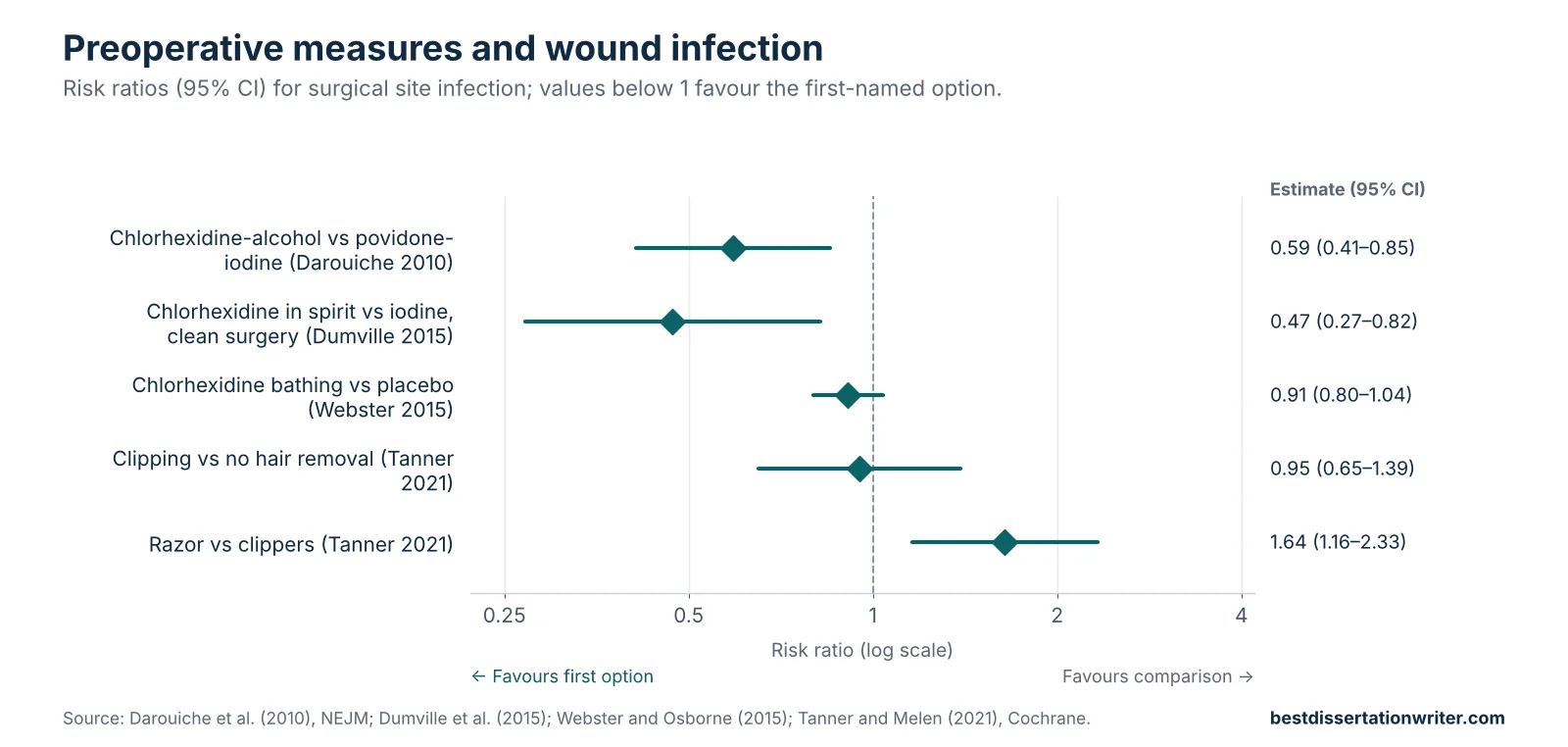
Dumville et al. (2015) reviewed 13 randomised trials with 2,623 participants comparing antiseptics for clean surgery. One trial found fewer infections with 0.5% chlorhexidine in methylated spirits than with an alcohol-based povidone-iodine solution (relative risk 0.47, 95% CI 0.27 to 0.82), but its reporting was poor. No other comparisons showed significant differences. A network meta-analysis suggested that alcohol-containing products had the highest probability of being effective, but the evidence was of low quality.
Together, these findings support the use of alcohol-based antiseptic solutions, particularly chlorhexidine-alcohol, for skin preparation. The strongest evidence comes from clean-contaminated surgery, and evidence for clean surgery is weaker. Because alcohol-based solutions are flammable, safe use requires allowing the solution to dry completely and preventing pooling under the patient or drapes.
Theme 2: Preoperative Bathing for SSI Prevention
Webster and Osborne (2015) reviewed seven randomised trials with 10,157 participants of preoperative bathing or showering with 4% chlorhexidine. Compared with placebo, chlorhexidine did not significantly reduce infection (relative risk 0.91, 95% CI 0.80 to 1.04). There was no difference compared with bar soap, and comparisons with no washing were inconsistent, with one large trial favouring chlorhexidine and smaller trials showing no difference. The authors found no clear evidence that chlorhexidine bathing is better than other wash products.
This finding suggests that preoperative bathing remains a reasonable hygiene measure, but that the use of chlorhexidine for bathing is not clearly supported. Nurses advising patients before surgery can therefore recommend showering or bathing with soap, in line with local policy, without needing to supply antiseptic washes for all patients.
Theme 3: Hair Removal and Surgical Site Infection
Tanner and Melen (2021) reviewed 25 trials with 8,919 participants of preoperative hair removal. Clipping made little or no difference to infection compared with no hair removal (relative risk 0.95, 95% CI 0.65 to 1.39). Shaving with a razor probably increased infection compared with no hair removal (1.82, 95% CI 1.05 to 3.14) and compared with clippers (1.64, 95% CI 1.16 to 2.33), and razors probably increased skin injuries. Removing hair on the day of surgery rather than the day before may make little difference.
The finding that clipping made little difference compared with leaving hair in place suggests that hair itself is not a major source of infection. Hair may still need to be removed when it interferes with the incision, wound closure or dressings, but the decision should be made for practical reasons rather than as a routine infection control measure.
Allegranzi et al. (2016) set out 13 WHO recommendations on preoperative measures, developed from systematic reviews and expert consensus. They emphasised that preventing surgical wound infection requires several measures used together before, during and after surgery, and that international recommendations were needed because national guidelines interpreted the evidence inconsistently.
Discussion
This review shows that chlorhexidine-alcohol skin preparation reduces infection compared with povidone-iodine in clean-contaminated surgery, that alcohol-based products appear most effective in clean surgery although the evidence is weak, that chlorhexidine bathing offers no clear advantage over other washing and that razors should not be used for hair removal. These findings are broadly consistent with international recommendations on the prevention of surgical site infection.
The size of the effect seen with chlorhexidine-alcohol is clinically meaningful. A reduction from 16.1% to 9.5% means that, in the population studied, around one surgical site infection was prevented for every 15 patients who received chlorhexidine-alcohol rather than povidone-iodine. Because the intervention involves a simple change in product rather than additional time or resources, it represents a highly efficient way to reduce surgical site infection.
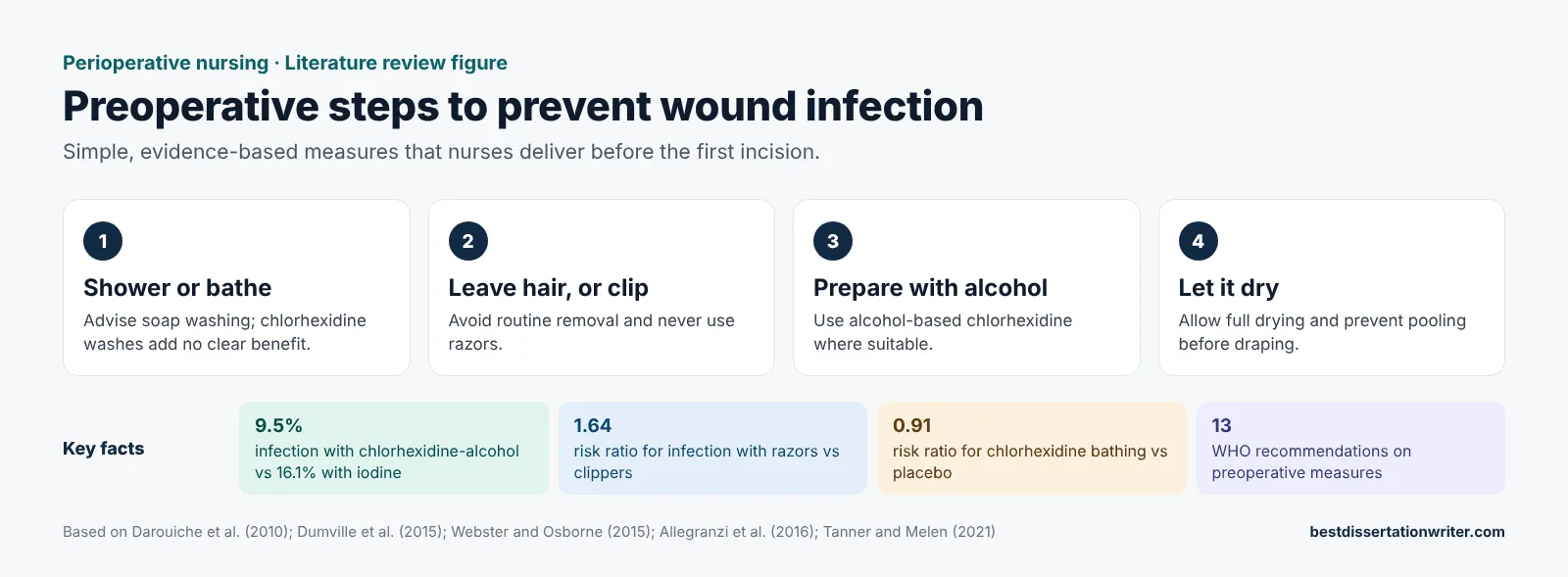
For perioperative nurses, the practical implications are clear. Skin preparation should use an alcohol-based antiseptic unless contraindicated, applied correctly and allowed to dry fully before draping. Hair should not be removed routinely, and when removal is necessary, clippers should be used. Patients should be advised to shower or bathe before surgery, but chlorhexidine washes are not required for all patients.
Some patients cannot receive chlorhexidine because of allergy, and certain sites, such as mucous membranes and the eye, require different products. Nurses should check for allergies at every stage and ensure that suitable alternatives are available, so that the move towards alcohol-based chlorhexidine does not put individual patients at risk.
Fire safety is an important consideration with alcohol-based solutions. Pooling of solution, particularly in skin folds, the umbilicus or under the patient, and application of drapes before the solution has dried increase the risk of fire when diathermy is used. Nurses play a key role in ensuring that the correct volume is used, that pooling is avoided and that drying time is respected, and these checks can be incorporated into the team briefing.
Preoperative measures are only one part of SSI prevention. Sterile instruments, effective sterilisation and decontamination processes, hand antisepsis, antibiotic prophylaxis, normothermia and careful wound care all contribute. Bundles that combine several measures may be more effective than single interventions, but they require consistent implementation and audit to ensure that every element is delivered for every patient.
Variation in practice is a recurring challenge. Different surgeons may prefer different antiseptic solutions, and habits such as shaving the operative site may persist in some areas despite the evidence. Standardising skin preparation through local policy, with clear exceptions for patient allergy or specific sites such as mucous membranes, can reduce unwarranted variation and help to ensure that every patient benefits from the measures most likely to prevent surgical site infection.
Patient factors also influence the risk of surgical site infection. Smoking, diabetes with poor glucose control, obesity and malnutrition all increase risk, and some can be addressed before planned surgery. Nurses in preoperative assessment can support smoking cessation, liaise with diabetes teams and identify patients whose nutrition needs attention, contributing to SSI prevention well before the day of the operation.
Patient education also matters. Patients who understand why they should not shave the operative site themselves before surgery, and why showering is advised, are more likely to follow instructions. Preoperative assessment provides an opportunity to explain these measures alongside other preparation and to address concerns that contribute to preoperative anxiety.
The evidence base has limitations. The main trial of skin preparation was conducted in clean-contaminated surgery, and evidence for clean surgery was of low quality. The bathing and hair removal reviews included trials with varying risk of bias, and some comparisons were based on few studies. This review relied on openly accessible, English-language sources and did not involve formal systematic screening. Future research should compare antiseptic solutions in clean surgery and evaluate the implementation of SSI prevention bundles.
Implications of Surgical Site Infection Evidence for Practice
For perioperative nurses, the evidence supports using alcohol-based chlorhexidine for skin preparation where appropriate, allowing it to dry fully and preventing pooling, avoiding routine hair removal and using clippers rather than razors when necessary, and advising patients to shower or bathe before surgery. Further guidance is available in the NICE guideline on surgical site infections.
Audit of practice can complement infection surveillance. Observing skin preparation, checking whether razors are still in use and reviewing whether patients received advice on bathing can show whether evidence-based measures are being delivered, even when infection rates are too low to detect change in a single unit. Sharing audit results with theatre teams supports a shared commitment to improvement.
Theatre managers should ensure that appropriate antiseptic solutions and clippers are available, that razors are removed from clinical areas, that staff are trained in safe skin preparation and that infection rates are monitored through surveillance. Infection prevention sits alongside other safety priorities in theatre, such as preventing retained surgical items, and benefits from the same culture of standardisation and audit.
Conclusion
This systematic review examined preoperative measures to prevent surgical site infection. Chlorhexidine-alcohol skin preparation reduces infection in clean-contaminated surgery, alcohol-based products are favoured in clean surgery, chlorhexidine bathing shows no clear advantage over other washing and razors increase infection compared with clippers.
Applying this evidence consistently is a simple and effective way to protect patients from surgical site infection. Through correct skin preparation, appropriate hair removal and clear patient education, perioperative nurses make a direct contribution to reducing surgical site infection.
References
Allegranzi, B., Bischoff, P., de Jonge, S., Kubilay, N. Z., Zayed, B., Gomes, S. M., Abbas, M., Atema, J. J., Gans, S., van Rijen, M., Boermeester, M. A., Egger, M., Kluytmans, J., Pittet, D., & Solomkin, J. S. (2016). New WHO recommendations on preoperative measures for surgical site infection prevention: An evidence-based global perspective. The Lancet Infectious Diseases, 16(12), e276–e287. https://doi.org/10.1016/S1473-3099(16)30398-X
Darouiche, R. O., Wall, M. J., Itani, K. M. F., Otterson, M. F., Webb, A. L., Carrick, M. M., Miller, H. J., Awad, S. S., Crosby, C. T., Mosier, M. C., AlSharif, A., & Berger, D. H. (2010). Chlorhexidine–alcohol versus povidone–iodine for surgical-site antisepsis. New England Journal of Medicine, 362(1), 18–26. https://doi.org/10.1056/NEJMoa0810988
Dumville, J. C., McFarlane, E., Edwards, P., Lipp, A., Holmes, A., & Liu, Z. (2015). Preoperative skin antiseptics for preventing surgical wound infections after clean surgery. Cochrane Database of Systematic Reviews, (4), CD003949. https://doi.org/10.1002/14651858.CD003949.pub4
Tanner, J., & Melen, K. (2021). Preoperative hair removal to reduce surgical site infection. Cochrane Database of Systematic Reviews, (8), CD004122. https://doi.org/10.1002/14651858.CD004122.pub5
Webster, J., & Osborne, S. (2015). Preoperative bathing or showering with skin antiseptics to prevent surgical site infection. Cochrane Database of Systematic Reviews, (2), CD004985. https://doi.org/10.1002/14651858.CD004985.pub5
Cite this example
Best Dissertation Writers (2026) Perioperative Nursing Interventions for the Prevention of Surgical Site Infection: A Systematic Review. Available at: https://bestdissertationwriter.com/surgical-site-infection-review-review/
Best Dissertation Writers
Get expert help with your nursing literature review
Share your topic and deadline with Best Dissertation Writers and get support tailored to your module brief.