
Identification of and Response to Domestic Violence in Emergency Settings: A Systematic Review
 By Dr. Robertson Prime, Research Fellow
Updated November 2, 2026
15 min read
About 3,100 words
In this review
Abstract
Background: Domestic violence and abuse is a common cause of injury and ill health, and emergency departments are often the only place where survivors seek help. Emergency nurses are well placed to notice signs of abuse, to ask about it safely and to link survivors with support, but identification remains inconsistent.
Aim: This systematic review aimed to examine the evidence on how domestic violence is identified and responded to in emergency settings, including screening approaches, the barriers faced by staff and the strategies that may improve practice.
Methods: Evidence was identified through targeted searches of openly accessible bibliographic records, publisher websites and repositories. Five sources published between 2017 and 2024 were included: a systematic review, a rapid review, a qualitative meta-synthesis, a scoping review and a second rapid review of strategies. The sources were appraised using CASP checklists and synthesised narratively.
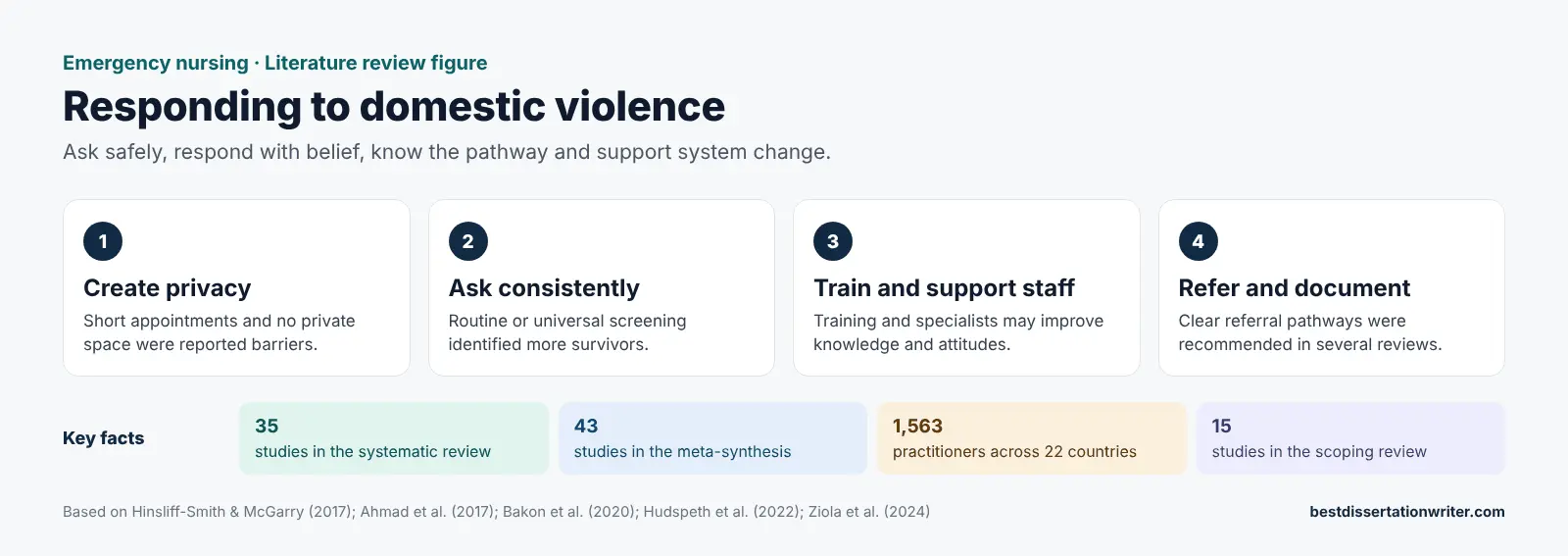
Findings: A systematic review of 35 studies found that physical abuse is easier to identify than emotional abuse and recommended training, referral pathways and better reporting. A rapid review found that routine or universal screening identified more survivors and that staff competence strongly influenced disclosure. A meta-synthesis of 43 studies, covering 1,563 practitioners from 22 countries, identified barriers in the environment, in lack of training and policy, and in societal attitudes. A scoping review of 15 studies found that no two used the same validated tool and that time, acuity and language were barriers. A rapid review of 11 articles suggested that specialists and training may improve staff knowledge and attitudes.
Conclusion: Domestic violence is under-identified in emergency settings, and barriers are mainly organisational. Training, clear pathways, privacy and specialist support are the main recommendations, although the evidence is mostly descriptive and few studies test outcomes for survivors.
Keywords: domestic violence, intimate partner violence, domestic abuse
Introduction
This systematic review critically examines recent evidence on domestic violence and its implications for emergency nursing practice.
Domestic violence and abuse covers physical, sexual, emotional and financial harm inflicted by a partner or family member. It is most often described in the research literature as intimate partner violence when the perpetrator is a current or former partner. Survivors may present to the emergency department with obvious injuries, but they may also attend with vague symptoms, repeated minor complaints, anxiety or problems in pregnancy, and the connection to abuse may never be mentioned.
The emergency department matters because it is open at all hours, does not require an appointment and may be the only service a person feels able to use. A visit may also be one of the few occasions when a survivor is separated from the person causing harm, even briefly. Nurses, who triage patients, take histories and spend more time at the bedside than other staff, are therefore in a position to notice concerns and to open a conversation.
Despite this opportunity, many survivors leave the department without help. Staff may not recognise the signs, may feel unsure about how to ask, may worry about offending patients or may have nowhere to refer them. Departments are noisy, busy and often lack privacy, and survivors are often accompanied by the person who is harming them.
Review question
How is domestic violence identified and responded to in emergency settings, what barriers do staff face and what strategies may improve practice?
Background to Domestic Violence in Emergency Nursing
Recognising abuse is not the same as screening for it. Screening usually means asking every patient, or every patient in a defined group, a set of questions regardless of presentation. Case finding means asking when there are signs or risk factors. Both approaches are discussed in the literature, and they raise different questions about the evidence, the resources needed and the possible harm if a survivor is asked at an unsafe moment.
The nurse’s role goes beyond asking a question. It includes creating a private space, using an interpreter who is not a relative, responding with belief and without judgement, assessing immediate risk, documenting carefully and offering a route to specialist support. Domestic abuse can also involve children in the household, so safeguarding considerations are often present and the nurse needs to know the local process.
Domestic violence is also part of a wider set of challenges in emergency care. Busy departments need effective ways of sorting patients, as discussed in the review of rapid assessment and streaming, and a rapid approach can leave little room for sensitive conversations. Staff who see distressing cases regularly may also be affected personally, which is the subject of the review of compassion fatigue. Initial assessment at triage, including the triage tools used to prioritise patients, is often where concerns are first raised.
Domestic violence is at once a clinical, a safeguarding and a public health concern. Nurses who understand domestic violence as a pattern of controlling and coercive behaviour, and not only as isolated incidents of physical assault, are more likely to recognise it in the many forms in which it presents. Domestic abuse can continue after a relationship has ended, and it can affect people of any age, gender or background.
Responding to domestic violence also requires attention to the nurse’s own limits. A nurse is not expected to resolve the situation during a single attendance, but to offer safety information, to respond kindly and to make sure that the next step is available. Domestic abuse services, safeguarding teams and independent advocates provide the longer-term support, so knowing how to reach them is as important as asking the question.
Search Strategy and Methods
Evidence for this example was identified through targeted searches of openly accessible bibliographic records, publisher websites and repositories. Search terms combined keywords for the problem (“domestic violence”, “domestic abuse”, “intimate partner violence”) with terms for the response and setting (“screening”, “identification”, “barriers”, “emergency department”, “nurses”, “training”), joined with the Boolean operators AND and OR. A full review for assessment would run the same strategy in CINAHL, PubMed/MEDLINE, Embase and the Cochrane Library and report how records were screened.
Sources were eligible if they were reviews that examined the identification of, or response to, domestic violence in emergency or healthcare settings and reported methods and findings that could be appraised. Single primary studies, opinion pieces and reviews focused on perpetrators or on children alone were excluded.
Five sources published between 2017 and 2024 were included (Table 1). The quality of each source was considered using the Critical Appraisal Skills Programme (CASP) checklists, and findings were synthesised narratively under themes.
The findings are presented from the general to the specific. First the evidence on identification and screening is considered, then the barriers staff and patients describe, and finally the strategies proposed to improve the response. Because the included sources are themselves reviews with different designs, the results are described in each source’s own terms and are not combined statistically.
Key Findings on Domestic Violence
Three themes were identified: identification and screening, barriers to identification, and strategies for improving the response. Table 1 summarises the included sources, and Figure 1 shows the number of studies in each review.
| Author, year | Design | Setting and sample | Key finding |
|---|---|---|---|
| Ahmad et al. (2017) | Rapid review | Intimate partner violence screening in emergency departments; 2000–2015 | Routine or universal screening identified more survivors; clinician competence affected disclosure. |
| Bakon et al. (2020) | Rapid review | 11 articles on strategies to address staff knowledge and attitudes | Specialists and education may improve knowledge, attitudes and response. |
| Hinsliff-Smith & McGarry (2017) | Systematic review | 35 studies, 2000–2015; five databases | Physical abuse easier to identify than emotional abuse; training and referral pathways recommended. |
| Hudspeth et al. (2022) | Qualitative meta-synthesis | 43 studies; 1,563 practitioners; 22 countries | Barriers in the environment, lack of training and policy, and societal attitudes. |
| Ziola et al. (2024) | Scoping review | 15 studies from 259 records | No common validated tool; time, acuity and language were barriers. |
Theme 1: Identification and Screening
Hinsliff-Smith and McGarry (2017) carried out a systematic literature review of the management and support of domestic violence and abuse in emergency departments. They searched five electronic databases and included 35 studies published between 2000 and 2015, which covered staff, service users and survivors. Four themes emerged: prevalence, screening tools and interventions, obstacles facing staff, and the perspectives of users and survivors.
The authors noted that physical abuse is generally easier to identify than emotional and psychological abuse, which has implications for nurses, since the absence of visible injury does not mean the absence of harm. They concluded that knowledgeable, supportive staff can benefit survivors’ long-term health, and they recommended training, ongoing support, clear assessment and referral pathways and better reporting systems, in line with 2014 guidance from the National Institute for Health and Care Excellence.
Ahmad et al. (2017) carried out a rapid review of intimate partner violence screening in the emergency department. They searched six databases for studies published between 2000 and 2015 and appraised them using CASP checklists. Screening was usually delivered electronically, face to face or on paper. Routine or universal screening identified more survivors, and women who screened positive in the department were more likely to experience abuse in the following months.
The review also reported evidence on method. In the studies it summarised, computer-based screening produced a higher rate of disclosure than verbal screening, 14% compared with 8% in one study, and verbal screening was the least preferred by participants. A trained advocate was reported to increase detection. The review noted that only about 5% of survivors were thought to be identified by healthcare professionals, a figure it drew from earlier work, which suggests that most cases are missed.
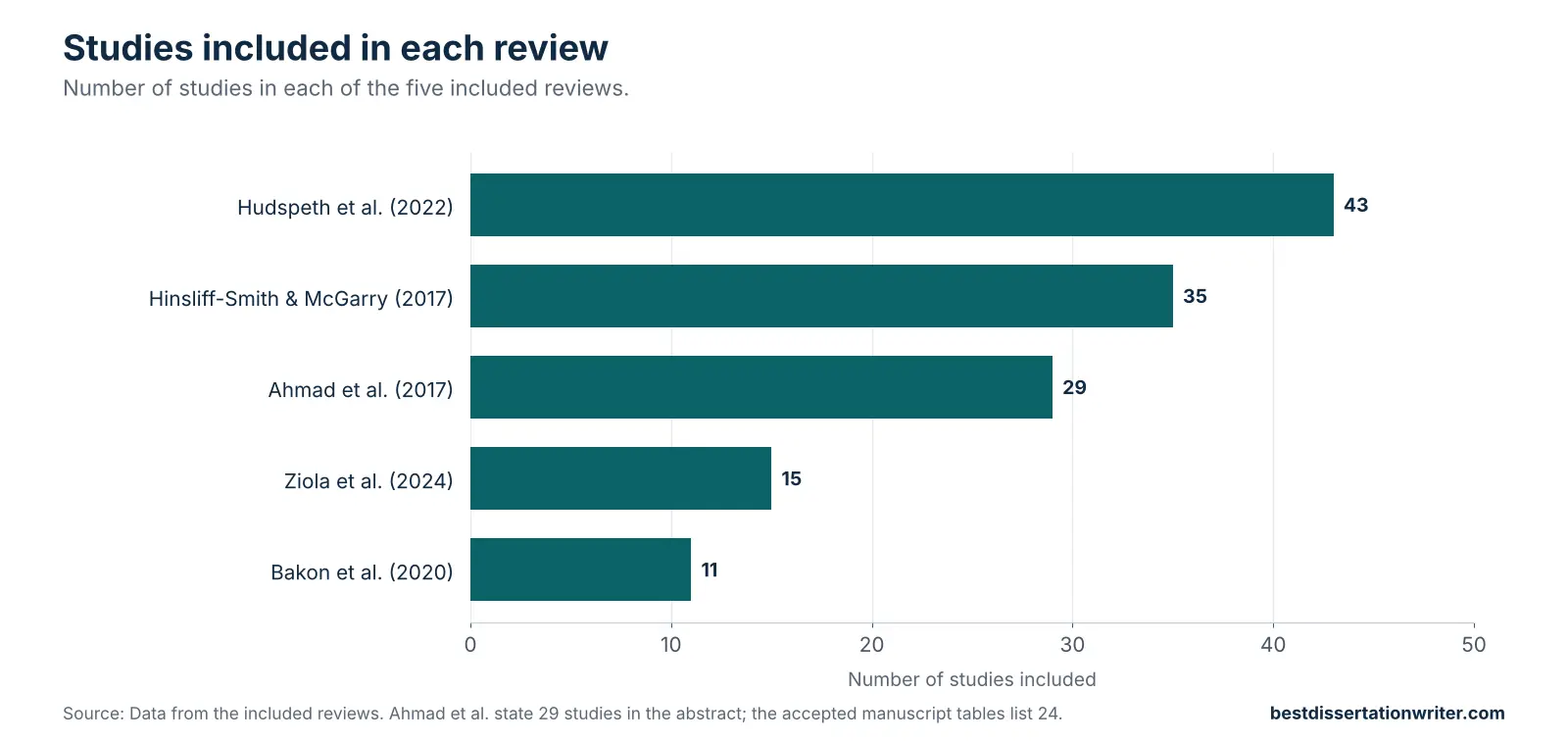
Ziola et al. (2024) carried out a scoping review of intimate partner violence in emergency medicine after the 2018 United States Preventive Services Task Force recommendation on screening. From 259 records identified in PubMed and CINAHL, 15 studies met the inclusion criteria. Practice remained inconsistent: no two studies used the same validated screening tool, and four did not name the tool they used. The authors recommended a standardised and inclusive tool and further research.
Taken together, the reviews suggest that asking increases identification but that how, when and by whom the question is asked varies widely. The evidence is better at describing practice than at showing that screening in emergency departments improves outcomes for survivors, and the reviews are cautious on that point. For nurses, the practical implication is that a consistent, trained and private approach is more likely to lead to disclosure than an ad hoc one.
Theme 2: Barriers to Identification
Ahmad et al. (2017) grouped facilitators of screening into three categories: healthcare professional factors, organisational factors and patient factors. Among the barriers they described were overcrowding, lack of time, lack of confidence and lack of staff preparedness. Patients were less likely to disclose because of embarrassment, fear of the abuser, fear of losing children, language barriers and the presence of family members. Clinician competence appeared to strongly affect disclosure.
Hudspeth et al. (2022) carried out a qualitative meta-synthesis of health practitioners’ perceptions of structural barriers to the identification of intimate partner abuse. They included 43 studies from 22 countries, covering 1,563 practitioners, used thematic synthesis and registered the review with PROSPERO. Not all of the practitioners worked in emergency departments, so the findings apply to healthcare in general, but the themes are highly relevant to emergency nursing.
Three themes were identified. First, the environment works against practitioners, with short appointment times and a lack of privacy, including partners present during visits and noisy or open layouts. Second, practitioners felt they were trying to tackle the problem on their own, reporting inadequate training, missing policies and protocols, weak referral pathways and limited support from colleagues and managers. Third, societal attitudes enable blaming women, including beliefs that abuse is normal, affects only certain women or that women lie.
Ziola et al. (2024) reported a similar picture in emergency medicine: time constraints, patient acuity, language barriers, gaps in staff education and difficulty connecting patients to resources. These barriers were found in different countries and settings, which suggests that they are not specific to one department. They are largely organisational, which means that they can be addressed by managers and commissioners as well as by individual nurses.
A point worth emphasising is that the barriers described by practitioners include attitudes. The belief that some women are to blame, or that abuse is a private matter, may be held unconsciously and can shape how a nurse responds to a disclosure. Education that addresses attitudes as well as knowledge is therefore important, and reflective practice or supervision may help staff to examine their own assumptions.
Theme 3: Strategies for Improving the Response
Bakon et al. (2020) carried out the second part of a two-part series on emergency healthcare for women who experience intimate partner violence. They ran a rapid review of three databases using strict inclusion criteria to identify strategies for addressing the knowledge gaps and negative attitudes of staff. Eleven articles met the criteria, and a three-step thematic analysis identified two main strategies: specialists in domestic violence and abuse, and education and training.
The authors concluded that a healthcare specialist in intimate partner violence based in the emergency department, together with a focused education and training programme, may improve staff knowledge, attitudes and ability to respond. This is a conclusion about likely benefit, not a demonstrated effect on survivors, and it rests on a small number of articles. It is, however, consistent with the recommendations of the other sources.
Hinsliff-Smith and McGarry (2017) recommended training, ongoing support for staff, clear assessment and referral pathways and better reporting systems. Hudspeth et al. (2022) recommended a health system model that improves training, workflows, policies, clinical champions and referral pathways, as well as links to social services outside healthcare, alongside a change in attitudes. Ziola et al. (2024) added that change is needed at the personal, institutional and policy levels.
Taken together, these recommendations form a coherent picture. Individual training is necessary but not enough, because staff also need a private space, time, a clear protocol and somewhere to refer survivors. Nurses can contribute by acting as champions, by asking for local pathways to be documented and shared and by taking part in audit. The cumulative message is that the response to domestic violence is a system, and not only a skill.
Discussion
This systematic review suggests that domestic violence is under-identified in emergency settings, that routine and trained approaches improve identification and that the main barriers are organisational. Staff need time, privacy, confidence and a clear route for referral, and survivors need to feel believed and safe.
The evidence base has limits. The included sources are reviews, and they inherit the weaknesses of the primary studies, many of which are descriptive and based on self-report. Few studies test whether screening or training in the emergency department leads to better outcomes for survivors, such as safety, health or reduced reattendance. The reviews overlap in the studies they include, so their agreement should not be taken as independent confirmation.
Further limitations should be noted. Ahmad et al. (2017) reported that 29 studies were included in the abstract, whereas the accepted manuscript lists 24 in its tables, so the exact number should be treated with caution. Hudspeth et al. (2022) included practitioners from many settings, and Ziola et al. (2024) was set in the context of United States policy, so some findings may not transfer to United Kingdom emergency departments. Most sources focus on women, and evidence on men, on same-sex couples and on older people is sparse.
This review also relied on openly accessible, English-language sources, and it did not include survivors’ own accounts except where they were reported within the reviews. Studies published after 2024 would not be captured. These limits mean that the conclusions are best taken as a guide to what is known and unknown, and not as a definitive account.
A further point concerns diversity. The sources focus mainly on women, yet domestic violence also affects men, older people, disabled people and people in same-sex relationships, and these groups may face additional barriers to disclosure. Nurses should avoid assumptions about who might be affected, and services should consider how their information and pathways serve all groups. Language support and culturally sensitive responses are part of a safe approach to domestic abuse.
Implications of Domestic Violence Evidence for Practice
For practice, the evidence supports training for all emergency nurses in recognising and responding to domestic violence, a private space and an independent interpreter when asking, a clear local pathway for referral and safeguarding, and documentation that protects the survivor. Guidance is available from the Royal College of Emergency Medicine and from the National Institute for Health and Care Excellence.
Managers should provide protected time for training, support clinical champions, make sure that policies are accessible and consider a specialist role or links with local services. They should also check that the environment allows a private conversation and that staff feel supported when they hear difficult disclosures.
Future research should compare screening and case-finding approaches in the emergency department, test training and specialist roles in controlled designs, include the views of survivors and measure outcomes such as safety and reattendance. Studies from United Kingdom emergency departments would be particularly valuable.
Conclusion
This systematic review found that domestic violence is often missed in emergency settings, that routine and trained approaches identify more survivors and that barriers are largely organisational.
Emergency nurses can contribute by asking safely, responding with belief, knowing the local pathway and supporting the improvements that departments need.
References
Ahmad, I., Ali, P. A., Rehman, S., Talpur, A., & Dhingra, K. (2017). Intimate partner violence screening in emergency department: A rapid review of the literature. Journal of Clinical Nursing, 26(21–22), 3271–3285. https://doi.org/10.1111/jocn.13706
Bakon, S., Taylor, A., Meyer, S., & Scott, M. (2020). The provision of emergency healthcare for women who experience intimate partner violence: Part 2. Strategies to address knowledge deficits and negative attitudes. Emergency Nurse, 28(4), 18–23. https://doi.org/10.7748/en.2020.e1994
Hinsliff-Smith, K., & McGarry, J. (2017). Understanding management and support for domestic violence and abuse within emergency departments: A systematic literature review from 2000–2015. Journal of Clinical Nursing, 26(23–24), 4013–4027. https://doi.org/10.1111/jocn.13849
Hudspeth, N., Cameron, J., Baloch, S., Tarzia, L., & Hegarty, K. (2022). Health practitioners’ perceptions of structural barriers to the identification of intimate partner abuse: A qualitative meta-synthesis. BMC Health Services Research, 22, Article 96. https://doi.org/10.1186/s12913-022-07491-8
Ziola, E. A., Gimenez, M. A., Stevenson, A. P., & Newberry, J. A. (2024). The role of emergency medicine in intimate partner violence: A scoping review of screening, survivor resources, and barriers. Trauma, Violence, & Abuse, 25(5), 3923–3937. https://doi.org/10.1177/15248380241265383
Cite this example
Best Dissertation Writers (2026) Identification of and Response to Domestic Violence in Emergency Settings: A Systematic Review. Available at: https://bestdissertationwriter.com/domestic-violence-literature-review/
Best Dissertation Writers
Get expert help with your nursing literature review
Share your topic and deadline with Best Dissertation Writers and get support tailored to your module brief.