Parental Vaccine Hesitancy and the Role of Nurses in Promoting Childhood Immunisation: A Narrative Review
 By Dr. Robertson Prime, Research Fellow
Updated October 12, 2026
15 min read
About 3,000 words
In this review
Abstract
Background: Parental vaccine hesitancy, in which parents delay, question or decline some or all of the vaccines offered to their children even when services are available, threatens the benefits of childhood immunisation. In 2025, 85% of infants worldwide received three doses of diphtheria, tetanus and pertussis vaccine, and nurses give most childhood vaccines and answer parents’ questions.
Aim: This narrative review aimed to explore what drives hesitancy among parents and how nurses can support them to make informed decisions about childhood immunisation.
Methods: Evidence was identified through targeted searches of openly accessible bibliographic records, publisher websites and the reference lists of key reviews. Seven sources published between 2013 and 2026 were included: two Cochrane reviews, a systematic review, an observational study of recorded consultations, the SAGE working group definition and two World Health Organization publications, appraised with CASP checklists and synthesised narratively.
Findings: A systematic review of 64 studies linked vaccine uptake to beliefs about adverse effects, positive recommendations and practical difficulties, mirroring the ‘3 Cs’ of confidence, complacency and convenience. In 111 recorded vaccine discussions, parents were much more likely to resist when providers used a participatory rather than a presumptive format (adjusted odds ratio 17.5), and 47% of parents who initially resisted went on to accept the vaccines. Face-to-face education may slightly improve vaccination status (risk ratio 1.20) and knowledge, but it had little or no effect on attitudes.
Conclusion: Nurses should make clear, confident recommendations while listening without judgement, exploring specific worries and addressing practical barriers. Training in nurse communication should form part of immunisation updates.
Keywords: parental vaccine hesitancy, childhood immunisation, nurse communication
Introduction
This narrative review critically examines recent evidence on parental vaccine hesitancy and its implications for children’s nursing practice.
Childhood immunisation is one of the most effective public health measures available, yet global coverage has stalled and outbreaks of measles and pertussis continue to occur. Part of the problem is access, because many families still struggle to reach services. Another part is parental vaccine hesitancy: parents who delay, question or decline some or all of the vaccines offered to their children, even when services are available. In 2019, the World Health Organization listed vaccine hesitancy among ten threats to global health, which brought the issue to the attention of policy makers and the public.
Nurses are central to this issue. In the United Kingdom and many other countries, practice nurses, health visitors, school nurses and children’s nurses give most childhood vaccines, answer parents’ questions and follow up missed appointments. The way a nurse talks to a hesitant parent may influence whether a child is vaccinated that day, later or not at all. Understanding parental vaccine hesitancy, and the evidence on what helps, is therefore part of everyday nursing practice rather than a specialist concern.
A narrative review was chosen because the evidence spans definitions, observational studies of conversations, Cochrane reviews of interventions and international surveillance data. These sources answer different questions and could not be pooled statistically, so a critical narrative synthesis is more suitable than a meta-analysis for understanding parental vaccine hesitancy.
Review question
What drives parental vaccine hesitancy, and what does the evidence say about how nurses can support parents to make informed decisions about childhood immunisation?
Background to Parental Vaccine Hesitancy
The World Health Organization’s Strategic Advisory Group of Experts (SAGE) on Immunization set up a working group to define vaccine hesitancy. MacDonald and the SAGE Working Group (2015) defined it as delay in acceptance or refusal of vaccination despite the availability of vaccination services. Hesitancy is complex and context-specific, varying across time, place and vaccine. It sits on a continuum between full acceptance and outright refusal, and many hesitant parents accept some vaccines while delaying or declining others.
The working group described three broad influences, often called the ‘3 Cs’: complacency, where parents see vaccine-preventable diseases as a low risk; convenience, including the availability, affordability and accessibility of services; and confidence, meaning trust in vaccine safety and effectiveness, in health services and in policy makers. MacDonald and the SAGE Working Group (2015) also proposed a determinants matrix covering contextual influences, individual and group influences, and vaccine- or vaccination-specific issues. An important point is that high hesitancy leads to low demand, but low hesitancy does not guarantee high demand, because practical barriers may still prevent vaccination.
This distinction matters for nursing. Not every unvaccinated child has a hesitant parent, and labelling families as hesitant when they face problems with transport, work, appointment times or language can be unfair and unhelpful. Equally, parental vaccine hesitancy can exist among families who attend regularly, who may vaccinate on time while still feeling anxious, or who may delay a single vaccine because of a specific concern. Nurses therefore need to explore each family’s reasons rather than assume them.
Coverage figures show why this matters. The World Health Organization (2026) reported that in 2025 85% of infants worldwide received three doses of diphtheria, tetanus and pertussis vaccine, but 13.5 million children received no vaccines at all. Coverage of the first dose of measles vaccine was 84% and of the second dose 77%. Many of these gaps reflect weak health systems and conflict rather than hesitancy, but in high-income countries parental vaccine hesitancy and complacency play a larger part in missed doses.
Search Strategy and Methods
Evidence for this example was identified through targeted searches of openly accessible bibliographic records, publisher websites and the reference lists of key reviews. Search terms combined keywords for the problem (“vaccine hesitancy”, “parental vaccine hesitancy”, “vaccine refusal”, “vaccine confidence”) with terms for the population and intervention (“parent*”, “child*”, “immunisation”, “communication”, “nurse*”, “education”), joined with the Boolean operators AND and OR. A full narrative review for assessment would run the same strategy in CINAHL, PubMed/MEDLINE, the Cochrane Library and Embase and report the number of records screened in a PRISMA flow diagram.
Sources were eligible if they defined or measured parental vaccine hesitancy, examined factors linked to routine childhood vaccine uptake, evaluated communication or education interventions for parents, or reported authoritative international data on coverage. Cochrane reviews, systematic reviews, observational studies of real consultations and World Health Organization publications were prioritised. Studies limited to adolescent, adult, influenza or COVID-19 vaccination were excluded, because decisions about these vaccines differ from those about the routine infant schedule.
Seven sources published between 2013 and 2026 were included: two Cochrane reviews, one systematic review, one observational study of recorded consultations, the SAGE working group definition and two World Health Organization publications (Table 1). The quality of each source was appraised using the Critical Appraisal Skills Programme (CASP) checklist appropriate to its design, and findings were synthesised narratively and grouped into themes relevant to parental vaccine hesitancy.
Key Findings on Parental Vaccine Hesitancy
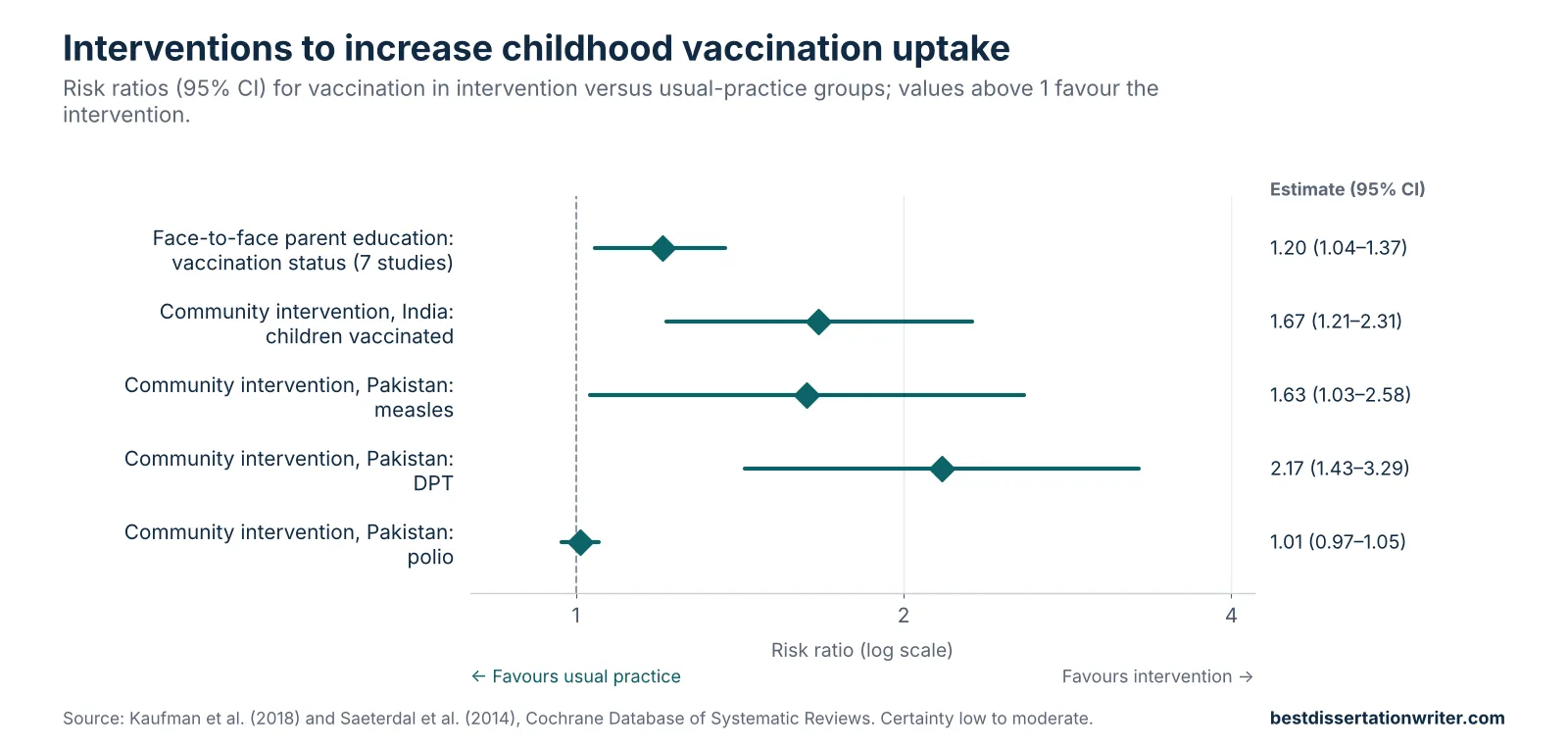
Three themes were identified: the factors that shape parents’ vaccination decisions, the way health professionals communicate during vaccine discussions, and the effectiveness of interventions to inform and educate parents. Table 1 summarises the included sources, and Figure 1 presents the effects of education and community interventions on childhood vaccination uptake reported in two Cochrane reviews.
| Author, year | Design | Setting and sample | Key finding |
|---|---|---|---|
| Opel et al. (2013) | Observational study of video-recorded consultations | 111 vaccine discussions, 16 providers, 9 practices; children aged 1–19 months | Participatory openings linked to more parental resistance than presumptive ones (AOR 17.5); 47% of resisting parents accepted after pursuit. |
| Saeterdal et al. (2014) | Cochrane systematic review | 2 cluster-randomised trials; communities in India and Pakistan | Community-directed interventions probably increased vaccination uptake; may be resource-intensive. |
| MacDonald and SAGE Working Group (2015) | Expert working group report | WHO SAGE Working Group on Vaccine Hesitancy | Defined hesitancy as delay or refusal despite available services; described confidence, complacency and convenience. |
| Smith et al. (2017) | Systematic review | 64 studies; children aged 5 and under in high-income countries | Safety concerns, attitudes, recommendations and practical difficulties strongly associated with uptake; no experimental studies measured uptake. |
| Kaufman et al. (2018) | Cochrane systematic review | 10 trials, 4,527 participants; parents of young children | Face-to-face education may slightly improve vaccination status (RR 1.20) and knowledge; little effect on attitudes. |
| World Health Organization (2019) | International policy statement | Global health threats | Vaccine hesitancy listed as one of ten threats; health workers the most trusted advisers on vaccination. |
| World Health Organization (2026) | International surveillance data | WHO/UNICEF coverage estimates for 2025 | DTP3 coverage 85%; 13.5 million zero-dose children; measles second-dose coverage 77%. |
Theme 1: What Drives Parental Vaccine Hesitancy
Smith et al. (2017) carried out a systematic review of psychological, social and contextual factors affecting routine vaccine uptake among healthy children aged five years and under in high-income countries. They included 64 studies. Factors with strong evidence of an association with vaccination were not believing that vaccines cause adverse effects, holding generally positive attitudes to vaccination, receiving positive vaccine recommendations and perceiving fewer practical difficulties in getting vaccinated. Believing that the child was susceptible to the disease was also well supported, whereas perceived severity of the disease had only weak evidence.
These drivers of parental vaccine hesitancy fit closely with the SAGE ‘3 Cs’. Concern about side effects reflects confidence, low perceived susceptibility reflects complacency, and practical difficulties reflect convenience (MacDonald & SAGE Working Group, 2015). Smith et al. (2017) also found associations with knowledge of the vaccine, social influences such as whether other parents vaccinate, and trust in the health profession. Trust is significant for nurses, since the World Health Organization (2019) described health workers, especially those in communities, as the most trusted advisers and influencers of vaccination decisions.
There are important limitations. Most studies in the review by Smith et al. (2017) were cross-sectional, so they show associations rather than causes. The authors found no experimental studies in this age group that used actual vaccine uptake as the outcome; most measured attitudes or intentions instead. The review was also restricted to high-income countries, so its findings may not apply where access, cost and conflict are the main barriers to childhood immunisation.
Theme 2: Nurse Communication and the Vaccine Conversation
Opel et al. (2013) video-recorded 111 vaccine discussions between 16 providers and parents of children aged 1 to 19 months in nine practices. Most providers (74%) began with a presumptive format, which assumes that vaccines will be given, rather than a participatory format, which invites the parent to decide whether to vaccinate. Parents were much more likely to resist when the participatory format was used (adjusted odds ratio 17.5, 95% confidence interval 1.2 to 253.5).
The way professionals responded to resistance also mattered. About half of providers pursued their original recommendation when parents resisted, and 47% of parents who initially resisted then accepted the vaccines (Opel et al., 2013). Although the study did not focus on nurses, its findings are directly relevant to nurse communication, because nurses frequently open and conduct vaccine conversations in clinics and at home visits. A clear, confident recommendation appears to reduce resistance linked to parental vaccine hesitancy, while continuing to recommend vaccination after a parent voices concern may change the outcome.
The evidence should be interpreted with caution. The confidence interval for the odds ratio is extremely wide, the sample was small, and the design was observational, so the communication format may reflect providers’ expectations of each parent rather than cause resistance. There is also an ethical tension. A presumptive approach may feel less respectful of parental autonomy, and nurse communication must still allow parents to ask questions, express concerns and give informed consent. Presumptive does not mean dismissive.
Theme 3: Interventions to Inform and Educate Parents
Kaufman et al. (2018) updated a Cochrane review of face-to-face interventions for informing or educating parents about early childhood vaccination. Ten randomised trials with 4,527 participants were included. Low-certainty evidence from seven studies suggested that face-to-face interventions may slightly improve vaccination status (risk ratio 1.20, 95% confidence interval 1.04 to 1.37). Moderate-certainty evidence showed a small improvement in parental knowledge, and low-certainty evidence suggested an increase in intention to vaccinate.
However, the same review found little or no effect on parents’ attitudes or beliefs about vaccination (standardised mean difference 0.03), and no study reported parents’ experience of the intervention (Kaufman et al., 2018). In one study, a case management approach cost about eight times as much per fully immunised child as usual care. This suggests that education can improve knowledge without necessarily shifting the underlying concerns that drive parental vaccine hesitancy, and that intensive approaches may be expensive to deliver at scale.
Saeterdal et al. (2014) reviewed interventions aimed at whole communities rather than individual parents. Only two cluster-randomised trials, from India and Pakistan, were eligible. Community-directed interventions probably increased the number of children vaccinated in India (risk ratio 1.67) and measles and DPT uptake in Pakistan (risk ratios 1.63 and 2.17), although polio uptake showed little or no difference. The authors noted that these interventions may be resource-intensive and may work best where coverage is low, which limits their transfer to UK practice.
Discussion
This review suggests that parental vaccine hesitancy is driven mainly by concerns about safety, low perceived risk of disease and practical barriers, and that the way a recommendation is made can influence whether parents accept vaccines. Face-to-face education may slightly improve vaccination and knowledge, but its effect on attitudes appears small. Together, the evidence points to the importance of trusted, confident and individualised nurse communication rather than information alone.
A tension runs through the evidence. Presumptive communication is linked to less resistance, yet the Cochrane evidence shows that education rarely changes attitudes. One interpretation is that many hesitant parents are not lacking information but are uncertain, anxious or influenced by people they trust. A clear recommendation from a known nurse may reassure such parents more effectively than a leaflet. However, a strongly hesitant parent may experience a presumptive approach as pressure, which could damage trust in future encounters and in childhood immunisation services more broadly.
The evidence base is also uneven. The communication study was small and observational, the factors review relied on cross-sectional surveys, and the Cochrane reviews included few trials, with low certainty for most outcomes. Very few studies measured actual vaccine uptake, focused specifically on nurses, or were set in the United Kingdom. The community interventions came from low- and middle-income settings where access is a major barrier, so their relevance to parental vaccine hesitancy in high-income countries is uncertain.
It is also important not to overstate the role of parental vaccine hesitancy. The World Health Organization (2026) data show that 13.5 million children received no vaccines in 2025, mostly in settings where services are hard to reach. Even in high-income countries, missed appointments may reflect poverty, work patterns or language barriers. Reminder systems, flexible clinic times and outreach are therefore as important as conversations about safety, and nurses should consider convenience as well as confidence when a child is behind schedule.
This review relied on openly accessible, English-language sources, did not involve independent double screening and included a small number of sources, so relevant studies may have been missed. Several sources pre-date the COVID-19 pandemic, which may have changed parents’ trust in vaccines and health services. Future research should test nurse-delivered communication strategies, such as presumptive recommendations combined with motivational interviewing, in randomised trials that measure actual vaccine uptake, include UK and diverse populations and capture parents’ experiences of care.
Implications of Parental Vaccine Hesitancy Evidence for Practice
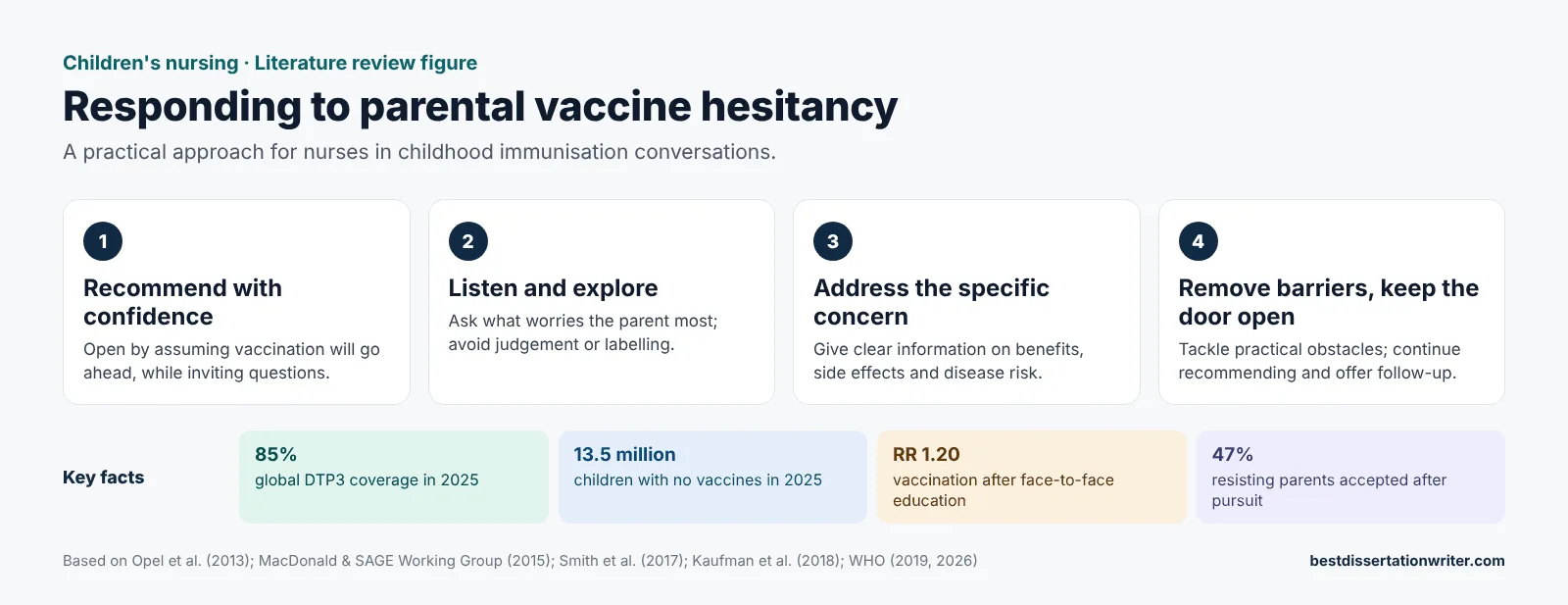
For nurses who give or discuss childhood immunisation, the evidence supports making a clear, confident recommendation that assumes vaccination will go ahead, while leaving room for questions. When a parent raises concerns, nurses should listen without judgement, explore the specific worry, give accurate information about benefits and side effects, and continue to recommend vaccination rather than simply recording a refusal. Practical barriers should be identified and addressed, and families who decline should be offered further opportunities to talk. Training in nurse communication, including how to respond to misinformation, should be part of immunisation updates.
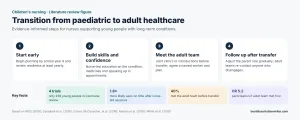
Vaccine conversations draw on the same therapeutic communication skills and partnership principles as family-centred care. Questions about fever after vaccines offer a natural opportunity to give evidence-based advice on fever management in children. Trusting relationships built through early childhood immunisation can also support young people with long-term conditions later, including during the move from paediatric to adult healthcare.
Conclusion
This narrative review examined the causes of parental vaccine hesitancy and the evidence on how nurses can respond. Hesitancy is shaped by confidence, complacency and convenience; presumptive recommendations are linked to less resistance; and face-to-face education may slightly increase uptake and knowledge but rarely changes attitudes. The certainty of most evidence is low, and few studies focus on nurses or measure actual uptake.
Nurses remain among the most trusted sources of advice for families. By combining confident recommendations with respectful listening, attention to practical barriers and persistent follow-up, nurses can help parents move towards vaccination. Addressing parental vaccine hesitancy in this way is an essential part of protecting children through childhood immunisation.
References
Kaufman, J., Ryan, R., Walsh, L., Horey, D., Leask, J., Robinson, P., & Hill, S. (2018). Face-to-face interventions for informing or educating parents about early childhood vaccination. Cochrane Database of Systematic Reviews, (5), CD010038. https://doi.org/10.1002/14651858.CD010038.pub3
MacDonald, N. E., & SAGE Working Group on Vaccine Hesitancy. (2015). Vaccine hesitancy: Definition, scope and determinants. Vaccine, 33(34), 4161–4164. https://doi.org/10.1016/j.vaccine.2015.04.036
Opel, D. J., Heritage, J., Taylor, J. A., Mangione-Smith, R., Salas, H. S., DeVere, V., Zhou, C., & Robinson, J. D. (2013). The architecture of provider-parent vaccine discussions at health supervision visits. Pediatrics, 132(6), 1037–1046. https://doi.org/10.1542/peds.2013-2037
Saeterdal, I., Lewin, S., Austvoll-Dahlgren, A., Glenton, C., & Munabi-Babigumira, S. (2014). Interventions aimed at communities to inform and/or educate about early childhood vaccination. Cochrane Database of Systematic Reviews, (11), CD010232. https://doi.org/10.1002/14651858.CD010232.pub2
Smith, L. E., Amlôt, R., Weinman, J., Yiend, J., & Rubin, G. J. (2017). A systematic review of factors affecting vaccine uptake in young children. Vaccine, 35(45), 6059–6069. https://doi.org/10.1016/j.vaccine.2017.09.046
World Health Organization. (2019). Ten threats to global health in 2019. https://www.who.int/news-room/spotlight/ten-threats-to-global-health-in-2019
World Health Organization. (2026, July 15). Immunization coverage [Fact sheet]. https://www.who.int/news-room/fact-sheets/detail/immunization-coverage
Cite this example
Best Dissertation Writers (2026) Parental Vaccine Hesitancy and the Role of Nurses in Promoting Childhood Immunisation: A Narrative Review. Available at: https://bestdissertationwriter.com/parental-vaccine-hesitancy-review/
Best Dissertation Writers
Get expert help with your nursing literature review
Share your topic and deadline with Best Dissertation Writers and get support tailored to your module brief.