

Assessment and Management of Procedural Pain in Neonates: A Systematic Review of Nursing Interventions
 By Dr. Robertson Prime, Research Fellow
Updated October 25, 2026
14 min read
About 2,800 words
In this review
Abstract
Background: Procedural pain in neonates is common in neonatal units, where sick and preterm babies undergo many painful procedures such as heel lances, venepuncture and injections, often without pain relief. Repeated untreated pain may have short- and long-term consequences, making pain assessment and management a core part of neonatal nursing.
Aim: This systematic review aimed to examine how often neonates experience painful procedures and the effectiveness of nursing interventions to reduce their pain.
Methods: Evidence was identified through targeted searches of openly accessible bibliographic records, publisher websites and the reference lists of key reviews. Five sources published between 2008 and 2023 were included: a prospective epidemiological study and four Cochrane systematic reviews, appraised with CASP checklists and synthesised narratively.
Findings: In 430 neonates in intensive care, 42,413 painful procedures were recorded in the first 14 days and 79.2% were performed without specific analgesia. High-quality evidence showed that oral sucrose reduced pain scores during heel lance (mean difference −1.70 on the Premature Infant Pain Profile at 30 seconds), venepuncture and intramuscular injection. Skin-to-skin contact reduced pain scores (−3.21 at 30 seconds), and breastfeeding or breast milk, non-nutritive sucking and facilitated tucking also reduced pain responses, although certainty was often low.
Conclusion: Effective, low-risk interventions exist for most routine procedures. Nurses should assess pain systematically, reduce unnecessary procedures and use sucrose, breastfeeding, skin-to-skin contact and comfort positioning as standard care.
Keywords: procedural pain in neonates, neonatal pain, sucrose, non-pharmacological
Introduction
This systematic review critically examines recent evidence on procedural pain in neonates and its implications for neonatal nursing practice.
Babies admitted to neonatal units undergo many procedures as part of their care. Heel lances for blood tests, venepuncture, cannulation, intramuscular injections, suctioning, nasogastric tube insertion and removal of adhesive tape are routine events, and preterm or critically ill babies may experience many of them each day. For much of the twentieth century, it was believed that newborns did not feel pain in the same way as older children, and procedures were often performed without any pain relief.
It is now accepted that neonates, including those born preterm, have the neural pathways needed to experience pain, and that their responses may be exaggerated because inhibitory pathways are immature. Repeated untreated pain has been associated with physiological instability during procedures and with altered pain responses later in infancy. Neonatal nurses perform or assist with most painful procedures, so they are central to recognising neonatal pain and ensuring that it is prevented and treated. Managing procedural pain in neonates is therefore a core nursing responsibility rather than an optional extra.
A systematic approach was chosen because large epidemiological data and several Cochrane reviews exist, and appraising them together allows the size and certainty of the evidence for each intervention to be compared.
The question matters because many of the most effective interventions are simple, inexpensive and within nurses’ control. Understanding the strength of the evidence helps neonatal nurses and unit leaders to decide which measures should be offered for every procedure, how to involve parents and where further research is needed.
Review question
How often do neonates experience painful procedures, and how effective are pharmacological and non-pharmacological nursing interventions in reducing procedural pain in neonates?
Background to Procedural Pain in Neonates
Neonates cannot report pain, so it must be inferred from behavioural and physiological responses. Validated tools such as the Premature Infant Pain Profile (PIPP), the Neonatal Infant Pain Scale (NIPS) and the Neonatal Facial Coding System combine indicators such as facial expression, crying, body movement, heart rate and oxygen saturation. Scores are influenced by gestational age and behavioural state, and very preterm or sedated babies may show muted responses, which makes regular assessment by skilled nurses essential.
Interventions to reduce procedural pain fall into several groups. Pharmacological measures include oral sweet solutions such as sucrose or glucose, topical anaesthetics and, for more invasive procedures, opioids. Non-pharmacological measures include non-nutritive sucking on a pacifier, swaddling, facilitated tucking, in which the baby is held in a flexed position, skin-to-skin contact with a parent and breastfeeding. Environmental measures, such as reducing light and noise and clustering care, aim to reduce stress more generally.
Sweet solutions are thought to work partly by activating endogenous opioid pathways, while sucking, containment and skin-to-skin contact provide comfort through touch, warmth and familiar stimuli. Breastfeeding combines several of these mechanisms. Many of these measures can be delivered by nurses or parents without a prescription, which makes them practical for routine use.
Reducing the number of painful procedures is as important as treating pain. Clustering blood tests, using non-invasive monitoring where possible and reviewing whether each test is necessary can reduce exposure. Together with pain assessment and effective interventions, these measures form the basis of neonatal pain management programmes in many units.
Expectations of care have changed accordingly. Preventing procedural pain in neonates is increasingly seen as an essential element of quality neonatal care rather than an optional comfort measure, and pain assessment is part of routine observation in many units. However, the availability of protocols, staff training and parental involvement can differ from one unit to another. Understanding the evidence behind each intervention helps nurses to judge which measures should be used for every procedure, and where nurse-led change could reduce procedural pain in neonates further.
Search Strategy and Methods
Evidence for this example was identified through targeted searches of openly accessible bibliographic records, publisher websites and the reference lists of key reviews. Search terms combined keywords for the population and problem (“procedural pain in neonates”, “neonatal pain”, “newborn”, “preterm”, “heel lance”, “venepuncture”) with terms for interventions (“sucrose”, “breastfeeding”, “skin-to-skin”, “non-nutritive sucking”, “facilitated tucking”, “non-pharmacological”), joined with the Boolean operators AND and OR. A full systematic review for assessment would run the same strategy in CINAHL, PubMed/MEDLINE, the Cochrane Library and Embase and report the number of records screened in a PRISMA flow diagram.
Sources were eligible if they reported the frequency of painful procedures in neonatal units or evaluated interventions to reduce procedural pain in preterm or term neonates, using pain scores, crying or physiological outcomes. Cochrane reviews were prioritised because each synthesises many randomised trials. Studies of postoperative pain and of older infants without separate neonatal data were excluded, because the focus was procedural pain in neonates rather than pain from surgery or illness.
Five sources published between 2008 and 2023 were included: one prospective epidemiological study and four Cochrane systematic reviews of sucrose, skin-to-skin contact, breastfeeding or breast milk and non-pharmacological interventions (Table 1). The quality of each source was appraised using the Critical Appraisal Skills Programme (CASP) checklist appropriate to its design, and findings were synthesised narratively.
Key Findings on Procedural Pain in Neonates
Three themes were identified: the frequency of painful procedures and the gap in pain relief, the effectiveness of sucrose, and the effectiveness of non-pharmacological and parent-delivered comfort measures. Table 1 summarises the included sources, and Figure 1 compares pooled effects of sucrose and skin-to-skin contact on pain scores.
| Author, year | Design | Setting and sample | Key finding |
|---|---|---|---|
| Carbajal et al. (2008) | Prospective epidemiological study | 430 neonates in intensive care, Paris region | 42,413 painful procedures in 14 days; 79.2% without specific analgesia. |
| Stevens et al. (2016) | Cochrane systematic review | 74 RCTs, 7,049 infants | Sucrose reduced PIPP scores in heel lance (−1.70 at 30 s), venepuncture and IM injection; no serious harms. |
| Johnston et al. (2017) | Cochrane systematic review | 25 studies, 2,001 infants | Skin-to-skin contact reduced PIPP scores (−3.21 at 30 s) and heart rate during procedures. |
| Pillai Riddell et al. (2023) | Cochrane systematic review | 138 studies, 11,058 infants and young children | Non-nutritive sucking and facilitated tucking reduced pain responses in neonates; very low certainty. |
| Shah et al. (2023) | Cochrane systematic review | 66 RCTs, more than 6,200 infants | Breastfeeding and breast milk likely reduced crying and pain scores. |
Theme 1: The Burden of Procedural Pain in Neonates
Carbajal et al. (2008) prospectively recorded all procedures in 430 neonates admitted to intensive care units in the Paris region during the first 14 days of admission. Of 60,969 first-attempt procedures, 42,413 were painful, and the median was 10 painful procedures per baby per day of hospitalisation. Of these painful procedures, 79.2% were performed without specific analgesia. Infants received specific analgesia for a median of only 20% of painful procedures.
The study is large and its data were collected prospectively, which strengthens its findings, but it was conducted in one region of France some years ago, and practice may have improved since. Nevertheless, it demonstrated the scale of the problem: babies in intensive care may experience hundreds of painful procedures during their stay, most without targeted pain relief. The finding provided a strong rationale for routine use of simple analgesic measures.
Many of the painful procedures that babies experience, such as heel lances, suctioning and removal of adhesive tape, are performed by nurses as part of routine care. This means that much procedural pain in neonates arises not only from rare, invasive interventions but also from everyday nursing tasks. Small changes to routine practice, such as using sucrose or containment for each heel lance and removing tape gently, could therefore reduce the cumulative burden of procedural pain in neonates considerably across a stay in intensive care.
Theme 2: Sucrose for Neonatal Pain
Stevens et al. (2016) reviewed 74 randomised trials involving 7,049 infants. High-quality evidence showed that sucrose reduced pain during heel lance, venepuncture and intramuscular injection. For heel lance, the mean difference in PIPP score was −1.70 at 30 seconds and −2.14 at 60 seconds; for venepuncture it was −2.79 and for intramuscular injection −1.05. No serious side effects were documented. Sucrose was not effective for circumcision, and no optimal dose was identified. The review remains the largest body of trial evidence on any single intervention for procedural pain in neonates.
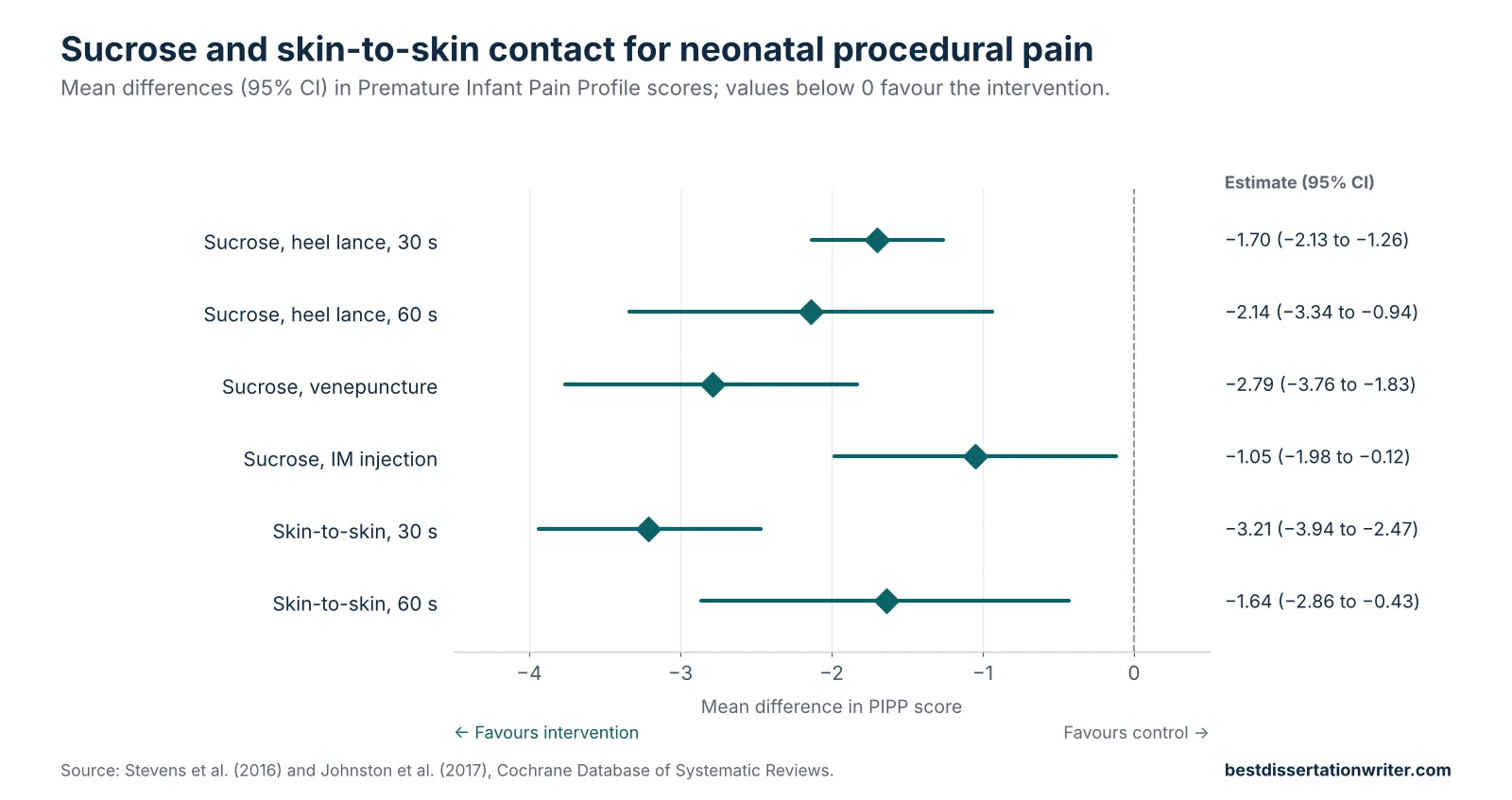
The reductions in PIPP score are modest, typically one to three points, and some researchers have questioned whether sucrose relieves pain or mainly reduces its behavioural expression. The authors called for research on repeated doses and on extremely preterm, unstable or ventilated babies. Even so, the consistency of the evidence across many trials supports sucrose as a standard measure for single, minor procedures.
Theme 3: Non-Pharmacological and Parent-Delivered Comfort
Johnston et al. (2017) reviewed trials of skin-to-skin contact during painful procedures, including 25 studies with 2,001 infants in the abstract. Skin-to-skin contact reduced PIPP scores by 3.21 points at 30 seconds and 1.64 at 60 seconds, reduced heart rate during the procedure by about 11 beats per minute and shortened crying. The certainty of evidence was low for the response to the procedure and moderate for recovery, and no adverse events were reported.
Shah et al. (2023) reviewed 66 trials with more than 6,200 infants of breastfeeding or supplemental breast milk. Breastfeeding likely reduced crying duration and NIPS scores compared with holding, positioning or placebo, and supplemental breast milk likely reduced crying duration. Moderate concentrations of sucrose or glucose may make little or no difference compared with breastfeeding. Evidence was of moderate to low certainty, and most trials involved term babies, so further research in preterm infants is needed.
Pillai Riddell et al. (2023) reviewed 138 studies of non-pharmacological interventions in infants and young children. In preterm neonates, non-nutritive sucking reduced pain reactivity (standardised mean difference −0.57) and facilitated tucking produced a large reduction (−1.01), while swaddling improved regulation after the procedure. In term neonates, non-nutritive sucking had large effects. However, none of the analyses was based on high-certainty evidence and heterogeneity was high.
Discussion
This review shows that procedural pain in neonates is frequent and has often been undertreated, yet a range of safe, simple interventions can reduce it. Sucrose has the strongest evidence for single minor procedures, while skin-to-skin contact, breastfeeding, breast milk, non-nutritive sucking and facilitated tucking all reduce pain responses, albeit with lower certainty. These interventions can be delivered by nurses and parents and require little equipment.
The size and meaning of the effects deserve critical consideration. Reductions in pain scores are moderate, and composite scales rely on behaviours that interventions such as sucking may suppress directly. It is therefore possible that some interventions reduce the expression of pain more than the experience of it. However, given the low risk of these measures and the potential harm of untreated pain, the balance of benefit strongly favours their routine use.
Combining interventions may offer greater benefit than any single measure. Sucrose with non-nutritive sucking, or breastfeeding during skin-to-skin contact, combines several comforting mechanisms. Many units now use stepwise protocols that match interventions to the expected pain of each procedure, adding topical anaesthetics or opioids for more invasive procedures. Such protocols help to standardise care and make pain relief the default rather than an afterthought.
Implementation is likely to be the main challenge. The gap identified by Carbajal et al. (2008) shows that effective measures are not automatically used, and plausible barriers include time pressure, uncertainty about dosing, the absence of clear protocols and reluctance to handle very sick babies. Standard protocols, staff education, prompts at the cot side and regular audit are practical ways for units to embed pain relief, and treating procedural pain in neonates as a measurable quality indicator may help to sustain change.
Parents have an important role. Breastfeeding and skin-to-skin contact depend on parental presence, and many parents want to comfort their babies during procedures. Involving parents can reduce babies’ pain and parents’ feelings of helplessness, but it requires flexible scheduling, private space and nurses who are confident in supporting parents. Concerns about repeated sucrose doses in very preterm babies also suggest that parent-delivered comfort measures should be prioritised where possible.
The evidence base has limitations. Many trials were small, single-centre and at risk of bias, outcome measures varied and most studied single procedures in relatively stable babies. Evidence for extremely preterm, ventilated and unstable infants is limited. This review relied on openly accessible, English-language sources and did not involve independent double screening. Future research should examine repeated procedures, long-term outcomes and the effectiveness of combined, parent-delivered interventions in the most vulnerable babies.
Implications of Procedural Pain in Neonates Evidence for Practice
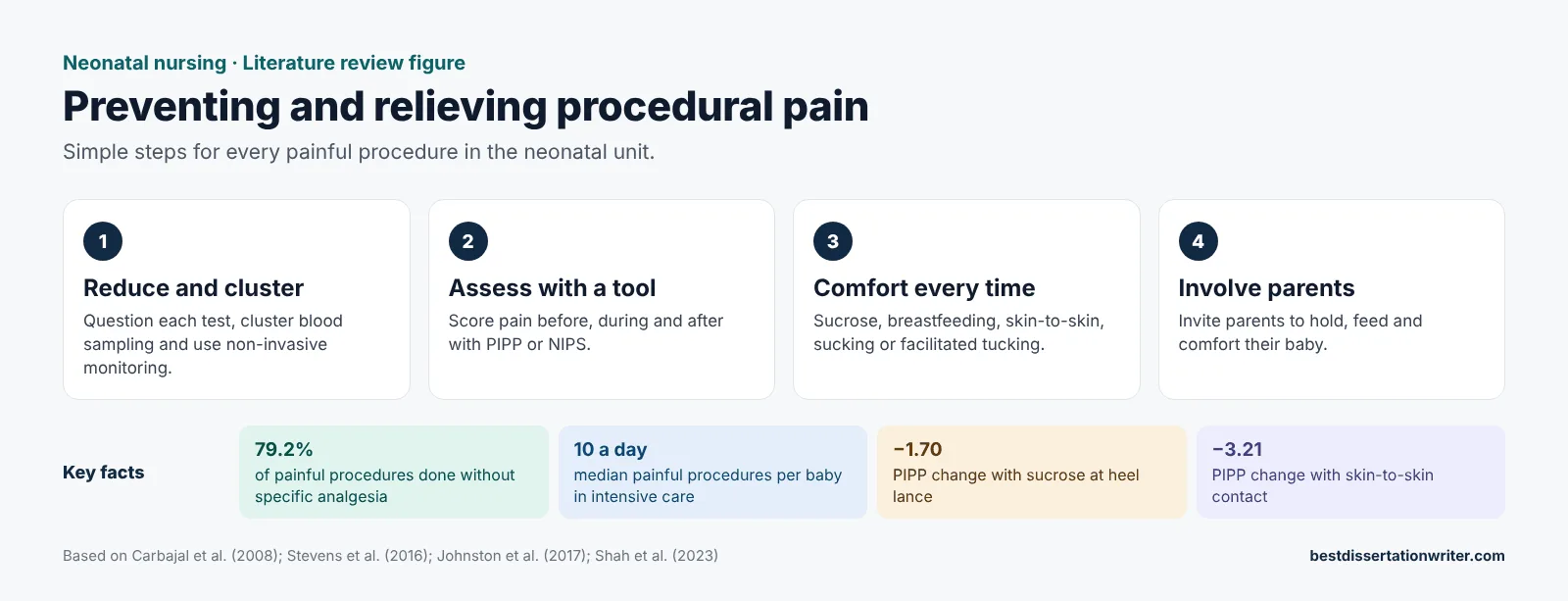
For neonatal nurses, the evidence supports assessing neonatal pain with a validated tool before, during and after procedures, minimising and clustering procedures, and offering sucrose, breastfeeding, skin-to-skin contact, non-nutritive sucking or facilitated tucking for every minor painful procedure. Units should have written protocols, train staff in pain assessment and audit whether pain relief is given. Parents should be informed and invited to comfort their babies during procedures where this is safe.
Nurse educators can support these changes by including neonatal pain assessment and comfort techniques in induction and annual training, using simulation to practise positioning and facilitated tucking, and sharing audit results with teams. Recording the comfort measure used alongside each procedure makes pain relief visible in the clinical record and allows units to see whether practice is improving over time.
Pain management sits within wider developmental care, and parent-delivered comfort builds on the evidence for kangaroo mother care. Breastfeeding and expressed milk support nutrition for preterm infants, and careful handling and reduced stress are relevant for babies at risk of necrotising enterocolitis.
Conclusion
This systematic review examined the frequency and management of procedural pain in neonates, drawing on a large epidemiological study and four Cochrane reviews. Painful procedures are common in neonatal units and have frequently been performed without pain relief, but sucrose, skin-to-skin contact, breastfeeding, breast milk, non-nutritive sucking and facilitated tucking all reduce pain responses, with sucrose supported by the strongest evidence.
Neonatal nurses are well placed to reduce procedural pain in neonates by making pain prevention and relief a routine part of every procedure. Systematic assessment, fewer unnecessary procedures and consistent use of simple comfort measures, delivered with parents wherever possible, offer a practical way to reduce the burden of pain on vulnerable babies.
References
Carbajal, R., Rousset, A., Danan, C., Coquery, S., Nolent, P., Ducrocq, S., Saizou, C., Lapillonne, A., Granier, M., Durand, P., Lenclen, R., Coursol, A., Hubert, P., de Saint Blanquat, L., Boëlle, P.-Y., Annequin, D., Cimerman, P., Anand, K. J. S., & Bréart, G. (2008). Epidemiology and treatment of painful procedures in neonates in intensive care units. JAMA, 300(1), 60–70. https://doi.org/10.1001/jama.300.1.60
Johnston, C., Campbell-Yeo, M., Disher, T., Benoit, B., Fernandes, A., Streiner, D., Inglis, D., & Zee, R. (2017). Skin-to-skin care for procedural pain in neonates. Cochrane Database of Systematic Reviews, (2), CD008435. https://doi.org/10.1002/14651858.CD008435.pub3
Pillai Riddell, R. R., Bucsea, O., Shiff, I., Chow, C., Gennis, H. G., Badovinac, S., DiLorenzo-Klas, M., Racine, N. M., Ahola Kohut, S., Lisi, D., Turcotte, K., Stevens, B., & Uman, L. S. (2023). Non-pharmacological management of infant and young child procedural pain. Cochrane Database of Systematic Reviews, (6), CD006275. https://doi.org/10.1002/14651858.CD006275.pub4
Shah, P. S., Torgalkar, R., & Shah, V. S. (2023). Breastfeeding or breast milk for procedural pain in neonates. Cochrane Database of Systematic Reviews, (8), CD004950. https://doi.org/10.1002/14651858.CD004950.pub4
Stevens, B., Yamada, J., Ohlsson, A., Haliburton, S., & Shorkey, A. (2016). Sucrose for analgesia in newborn infants undergoing painful procedures. Cochrane Database of Systematic Reviews, (7), CD001069. https://doi.org/10.1002/14651858.CD001069.pub5
Cite this example
Best Dissertation Writers (2026) Assessment and Management of Procedural Pain in Neonates: A Systematic Review of Nursing Interventions. Available at: https://bestdissertationwriter.com/procedural-pain-in-neonates-review/
Best Dissertation Writers
Get expert help with your nursing literature review
Share your topic and deadline with Best Dissertation Writers and get support tailored to your module brief.